3.6 Higher Education Access Pathways
Click the link below the image to view it in full screen
Click your browser's back button, top left, to exit full screen
Common Higher Education Access Pathways
There is no single route into higher education. You can reach international higher education through different pathways depending on your educational background, qualifications, and personal circumstances. The pathways below describe the most common ways you can access higher education
Click to view the image in full screen
Three Pathways to International Higher Education
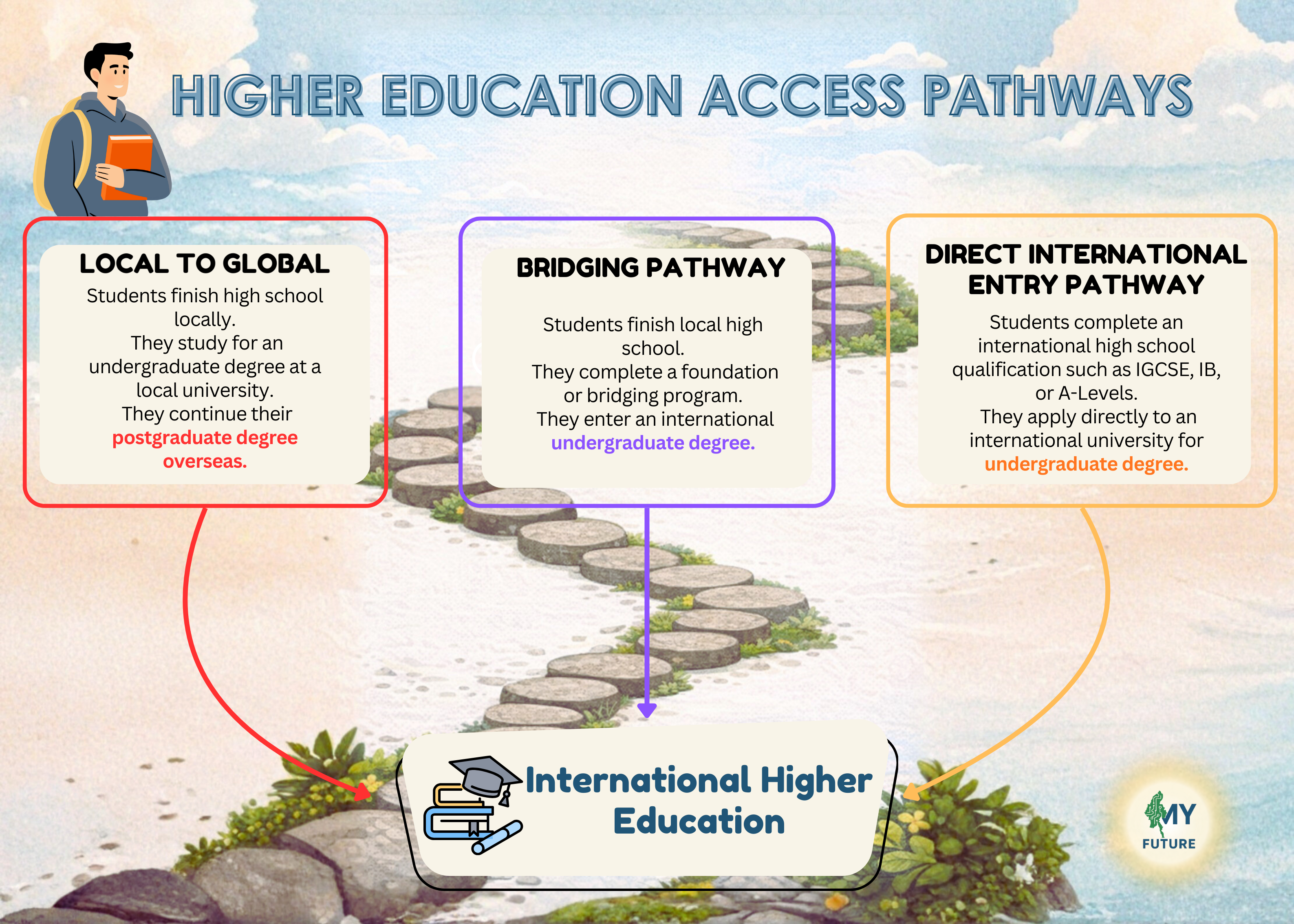
Students can reach international higher education through different routes depending on their qualifications, goals, and circumstances.
🌏 Pathway 1 — Local to Global Pathway (Click to expand)
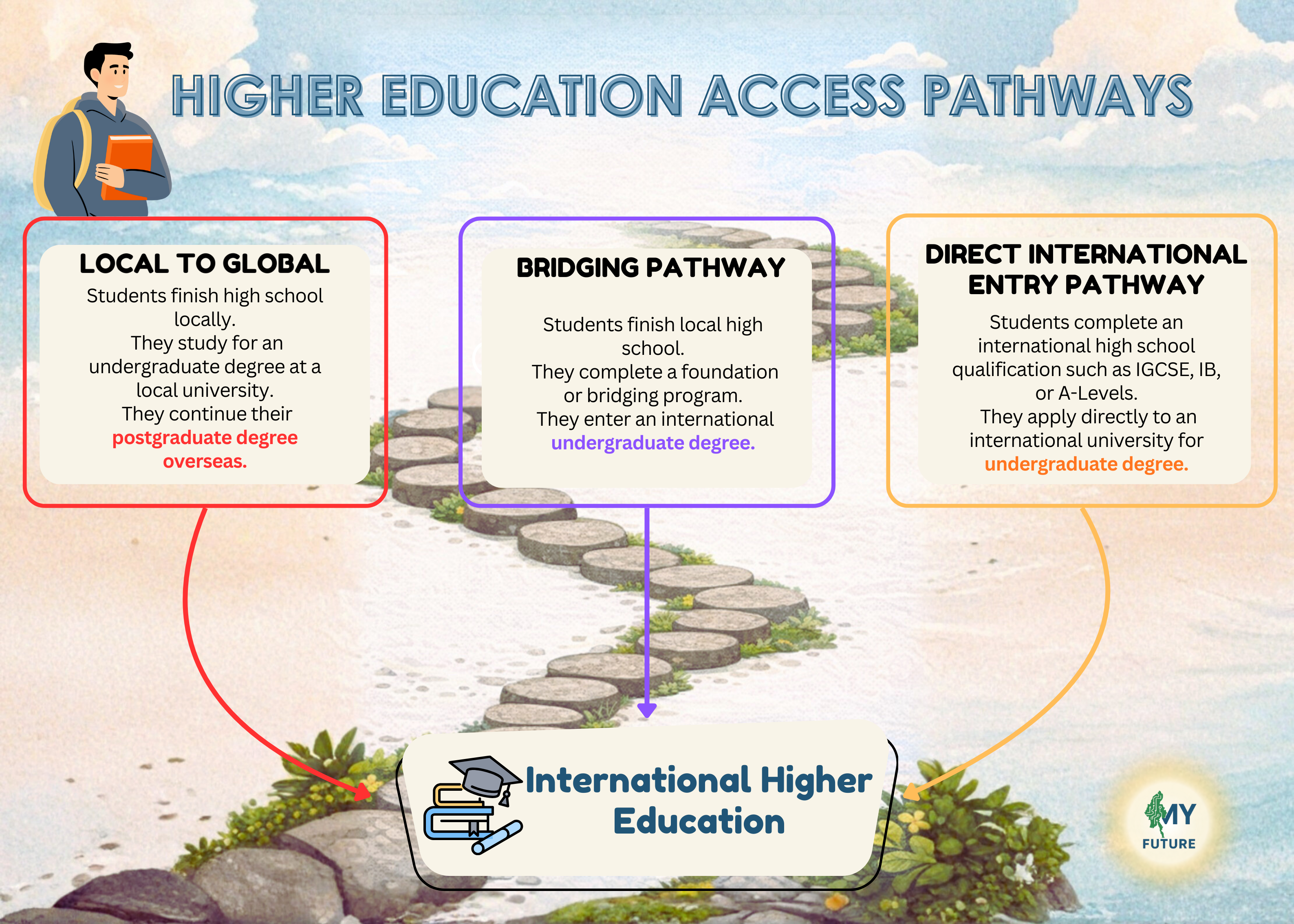
In the Local to Global Pathway, you begin your education in Myanmar. You complete high school locally and continue with an undergraduate degree at a local university. After completing your undergraduate studies, you may choose to pursue postgraduate education either locally or at an international university.
This pathway is suitable for students who prefer to start their studies within a familiar education system and progress internationally at a later stage.
Important:
Some international postgraduate programmes may not directly admit students from all local undergraduate programmes. Additional requirements may include English language qualifications, postgraduate diplomas, bridging programmes, or even a master's degree depending on the institution and course.
🎓 Pathway 2 — Bridging Pathway (Click to expand)
The Bridging Pathway supports students who are not able to enter international universities directly after high school. Students complete local high school or come from non-traditional education backgrounds and then enrol in a foundation or bridging programme.
These programmes prepare students academically and linguistically for university-level study and allow them to progress into an international undergraduate degree.
Why choose this pathway?
This pathway helps students transition confidently into international higher education. As discussed previously, bridging programmes are designed specifically to close qualification gaps and prepare students for success at university.
🚀 Pathway 3 — Direct International Entry Pathway
(Click to expand)
Direct international entry is available in limited cases. Students who complete international high school qualifications such as IGCSE, IB, or A-Levels may apply directly to international universities.
This pathway is typically faster but requires strong academic preparation and internationally recognised qualifications.
Considerations:
We consider this pathway relatively limited because it can be costly and often requires preparation several years in advance. As a result, it may not be the most accessible option for many students in Myanmar.
All three pathways can lead to international undergraduate or postgraduate study. The most important factor is choosing the pathway that best matches a student’s qualifications, academic readiness, and personal circumstances. With the right pathway, students from different educational backgrounds can successfully access international higher education.
Click here to go to the next page
Last modified: Friday, 13 November 2026, 8:44 AM