- Current section: Introduction
- Learning outcomes
- 1 Preamble
- 2 An introduction to models
- 3 Systems modelling in practice
- References
- Acknowledgements
from The Open University
Alternatively you can skip the navigation by pressing 'Enter'.
Systems modelling
Maps and plans, architects and engineers, drawings, graphs and tables: all are...
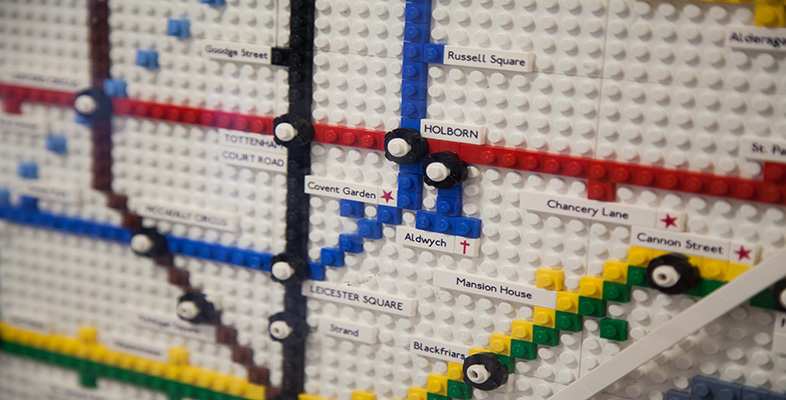
Maps and plans, architects and engineers, drawings, graphs and tables: all are models we use in everyday life. This unit will introduce you to the modelling process enabling you to recognise that systems models may be used in different ways as part of a process for: improving understanding of a situation; identifying problems or formulating opportunities and supporting decision making.
After working through these materials you should be able to:
- describe and use a general classification of models;
- outline and discuss the process of systems modelling, where models are used as part of a systemic approach to a range of different situations;
- recognise that systems models may be used in different ways as part of a process for: improving understanding of a situation; identifying problems or formulating opportunities; supporting decision making.
- Duration: 4 hours
- Published on: Monday 25th July 2011
- Level: Introductory
- Posted under: Systems (Computer)
Contents
Systems modelling
Introduction

Maps and plans, architects‗ and engineers‗ drawings, graphs and tables: all are models we use in everyday life. This unit will introduce you to the modelling process enabling you to recognise that systems models may be used in different ways as part of a process for: improving understanding of a situation; identifying problems or formulating opportunities and supporting decision making.
This unit is from our archive and is an adapted extract from a course which is no longer taught by The Open University. If you want to study formally with us, you may wish to explore other courses we offer in this subject area [Tip: hold Ctrl and click a link to open it in a new tab. (Hide tip)] .
Archive content
This is an extract from an Open University course which is no longer available to new students. If you found this interesting you could explore more free Systems (Computer) course units or view the range of currently available OU Systems (Computer) courses.
Other pages You might like

Try: Computer technology: robotic milking...
What have computers got to do with cows? Can a wooden mirror help us understand the...

Try: Distributed paradigms
This unit looks at some of the architectural and programming paradigms used in...

Study: Postgraduate Certificate in Computing
Looking for vocational development in computing? Taking the first steps towards achieving...

Try: The Final Cut
It is often said that a movie comes to life in the edit suite. Ben Harrex of Final Cut...

Try: Diagramming for development 1 -...
This unit introduces you to the following systems diagramming techniques - Rich pictures,...

Study: Accreditation of Certificated...
MT127 enables The Open University to award academic credit for specified, non-OU,...

Try: Finding information in information...
The internet provides a world of information, but how do you find what you are looking...

Study: Foundation Degree in Computing and IT...
If you already work with computers, this qualification will develop skills directly...

Try: Crossing the boundary - analogue...
How does the computer's peculiar binary world of digital entities differ from our...

Study: Career development and employability
Use your workplace as a context for learning, and develop your ability to apply your...

Try: Achieving public dialogue
There are a wide range of interactions between ‘science’ and ‘the public’....

Study: Diploma of Higher Education in...
If you already work with computers, this qualification will develop skills directly...
Comments
Be the first to post a comment
Copyright & revisions
Copyright information
- Creative-Commons: The Open University is proud to release this free course under a Creative Commons licence. However, any third-party materials featured within it are used with permission and are not ours to give away. These materials are not subject to the Creative Commons licence. See terms and conditions. Full details can be found in the Acknowledgements section.
Feeds
If you enjoyed this, why not follow a feed to find out when we have new things like it? Choose an RSS feed from the list below. (Don't know what to do with RSS feeds?)
Remember, you can also make your own, personal feed by combining tags from around OpenLearn.
Alternative Formats
Tags, Ratings and Social Bookmarking
Page Tags
Sign in or create a free account to add tags to your personal tag cloud using:
Have you tried our free courses?
Free stuff to your door
Living with Poverty
OU TV & Radio
-
Secrets Of Our Living Planet: Magical ForestEden
Friday 0:01 -
Timewatch: Last Day of WW1BBC Four
Friday 0:05 -
Life In Cold BloodEden
Friday 11:00 -
Life In Cold BloodEden
Friday 11:00 -
Life In Cold BloodEden
Friday 15:00
Views
Votes
Comments
Tags
- climate change (373)
- business (278)
- diaries (194)
- bottom line (169)
- food (168)
- Rough Science (162)
- internet (146)
- BBC Two (145)
- BBC Radio 4 (141)
- BBC (134)
- listings (121)
- Scotland (121)
- points for debate (120)
- Bang goes the Theory (116)
- children (116)
- Creative Climate (116)
- English Civil War (115)
- astronomy (108)
- Thinking Allowed (105)
- religion (98)
- marketing (94)
- 20th century (94)
- Charles I (93)
- communication (92)
- evolution (91)
- sustainability (89)
- research (88)
- architecture (85)
- energy (83)
- Charles Darwin (78)
OpenLearn Links
Copyrighted imageCredit: Background image Lucian Milasan | Dreamstime.com