
Feeding the world
Agriculture is a combination of science and skill. It refers to cultivating seeds, tending livestock, using pesticides, irrigation and harvesting plants, etc. Rather than dispersed ideas, it is a holistic integration of all these applications. Plants and animals both serve the purpose of food and material production. Food is the prime component of all human necessities. As per the Food and Agriculture Organization, by 2050, the global population is expected to increase by 20% to 9.8 billion people. To feed this increasing population, the agricultural industry will need to produce 60% more food while only using 5% more land. Continuing with traditional farming techniques could lead to a whopping 68% increase in cost.
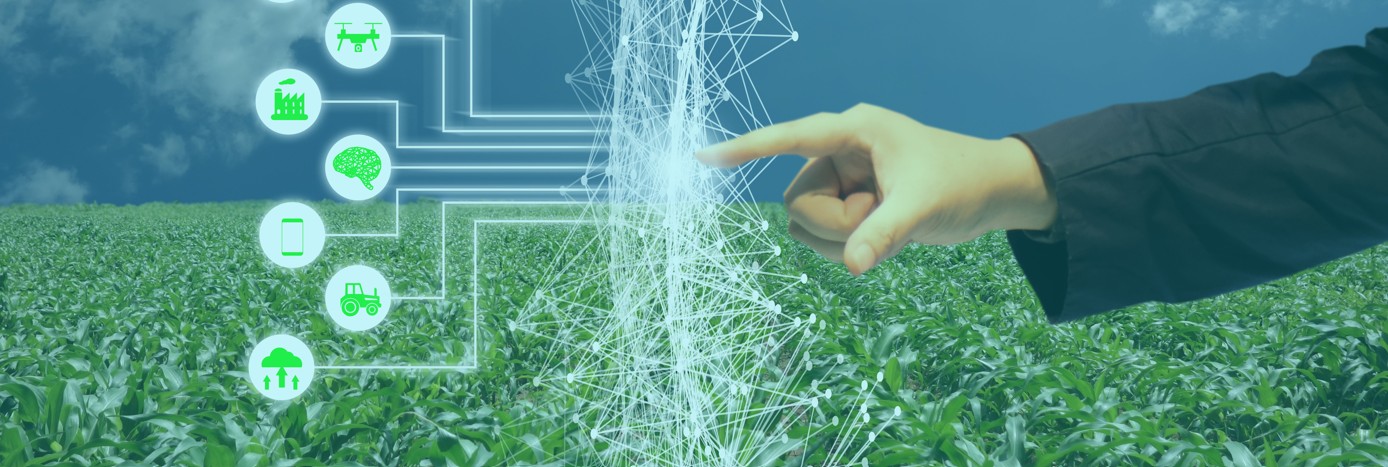
The integration of AI can effectively increase productivity while keeping the cost at bay. Smart Agriculture combines the latest technologies and evidence backed by scientific breakthroughs to optimise crops and livestock production.
AI in agriculture
Artificial intelligence can be used to filter quality seeds, study environmental conditions, estimate crop yield, predict cattle health and disease, and identify infestation or outbreaks. An AI system makes decisions based on what it learns from past mistakes and data trends.
In Machine learning (ML), a centralised model learns to perform by training on a single dataset. So, each record, data distribution, and raw data is accessible to the model.
Contrary to this setup, federated learning (FL) provides a way to distribute the learning process of AI systems across multiple devices, making it suitable for resource-constrained devices. A commercial farm from Wales, a farmer from the Scottish Highlands, and a backyard gardener in England can track their plant growth via images. Everyone gets their own ML model to deduce leaf diseases from images and then redirects the learned parameters to the central server. The server is then in charge of detecting the disease every time a new image comes from either of these three regions. In this process, all parties benefit without the need for compromising data security and increasing computational power, as large datasets and sophisticated tasks are handled by the central server.
Privacy preserving AI
In practice, a model often struggles to learn across complex and non-linear relationships. In fact, real data is heterogeneous, multi-modal, and multi-regional. Accessibility to data is also limited due to usage policies, and privacy restrictions. Federated-learning-based-agriculture models leverage environmental and sensor data and can learn from multi-domain datasets.
Most farms and farmers might be sceptical about sharing data with others. The decentralised setup allows multiple farms to collaborate with each other irrespective of their location, device type, or computation strength and helps them fulfil their individual aims. Thus, cross-city, cross-country, and even cross-continent global models can be deployed. Privacy and security are also upheld in the process while preventing unnecessary competition as local farm devices only share the updated weights and parameters rather than raw data with the global aggregator model.
Why federated learning (FL)?
As agriculture leaps into an unforeseen future, federated learning stands as the stewardship to balancing the productivity versus privacy issue by offering proper collaborative learning while keeping hold of local ownership of data. By offloading high intensity computation to the central server, it allows farms to operate on low powered, cost-effective settings, further driving productivity. Signing up to a decentralised system will benefit small-scale farmers as well as commercial farms irrespective of their location and resources, and thus pave the path towards a fair, successful, and sustainable agriculture system.
Read more articles like this
-
STEM postgraduate research
Learn more to access more details of STEM postgraduate researchThis content hub highlights the diverse range of topics explored by postgraduate research students in STEM (Science, Technology, Engineering and Mathematics) at The Open University.
Try a FREE course on the environment
-
Environment: treading lightly on the Earth
Learn more to access more details of Environment: treading lightly on the EarthEnvironment: treading lightly on the Earth focuses on the problem of greenhouse gas emissions, especially carbon dioxide. This free course will give you an understanding of the nature and importance of carbon footprints of individuals and households. It will enable you to measure your own carbon footprint and explore what you could do to reduce ...

-
Eating for the environment
Learn more to access more details of Eating for the environmentThis free course explores the links between food, nutrition and environmental sustainability.

-
Could we control our climate?
Learn more to access more details of Could we control our climate?Climate crisis is one of the grand challenges we face as a society, but it can be hard to approach as a subject. Not only can the science at times seem dauntingly complex, but the solutions are also far from clear. This leaves many people feeling confused, guilty, anxious, angry, or else completely switched off from the subject. This course ...

-
Introducing environmental decision making
Learn more to access more details of Introducing environmental decision makingMany of the decisions we make have implications for our environment, particularly those concerning natural resources and waste. Taking account of environmental factors in decision making can be both complex and challenging. This free course, Introducing environmental decision making, considers decisions in their broader contexts and advocates a ...

-
Introducing the environment: Ecology and ecosystems
Learn more to access more details of Introducing the environment: Ecology and ecosystemsWhat is ecology and why is it important to our understanding of the world around us? This free course, Introducing the environment: Ecology and ecosystems, looks at how we can study ecosystems to explore the effect that humans are having on the environment.

-
Environmental management and organisations
Learn more to access more details of Environmental management and organisationsIt is believed that environmental management requires action at all levels and by organisations of all types and sizes. However it is not always clear what we mean by environmental management and the role that organisations do and could play. This free course, explores the different interpretations and viewpoints involved by using system ...

Rate and Review
Rate this article
Review this article
Log into OpenLearn to leave reviews and join in the conversation.
Article reviews