
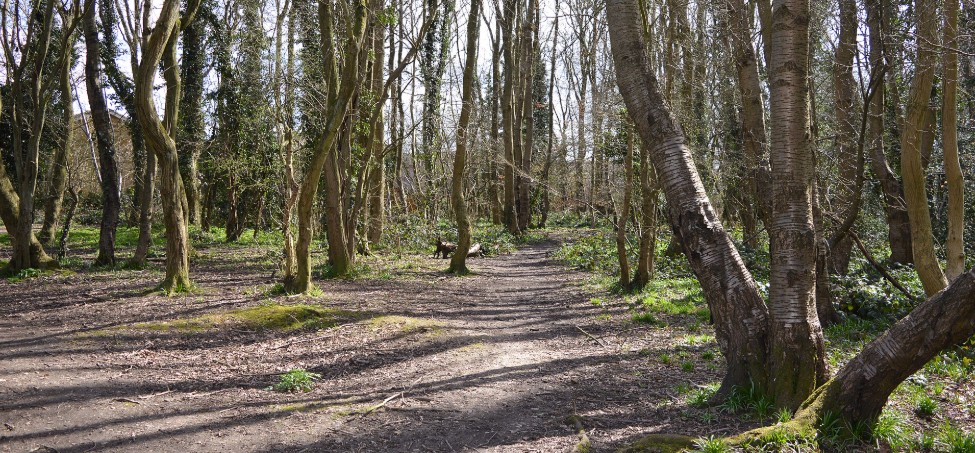
Prioritising nature
According to the World Wildlife Fund for Nature (2026), ‘From the air we breathe, to the food we eat, nature is the backbone of life on our planet.’ However, with many species under threat of extinction globally, the loss of biodiversity has consequences for our food security, ecosystem functions and human wellbeing. In the UK, it is estimated that there has been a 19% decline in biodiversity since 1970.
Recent efforts have focused on restoring habitats especially those lost to development, while TV programmes like the OU-BBC co-production Wild Isles have helped to raise awareness of the variety of species across the UK. With nature playing such a vital role, should more be done to safeguard it?
Connections to landfills
Each day through our consumption, we generate waste, but we rarely think about where this goes once it leaves us. In last few decades, the UK has focused on reducing the volume of waste that is sent to landfills through various recycling schemes, but the challenge of landfill space and sustainable management persists. Existing UK landfill regulations prioritise public health and safety alongside environmental compliance. It includes acquiring planning permission and an environmental permit linked to a proposed landfill restoration plan. At the landfill restoration phase, operators place an even layer of material on top of the landfill to create a soil profile, but there is no specific guidance on restoring biodiversity.
The challenge of sustainable management also extends to approximately 21,000 historical sites which have stopped accepting waste. Also known as closed landfills, these offer opportunities for remediation with some initiatives seeing sites transformed into green spaces like nature reserves or mixed uses like solar farms. Here, too, there are no overarching guidelines geared towards biodiversity. Exploring this potential and evaluating the extent to which closed landfills can help to restore biodiversity is an active research area. Additionally, evaluating the role of stakeholders in landfill restoration could complement this research effort by widening our understanding of these unique spaces.
Potential benefits
The UN Sustainable Development Goal 15 highlights the importance of protecting and restoring habitats, including halting, and reversing, biodiversity loss. Instead of adding to a growing problem, landfills could form part of the wider solution. Creating a variety of habitats like scrubland, grasslands, meadows, marshes and forests on closed landfills could encourage a range of native species. Having a diverse range of species is beneficial in supporting ecosystems and building resilience especially from the threats posed by climate change. We benefit indirectly through ecosystem services like pollination and carbon capture and directly by having access to some of these spaces for our own recreation and wellbeing. Understanding what shapes successful outcomes may also play a role in our future decision making.
What can you do to help?
A few minor changes could help to make a difference in the future of landfills and how we create spaces for nature.
- Support local organisations which promote biodiversity at a community level such as neighbourhood groups and local wildlife trusts. Volunteer your time or expertise to help with projects that can make a difference for biodiversity.
- Recycle more through the various schemes available such as separating food waste, ensuring recyclables are not contaminated or taking plastic packaging to larger supermarkets. These will continue to reduce the volume sent to landfills.
Read more articles like this
-
STEM postgraduate research
Learn more to access more details of STEM postgraduate researchThis content hub highlights the diverse range of topics explored by postgraduate research students in STEM (Science, Technology, Engineering and Mathematics) at The Open University.

Try a FREE course on the environment
-
Environment: treading lightly on the Earth
Learn more to access more details of Environment: treading lightly on the EarthEnvironment: treading lightly on the Earth focuses on the problem of greenhouse gas emissions, especially carbon dioxide. This free course will give you an understanding of the nature and importance of carbon footprints of individuals and households. It will enable you to measure your own carbon footprint and explore what you could do to reduce ...

-
Eating for the environment
Learn more to access more details of Eating for the environmentThis free course explores the links between food, nutrition and environmental sustainability.

-
Could we control our climate?
Learn more to access more details of Could we control our climate?Climate crisis is one of the grand challenges we face as a society, but it can be hard to approach as a subject. Not only can the science at times seem dauntingly complex, but the solutions are also far from clear. This leaves many people feeling confused, guilty, anxious, angry, or else completely switched off from the subject. This course ...

-
Introducing environmental decision making
Learn more to access more details of Introducing environmental decision makingMany of the decisions we make have implications for our environment, particularly those concerning natural resources and waste. Taking account of environmental factors in decision making can be both complex and challenging. This free course, Introducing environmental decision making, considers decisions in their broader contexts and advocates a ...

-
Introducing the environment: Ecology and ecosystems
Learn more to access more details of Introducing the environment: Ecology and ecosystemsWhat is ecology and why is it important to our understanding of the world around us? This free course, Introducing the environment: Ecology and ecosystems, looks at how we can study ecosystems to explore the effect that humans are having on the environment.

-
Environmental management and organisations
Learn more to access more details of Environmental management and organisationsIt is believed that environmental management requires action at all levels and by organisations of all types and sizes. However it is not always clear what we mean by environmental management and the role that organisations do and could play. This free course, explores the different interpretations and viewpoints involved by using system ...

Rate and Review
Rate this article
Review this article
Log into OpenLearn to leave reviews and join in the conversation.
Article reviews