
My OpenLearn Profile
Personalise your OpenLearn profile, save your favourite content and get recognition for your learning
Travelling for culture: the Grand Tour
In the eighteenth century and into the early part of the nineteenth, considerable numbers of aristocratic men (and occasionally women) travelled across Europe in pursuit of education, social advancement and entertainment, on what was known as the Grand Tour. A central objective was to gain exposure to the cultures of classical antiquity, particularly in Italy. In this free course, you’ll explore some of the different kinds of cultural encounters that fed into the Grand Tour, and will explore the role that they play in our study of Art History, English Literature, Creative Writing and Classical Studies today.
This OpenLearn course is an adapted extract from the Open University course A112 Cultures.
Course learning outcomes
After studying this course, you should be able to:
- understand some of the key characteristics of the Grand Tour as a cultural practice in eighteenth and nineteenth century Europe
- appreciate why the ancient world was so significant for modern visitors of this era
- analyse a range of different texts and images, both ancient and modern
- reflect how how these texts and images can prompt new creative activity, and put this into practice.
First Published: 01/08/2022
Updated: 01/08/2022
Rate and Review
Create an account to get more
Track your progress
Review and track your learning through your OpenLearn Profile.
Statement of Participation
On completion of a course you will earn a Statement of Participation.
Access all course activities
Take course quizzes and access all learning.
Review the course
When you have finished a course leave a review and tell others what you think.
Miscellaneous points:
The MS Word document figures have double “View description” links to the same description.
The reference section was surprisingly limited.
The included images are often, but not always, of a low resolution and require replacement from the web site itself.
2.2 The Grand Tour portrait: places and objects
𝗦𝗶𝗿 𝗚𝗿𝗲𝗴𝗼𝗿𝘆 𝗣𝗮𝗴𝗲-𝗧𝘂𝗿𝗻𝗲𝗿
"income from which was around £24,000 a year"
Given the lack of references, confirming this figure proved problematic.
Page 356 of The Gentleman's magazine v.75 pt.1 1805:
https://babel.hathitrust.org/cgi/pt?id=mdp.39015027527087&seq=356&q1=24,000&start=1
After stating the very substantial settlements within his will (totalling £310,000), "The net produce of his landed property is about £24,000 per annum" appears. Thus, £24,000 / year is the figure at death (after substantial sales of the inheritance from his uncle in south east London, which had been associated with the £24,000 figure within the course text), rather than when he was 20 (at the time of his Grand Tour).
2.3 The Grand Tour portrait: people and professions
𝗖𝗼𝗹𝗼𝗻𝗲𝗹 𝗪𝗶𝗹𝗹𝗶𝗮𝗺 𝗚𝗼𝗿𝗱𝗼𝗻 𝗼𝗳 𝗙𝘆𝘃𝗶𝗲
"Gordon is shown as an active figure, wearing the uniform of the 105th Regiment of Foot and grasping the sword he used as a threat to quash a revolt in the Houses of Parliament in 1780."
1) He was appointed a lieutenant-colonel of the 105th Regiment of Foot on 11 October 1762, though the regiment was promptly disbanded in 1763. The painting of him in that uniform in 1765-1766 seems to be somewhat unexpected; admittedly, he was retained at half-salary.
2) Perhaps the text should emphasise that the 1780 revolt was referring to the infamous Gordon Riots, provoked by his nephew Lord George Gordon (also an MP), who asked if the mob could enter Parliament.
2.4 The Grand Tour portrait: couples
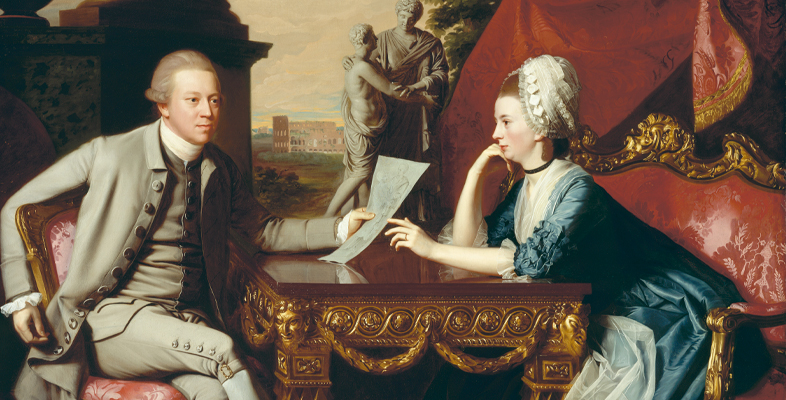
𝗠𝗿 & 𝗠𝗿𝘀 𝗥𝗮𝗹𝗽𝗵 𝗜𝘇𝗮𝗿𝗱 (𝗔𝗹𝗶𝗰𝗲 𝗗𝗲𝗹𝗮𝗻𝗰𝗲𝘆)
Regarding the benefit of incorporating further historical information, the MFABoston, produced a commentary. It was self-evident that the Izards were slave owners, the likely link to Michelle Obama's forefathers is surely a fascinating one, even if only included as a reference?
https://www.mfa.org/entry/2016/mr-and-mrs-ralph-izard-alice-delancey
Three interesting quotations from an authoritative portfolio may be of interest:
𝗖𝘂𝗹𝘁𝘂𝗿𝗮𝗹 𝗣𝗼𝗹𝗶𝘁𝗶𝗰𝘀, 𝗖𝗼𝗹𝗼𝗻𝗶𝗮𝗹 𝗖𝗿𝗶𝘀𝗶𝘀, 𝗮𝗻𝗱 𝗔𝗻𝗰𝗶𝗲𝗻𝘁 𝗠𝗲𝘁𝗮𝗽𝗵𝗼𝗿 𝗶𝗻 𝗝𝗼𝗵𝗻 𝗦𝗶𝗻𝗴𝗹𝗲𝘁𝗼𝗻 𝗖𝗼𝗽𝗹𝗲𝘆'𝘀 "𝗠𝗿. 𝗮𝗻𝗱 𝗠𝗿𝘀. 𝗥𝗮𝗹𝗽𝗵 𝗜𝘇𝗮𝗿𝗱", Maurie D. McInnis https://www.jstor.org/stable/1215344
1) "Even at the time when the Izards and Copley encountered the sculptural group, its identification was disputed. 𝗧𝗵𝗲 𝗰𝗼𝗻𝘁𝗿𝗼𝘃𝗲𝗿𝘀𝘆 𝗼𝘃𝗲𝗿 𝗶𝘁𝘀 𝗽𝗿𝗼𝗽𝗲𝗿 𝗶𝗱𝗲𝗻𝘁𝗶𝗳𝗶𝗰𝗮𝘁𝗶𝗼𝗻 𝘄𝗮𝘀 𝗼𝗻𝗲 𝗼𝗳 𝘁𝗵𝗲 𝗽𝗿𝗶𝗺𝗮𝗿𝘆 𝗿𝗲𝗮𝘀𝗼𝗻𝘀 𝗳𝗼𝗿 𝗶𝘁𝘀 𝗮𝗽𝗽𝗲𝗮𝗹 𝘁𝗼 𝗰𝗼𝗻𝗻𝗼𝗶𝘀𝘀𝗲𝘂𝗿𝘀 and is 𝗹𝗶𝗸𝗲𝗹𝘆 𝘄𝗵𝗮𝘁 𝗱𝗿𝗲𝘄 𝗜𝘇𝗮𝗿𝗱 𝗮𝗻𝗱 𝗖𝗼𝗽𝗹𝗲𝘆 𝘁𝗼 𝗶𝘁."
2) '"...sitting at a table, she having just copyed on paper these statues, & is shewing it to her husband, who (judging from his countinance) is evidently going to give her his candid opinion of her sketch." If the sketch is by Alice Izard, then the painting might illustrate the gender differences in eighteenth-century education, whereby women were more often taught only to draw and paint as necessary accomplishments, while 𝗺𝗲𝗻 𝘄𝗲𝗿𝗲 𝗮𝗹𝘀𝗼 𝘀𝗰𝗵𝗼𝗼𝗹𝗲𝗱 𝗶𝗻 𝗰𝗼𝗻𝗻𝗼𝗶𝘀𝘀𝗲𝘂𝗿𝘀𝗵𝗶𝗽, 𝘀𝗲𝘁𝘁𝗶𝗻𝗴 𝘂𝗽 𝗮 𝗱𝗶𝗳𝗳𝗲𝗿𝗲𝗻𝗰𝗲 𝗯𝗲𝘁𝘄𝗲𝗲𝗻 𝗱𝗼𝗶𝗻𝗴 𝗮𝗻𝗱 𝗷𝘂𝗱𝗴𝗶𝗻𝗴.'
3) "Another scholar has suggested that the drawing is not intended to be the work of Alice Izard but is, instead, another of the Izard's purchases and that it is in the manner of Batoni. Whether the sketch is by Alice Izard or a professional copyist, the central theme of the portrait remains Ralph Izard in the act of contemplation."