
Young people are growing up with a long list of worries: rivers that flood one year and run dry the next, species disappearing from familiar places, plastic in the sea, widening inequality, and technologies changing faster than anyone can explain. Young people become aware of these problems early in life, but awareness alone can lead to worry.
What turns worry into action is informed participation: understanding a problem well enough to form a judgement and having opportunities to make that judgement count. Education is where young people can practise this, because a classroom can hold a real question, the evidence that bears on it, and a group ready to decide together.
Making knowledge available was the great achievement of the past twenty-five years. MIT's OpenCourseWare, launched in 2001, showed that university teaching could be shared freely with the world. The Open University's OpenLearn widened that offer to anyone who wants to learn, and its partnership with the BBC on Blue Planet brought the ocean into millions of homes. In 2015 the United Nations adopted the Sustainable Development Goals, and in the same year CARE-KNOW-DO was launched at The Open University. The next step is participation: helping people use what they know, together.
This article explains how the CARE-KNOW-DO approach connects what young people care about with what they learn and what they can do with others, and how open schooling brings that work into communities. It also introduces the Blue Earth CARE-KNOW-DO calendar, in which each month poses a water question that students can investigate in science and multidisciplinary lessons. Its twelve themes, from Blue Energy and Clean Water to Microplastics and Sinking Islands, link water with energy, health, biodiversity and justice. Free teaching resources at the end of the article help teachers, families and communities turn these questions into investigations of their own.
Connecting care, knowledge and action
CARE-KNOW-DO brings together three things young people need to act on a complex problem: a reason to care about it, the knowledge to understand it, and the means to act on it with others. When all three are present, problems that once felt too vast or distant become questions learners can explore, helping them recognise their ability to make a difference.
Each dimension plays its own part. CARE starts with emotional and ethical engagement: issues that matter to learners personally, to their communities and to the world. KNOW brings curriculum knowledge, evidence and critical inquiry to questions that deserve careful thought. DO turns understanding into informed decisions, practical responses and action taken together. Each dimension feeds the next, so action often opens new questions to care about.
The 8Cs framework names eight capabilities that sit across these three dimensions, so that CARE-KNOW-DO can be taught, practised and developed:
- CARE is sustained by communicating, collaborating and cultivating relationships within teams and communities.
- KNOW depends on comprehending, constructing and creating, working actively with evidence.
- DO draws on coordinating and catalysing: organising an effort and inspiring others to join it.
For educators, this means starting with questions that matter to learners, then helping them move from first opinions towards evidence, critical thinking and informed participation.
Four research and education projects funded by the European Commission (weSPOT, ENGAGE, CONNECT and METEOR) have put this inquiry-based way of learning into practice. Young people in several countries, including Brazil, have investigated questions that matter to them alongside educators, researchers, families and communities. Over a decade, these projects have brought CARE-KNOW-DO to 55,000 students, 450 scientists and more than 700 schools and communities. The approach travels well, holding its shape across different curricula, languages and school systems. At its heart, it treats young people as investigators and active contributors to the decisions that affect their communities.
David Perkins calls this ‘lifeworthy learning’: learning rooted in issues that matter to people, which encourages them to look beyond immediate concerns and builds the confidence to contribute to change.
Open schooling: learning with the community
Open schooling brings schools, families, universities, scientists, local authorities, businesses and civil society together to work on real problems. A question about local water quality, for example, can combine scientific investigation, community experience and public decision-making. Real challenges cross subject boundaries and involve competing priorities, uncertainty and unequal influence. These qualities make them valuable for learning: students practise weighing evidence, listening to different perspectives and deciding together, and they discover where collective action is possible and how they can take part.
Open schooling also changes traditional roles and widens who takes part in learning. Teachers become co-designers of inquiry. Researchers become partners in public learning. Families contribute knowledge and experience, and community organisations connect questions with local realities. Young people, in turn, contribute ideas and evidence of their own.
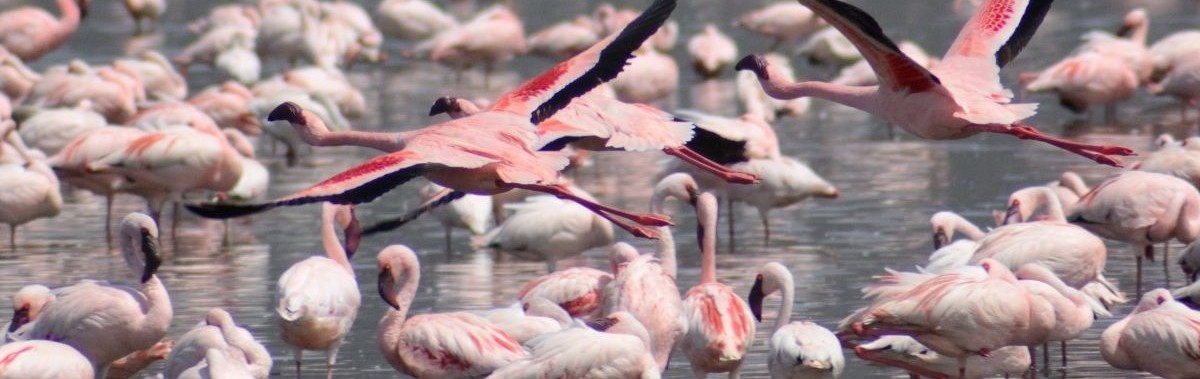
When communities share their investigations and data openly, open schooling becomes open science, and local learning gains a global dimension. A class in the UK can explore why flamingos left Lake Nakuru in Kenya, then compare it with a wetland or estuary near their school, where birds also depend on healthy water. Every local investigation becomes evidence that others can learn from, helping educators everywhere raise global learners ready to act for a sustainable Blue Earth.
The Blue Earth CARE-KNOW-DO calendar
The Blue Earth CARE-KNOW-DO calendar turns the approach into twelve classroom-ready questions, one for each month, each built around water. The year travels from rivers and wetlands to oceans and coasts. January asks how much water must stay in a river when a village needs power. March explores foam on a river and introduces the science of eutrophication. August follows microplastics from the beach into the bloodstream. December asks who decides, and who pays, when rising seas threaten island homes. Every month follows the same pattern: an issue to care about, the science needed to understand it, and an investigation that leads to a decision.
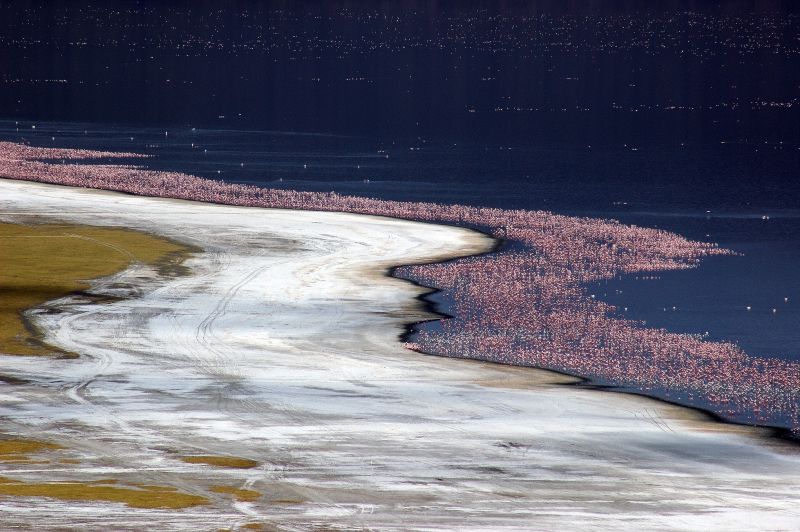
To see how a month unfolds as a single classroom investigation, take July. CARE begins with a million flamingos and a changing lake: at Lake Nakuru in Kenya, heavier rainfall has diluted the lake’s alkaline waters, affecting the cyanobacteria the flamingos feed on and contributing to their departure. KNOW explores salinity and pH in alkaline lakes, cyanobacteria and food chains. In DO, students track the lake’s area over time and use their data to predict how the flocks will respond.
The calendar is designed as a starting point for investigation in class, at home and in the community. A class can take up a month’s question with a scientist; a family can discuss the everyday choices it raises; a community can explore it through its own river or coastline. Questions lead to investigations, which encourage dialogue and help people take their first steps towards action. Teachers, families and communities can also create their own calendars from the places they know and the questions that matter to them. The method, more than any single product, is what is worth passing on.
Blue Earth: looking to the horizon
When my brothers faced a challenge, my father used to say: “Get up, stand up, look at the horizon.” Those words sit on the cover of the calendar, beside a flock of flamingos. For me, the horizon is a reminder to lift our eyes beyond immediate worries while seeing the choices available to us now: the same move from concern to agency that this article describes.
The Blue Earth approach offers an interconnected view of life on our planet. It embraces the whole water system, from oceans and rivers to ice and the water cycle, together with the living beings and habitats it sustains and the social, cultural, political and ethical dimensions of our lives. Human well-being is bound up with the health of the planet, and individual choices with the communities and systems that shape them.
Worry is where many young people begin. CARE-KNOW-DO offers a way forward: care that leads to questions, knowledge that supports informed choices, and action taken with others. Open schooling gives that action a place in the community, and the calendar offers a fresh question each month. Blue Earth is the horizon that gives the work its meaning. Together, they invite us to care enough to ask questions, to know enough to make informed choices, and to act with others towards a fairer, more inclusive and sustainable future for present and future generations of our Blue Earth.
Learning resources
Each resource below applies CARE-KNOW-DO to a water or climate question. All were co-created with teachers in projects funded by the European Commission with Mastery Science and are published free, ready to use in science lessons and easy to adapt for geography, citizenship and cross-curricular work.
| Resource | What it offers | Who it suits |
|---|---|---|
| ENGAGE (2015): Two degrees | Students weigh the evidence behind a global temperature target and argue for a position they can defend. | Secondary science and geography, ages 13 to 16 |
| ENGAGE (2015): Sinking Islands | A decision about who bears the cost of sea level rise, combining physical science with questions of justice. | Secondary science, citizenship or cross-curricular work |
| CONNECT (2023): Microplastic | A practical investigation students run themselves, from sampling to deciding what the result means. | Secondary science, and science clubs or family groups |
| CONNECT (2023): Beavers in London | A rewilding case where the benefits and the costs fall on different people. | Secondary biology and geography, and community discussion |
Free Downloads
- Okada, Alexandra (2026). Blue Earth CARE-KNOW-DO calendar. The Open University. DOI https://doi.org/10.21954/ou.ro.00112774
- Okada, A. (2025). Knowledge cartography for young thinkers: Sustainability issues, mapping techniques and AI tools (p. 172). Springer Nature. DOI: https://doi.org/10.1007/978-3-031-54677-8
Acknowledgements
My thanks to David Perkins for the concept of lifeworthy learning and to Sir David Attenborough for inspiring curiosity about our living world. I also thank Hannah Payne (Early School), Jennie Petrie (Primary and Secondary) and Tony Sherborne (Curriculum Design), together with the learners, colleagues, partners and teams across the four research projects, the Global Education and Digital Transformation Network and The Open University. Finally, thanks to my brother for preserving our father’s voice, and to my husband and our children for keeping learning connected to life.
Try a related free course
-
Supporting climate action through digital education
Learn more to access more details of Supporting climate action through digital educationEducation has a vital role in tackling the catastrophic impact of the climate emergency. However, there's abundant evidence that educators, worldwide, lack the knowledge and skills to effectively address the climate crisis in their teaching. This free course will equip you for designing and delivering online, blended and technology-enhanced ...

-
Climate change: transitions to sustainability
Learn more to access more details of Climate change: transitions to sustainabilityHuman societies have to take urgent action to end their dependences on fossil fuels. We have to alter the whole path of our development and decision making in order to make our societies both environmentally adaptable and sustainable. This free course, Climate change, takes on the task of trying to chart some of the ways in which it might be ...

-
Introducing the environment: Ecology and ecosystems
Learn more to access more details of Introducing the environment: Ecology and ecosystemsWhat is ecology and why is it important to our understanding of the world around us? This free course, Introducing the environment: Ecology and ecosystems, looks at how we can study ecosystems to explore the effect that humans are having on the environment.

Rate and Review
Rate this article
Review this article
Log into OpenLearn to leave reviews and join in the conversation.
Article reviews