
Conclusion
You have been provided with an insight to wellbeing and a variety of topics, resources and projects linked to creativity which can help promote it indifferent ways. Unlike completing a jigsaw, when often we look for the final piece to complete the picture, the hope is that you will continue piecing together your own understanding of wellbeing.
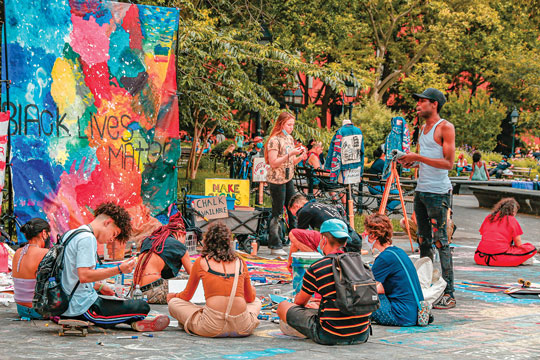
It is worth remembering that creative activities are a fundamental right as stated in Article 31 of the United Nations Convention on the Rights of the Child (UNCRC):
All children to have rest and leisure, to engage in play and recreational activities appropriate to their age and to participate freely in cultural life and the arts.
A key theme of this course is that as practitioners, we can make a difference to children and young people’s lives. It can be easy to lose sight of this when it is so clear that there are challenges, barriers and inequalities faced by many children and their families. To finish, it is helpful to remember this short story.
A child finds a beach covered in starfish that have washed up on the shoreline and begins to throw them back into the water. A man walking along the beach comments that it is a thankless task because there is no way all the starfish can be saved. The child picks up one starfish, throws it back into the water and notes, ‘Well, I saved that one’. This is a timely reminder that if each of us considers the small actions we can take, together we can make a difference to the experiences and wellbeing of children and young people.
To conclude, here are the key points to take away from this course.
- There is no one agreed-upon way of understanding wellbeing. There are many different models that can help you think about how to support children and young people’s wellbeing.
- Creative activities can be supportive for children and young people’s wellbeing, and can include crafting, visual arts, digital gaming and more.
- Wellbeing is an important consideration not just for children and young people themselves; it’s also a vital aspect of practice, professional standards for working with children and young people, and for us all.
This OpenLearn course is an adapted extract from the Open University course KE207 Supporting children and young people’s wellbeing [Tip: hold Ctrl and click a link to open it in a new tab. (Hide tip)] .