

1.1 Thinking about writing
As you progress through your career as a social worker you will have had to write different types of things. Lucy Rai developed a way to think about the purpose and focus of social work writing. The mnemonic CAPS, stands for Context, Audience, Purpose and Self (Rai, 2020). In summary, CAPS can help you focus on what you are writing, why you are writing and who the audience(s) are (Rai, 2020). You will develop your understanding and use of CAPS later in this course.
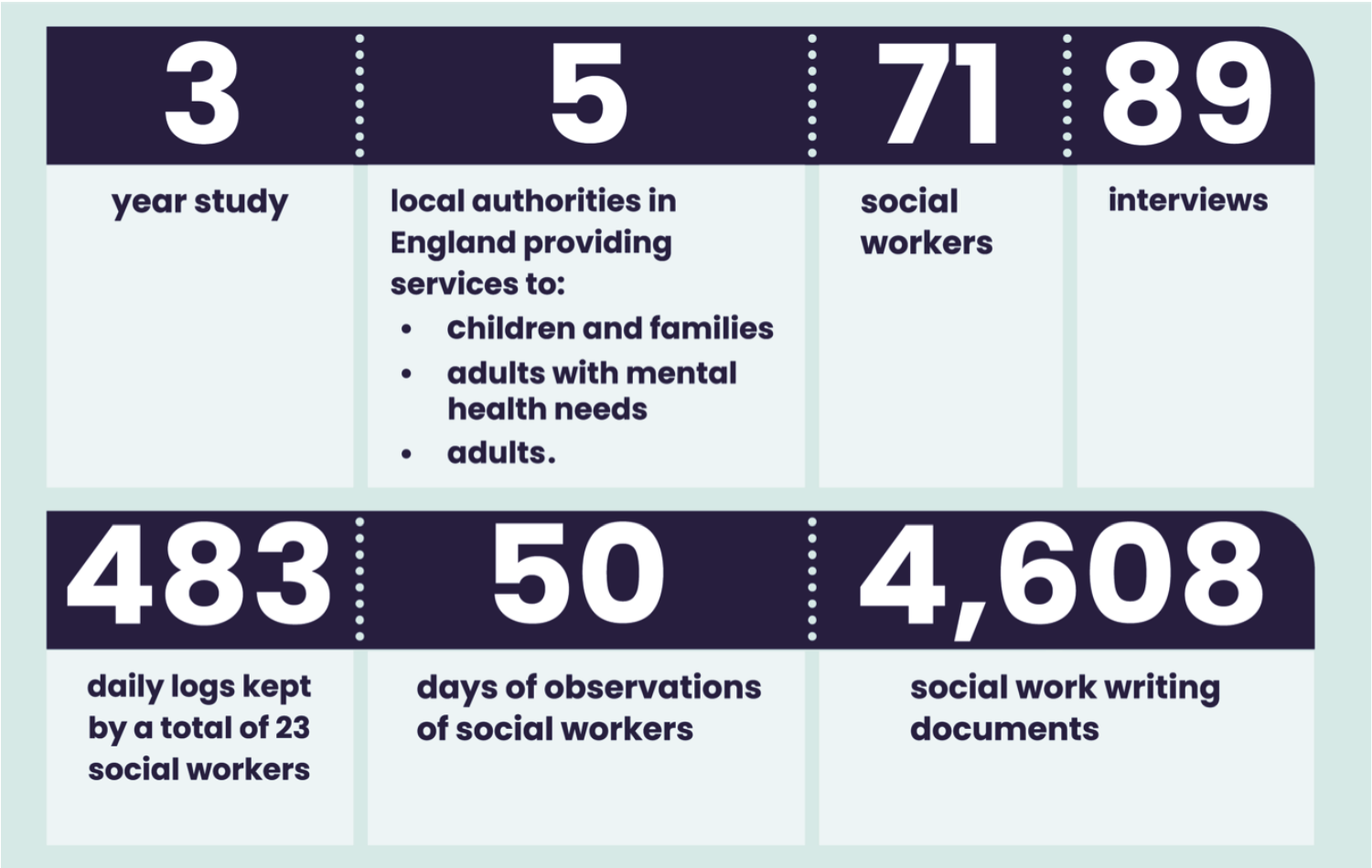
Professional writing, the writing undertaken in daily practice, is part of the core business of social work. Much of the content of this course is drawn from research undertaken at The Open University. The Writing in Social Work Practice (WiSP) project gathered and analysed examples of social work texts and documented the experiences of social workers’ writing in children’s services, mental health services and adult services teams. You can find more details about the research project using the links at the end of this course. The project also involved social work students, social work managers and service users. Figure 3 below details the data that was collected for this research study.
The Open University social work team worked with a group of people who have experience of using social work services to develop resources based on the research which would inform students, practitioners, managers and policy makers. The following statement sets out the mission for writing in social work:
Everything about social work writing should reflect the views, voices and experiences of the people who are being written about. Writing should be respectful, and respect peoples’ differences including any protected characteristics, preferences, interests and identities. Written products should be usable and understandable by all relevant stakeholders that need to access it. ‘Nothing about us without us’ is applicable to all aspects of social work writing.