

Introduction
Young adult carers are young people aged 16 to 25 who provide unpaid care to family members or friends who are ill, disabled, or have mental health needs (Carers Trust, 2025). In the UK, there are one million young carers aged 17 or under and 600,000 aged 18 to 25 (Carers Trust, 2025). This article is aimed at social workers and social work students to help them understand how they can support carers in transition, with a particular focus on South Asian young adult carers in England.
South Asian young people’s caring roles are often invisible to services and may be unsupported. The SATTA study at The Open University (South Asian Young Adult Carers’ Transitions to Adulthood), funded by the NIHR, has been exploring the lives of South Asian young adult carers living in England. The study reveals that these young people balance caring duties alongside studying, fulfilling their family expectations, and pursuing their own aspirations for the future. In this SATTA OpenLearn collection, you can find out about their experiences.
Who are South Asian young adult carers?
The words used to describe carers vary across South Asian communities - in Urdu, for instance, دیکھ بھال کرنے والے or نگہداشت کرنے والے. Whatever the language used, the reality of caring is similar: they perform a wide range of caring tasks, from housework and personal care to managing medications and acting as interpreters (Boyle and Sarwar, 2025). However, their caring roles are often not recognised by family members and professionals. Yet, many South Asian young adult carers are concurrently pursuing studies at college or university, while providing care to their family members and even engaging in paid employment. Although they miss classes or lectures, face difficulties with their assignments and exams, and experience a negative impact on their social lives, they persist in fulfilling their caring responsibilities (Boyle and Sarwar, 2025). Identifying that a young person is a carer makes a real difference to them, as they carry out emotionally and physically demanding work that is often overlooked and undervalued (Carers Trust, 2025). For social workers, the primary and most vital responsibility is recognition: identifying whether a young person is a carer. Proactive identification methods e.g. via outreach work with South Asian communities, collaborations with voluntary organisations and comprehensive and holistic family assessment strategies are all crucial to reaching South Asian young adult carers who do not self-refer for carers support.
The legal framework for social workers to intervene
The Children and Families Act 2014 gives young carers who are under 18 a right to an assessment of their own needs. Local authorities are required to offer a Young Carers Needs Assessment wherever it appears that a child is involved in providing care to a family member (Children's Society, 2024). A specific requirement is not necessary to assess young carers; the duty to assess arises from an 'appearance of need'. The assessment must consider whether it is appropriate for the young carer to provide, or continue to provide care, in light of their own needs, wishes and circumstances (Children and Families Act 2014, s.96).
The Care Act 2014 (S. 63-65) gives the right to a transition assessment to young carers, which considers how their needs and caring role might change as they move into adulthood. The purpose of this assessment is to plan ahead so that the right support plan can be put in place when the young person becomes 18. However, a transition assessment should be undertaken when it is most appropriate for the young person, which could be when they are 18 or older (Gov. UK, 2022). The timing of this assessment is therefore important to improve their wellbeing and other outcomes, such as education. Both the Care Act 2014 and the Children and Families Act 2014 are designed to work together to prevent or reduce excessive or inappropriate caring by young carers (Carers Trust, 2024). Where appropriate, social workers should explore whether better support for the adult receiving care can, in turn, reduce the young person’s caring commitment or even eliminate the need for their caring role. It is also important to be aware that the Care Act 2014 gives young adult carers a choice about continuing to care after 18 (Gov.UK, 2022).
What does transition assessment involve?
A transition assessment should not be perceived as a form-filling exercise. It is a planned, person-centred process that should actively and meaningfully engage the South Asian young adult carer, exploring their aspirations and considering their caring responsibilities. It should address the young person's current needs and the likely impact of their caring role as they move into adulthood. Their goals regarding education, employment, health, and their social life need to be included (Gov.UK, 2022). The process of exploration through transition assessment is important for South Asian young carers because it creates a space for them to articulate what they want for their futures and how they would manage their caring roles and family expectations alongside their own aspirations, should they choose to continue caring. The transition assessment can be considered an intervention since the overall aim is to improve their outcomes. It can also generate meaningful support, and social workers could identify informal support and inform planning, which helps to prevent, reduce and delay the development of future needs among young adult carers (Care Act Resource, 2024).
Safeguarding concerns
It is explicit in the guidance (Gov.UK, 2022) that children and young people should not undertake caring roles that are excessive and inappropriate, which may negatively impact their development and wellbeing. To support young people’s physical, emotional and spiritual wellbeing, it could be that better support for the adult being cared for may be required to reduce the commitment of young adult carers. Looking at their needs holistically and through a family-centred perspective could make the transition assessment more meaningful.
The SATTA study found that South Asian young adult carers experience anxiety, social isolation, physical exhaustion, burnout and disruption to their education (Boyle and Sarwar, 2025). That means active assessment and interventions are required where these impacts reach a threshold of significant harm. Furthermore, the impact of sustained caring on their mental health needs cannot be neglected. This is very important when their caring role is expected by family members and simply assumed by professionals.
The transition assessment is necessary to explore openly and honestly whether young adult carers wish to reduce or withdraw from their caring role, particularly when family expectations are that they continue caring for their adult family members. Such expectations could create coercive dynamics within a caring relationship, which could significantly harm the young adult carer's wellbeing. Social workers must navigate this with care and diplomacy. They need to explore young people’s wishes and feelings in a safe, private space while taking the family’s circumstances into account.
Cultural and religious sensitive practice
Cultural awareness and sensitivity must be integral to the anti-discriminatory framework of social work with South Asian young adult carers. Research evidence so far suggests that there is a need for social workers to provide culturally appropriate services (McMullen et al, 2025; Haider, 2025). In some South Asian families, caring is perceived as a collective moral, or in some instances a religious responsibility, rather than an individual commitment. Research by Heer et al. (2015) with British South Asian parental carers highlights the tensions that can arise in navigating both South Asian and Western cultural frameworks, particularly in relation to understanding disability, stigma, and help-seeking. Social workers need to engage with this perspective respectfully, diplomatically and without judgement.
Caring responsibilities in South Asian families generally fall disproportionately on daughters and sisters. Social workers should explore whether the caring load is distributed equitably across family members, male and female, and avoid assumptions that it is the natural role of any one family member to provide care. Social workers should be patient and persistent and should work where possible with community and faith leaders to build bridges to services.
Social workers must not rely on the young person as an interpreter during assessments for adults. This compromises confidentiality, creates role confusion, and can lead to inaccurate or incomplete information. Professional interpreting services should always be used.
In addition to culture, faith and religious practices play a meaningful role in how care and responsibility are viewed within South Asian communities that mostly follow Islam, Sikhism, or Hinduism. Social workers are encouraged to take the time to genuinely understand these religious expectations. Approaching this with curiosity and humility, rather than making broad assumptions about any specific community or religion, helps foster respectful and effective support.
Key takeaways for social workers
1. Proactively identify young adult carers, including those who are not engaged in education, employment, or training, with particular attention to females.
2. Apply the right legal framework. For those under 18, duties arise under the Children and Families Act 2014. For those aged 16-18, begin transition planning early under the Care Act 2014. For those 18 and over, the Care Act 2014 carer's assessment duties apply. It is important to acknowledge that young adult carers are individuals aged up to 25 years, and a transition assessment may be conducted at any given time. These assessments are intended to support the development and future planning of young adult carers.
3. Begin transition planning early - ideally well before a young person's 18th birthday and at a time that does not disrupt their education.
4. Utilise a strengths-based and person-centred approach to carry out the transition assessment. Use the assessment to explore aspirations, not just caring tasks. Include education, health, employment, housing, financial wellbeing, relationships, and what the young person wants for their own future.
5. Always use professional interpreters - never the young adult carers.
6. Practice cultural humility and maintain professional curiosity. Comprehend the significance of family duty, gender, faith, and language, ensuring that these factors are not used as a means to circumvent statutory responsibilities.
7. Young adult carers should be referred for replacement care as necessary, to reduce or relieve them of the caring role.
8. Signpost and connect young adult carers with specialist services such as specialist support for those who are not engaged in education, employment, or training.
9. Recognise safeguarding thresholds - including family pressure on young people over 18 who no longer wish to continue caring.
10. Involve South Asian young adult carers in the design of services.
11. Joint work between children’s and adults’ services and other agencies is required, including voluntary organisations providing young adult carers services.
Find out more
- To explore the experiences of South Asian young adult carers - including animations produced from the SATTA research - visit the SATTA OpenLearn collection below.
- The SATTA team is currently developing a bespoke model of good practice for undertaking transition assessment and providing support to South Asian young adult carers. You can follow the progress of the research via this link (click on the resources): the SATTA study website.
Funder
This project is funded by the National Institute for Health and Care Research (NIHR) under its Research for Social Care Programme (Grant Reference Number: NIHR 205625). The views expressed are those of the authors and not necessarily those of the NIHR or the Department of Health and Social Care.
More insights from the SATTA collection site
-
South Asian young adult carers: Balancing their caring roles and planning for the future
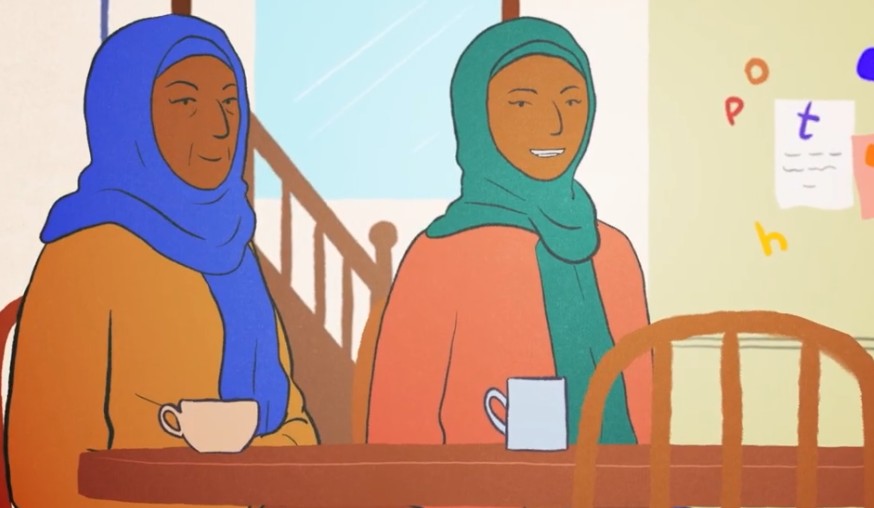
Read now to access more details of South Asian young adult carers: Balancing their caring roles and planning for the futureWhat does it mean to be a young adult when this involves caring for a parent or other family member? Via animations and short articles, South Asian young adult carers share their experiences of navigating education, culture and faith as they transition to adulthood, as part of the SATTA research at The Open University.
-
What does it mean to be a South Asian young adult carer?
Read now to access more details of What does it mean to be a South Asian young adult carer?What is life like for young adult carers in South Asian families? This article shares the experiences of 16–24 year olds in England who provide unpaid care to relatives, balancing cultural expectations, education and their own wellbeing.

-
What are South Asian young adult carers’ aspirations for the future?
Read now to access more details of What are South Asian young adult carers’ aspirations for the future?South Asian young adult carers balance study, work and family responsibilities while caring for loved ones – often with remarkable strength and determination. This article shares their dreams for the future, from higher education and careers to starting families and owning homes, and highlights the support that can help them achieve their goals.

Like this? Try a free course
-
Caring for adults
Learn more to access more details of Caring for adultsCaring for adults is an introductory course for anyone in a caring role, either paid or unpaid. It builds on what you already know to give you a better understanding of your role as a carer. It also supports your own well-being by giving you some ideas and information about looking after yourself and dealing with stress.

-
Mental health in society
Learn more to access more details of Mental health in societyIn this free course, Mental health in society, you will explore and critically reflect on mental health. You will explore the relationship between the lived experiences of individuals, and the society and environment in which they live. Different perspectives, approaches and models of understanding and critiquing mental health will be explored ...

-
Exploring learning disabilities: supporting belonging
Learn more to access more details of Exploring learning disabilities: supporting belongingThis course takes the real-life cases of a number of different people to explore what it is like to have the label ‘learning disability’. The course also considers how it feels to support someone with a learning disability, as a family member, a friend, an advocate or a paid worker. Through these human stories the course considers the ...

Rate and Review
Rate this article
Review this article
Log into OpenLearn to leave reviews and join in the conversation.
Article reviews