
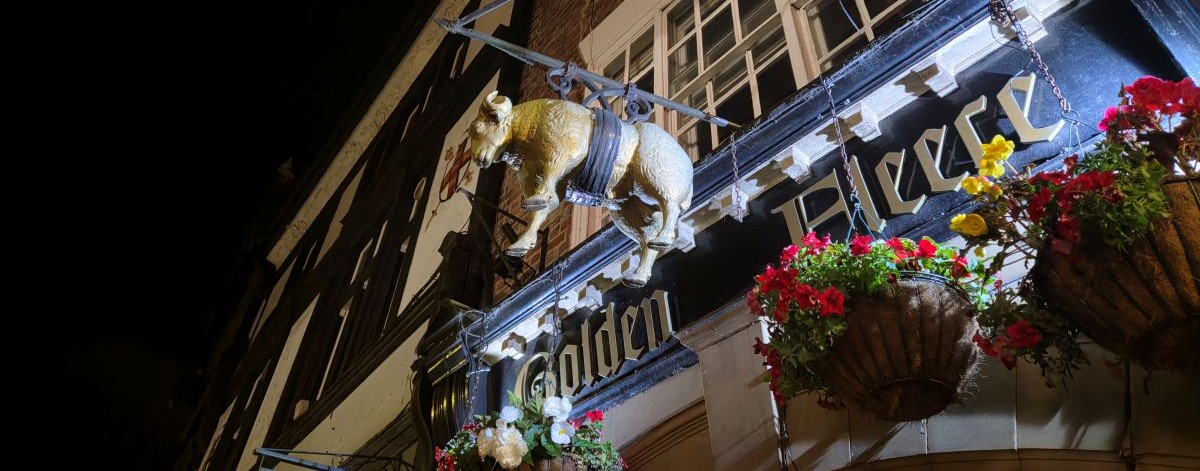
It’s late afternoon in Autumn when I arrive in York. The sky is blue and the air crisp as the first bite of an apple. This is not my first visit to the city and I find I am regularly drawn to locations with rich, bloody and tangible pasts. However, on this visit I have a very specific goal: I have booked a room at the infamous Golden Fleece, which is reputed to be the most haunted pub in the UK. Writing in a haunted inn in a haunted city, what’s the worst that could happen?
The Gothic and places of trauma are themes I am drawn to repeatedly in my poetry and short story writing. My recent poetry collection, Tips for Collectors of the Macabre (Yaffle Press 2026), focuses on the display of human remains. Another upcoming publication is inspired by the story of the Pendle witches. On this visit to York, I wanted to explore whether writing in a specific location would inspire or hinder my poetry process on the theme of hauntings.
Spoiler alert – I am a sceptic. It is not that I do not believe the accounts I am told, rather I tend to lean towards a logical explanation, but then again I may just suffer from a lack of any sensitivity! As Edith Wharton famously said, quoting Sartre, in the preface of her 1937 Ghosts, “I don’t believe in Ghosts, but I am afraid of them.” I was certainly still apprehensive about the challenge ahead.
A city steeped in ghost stories
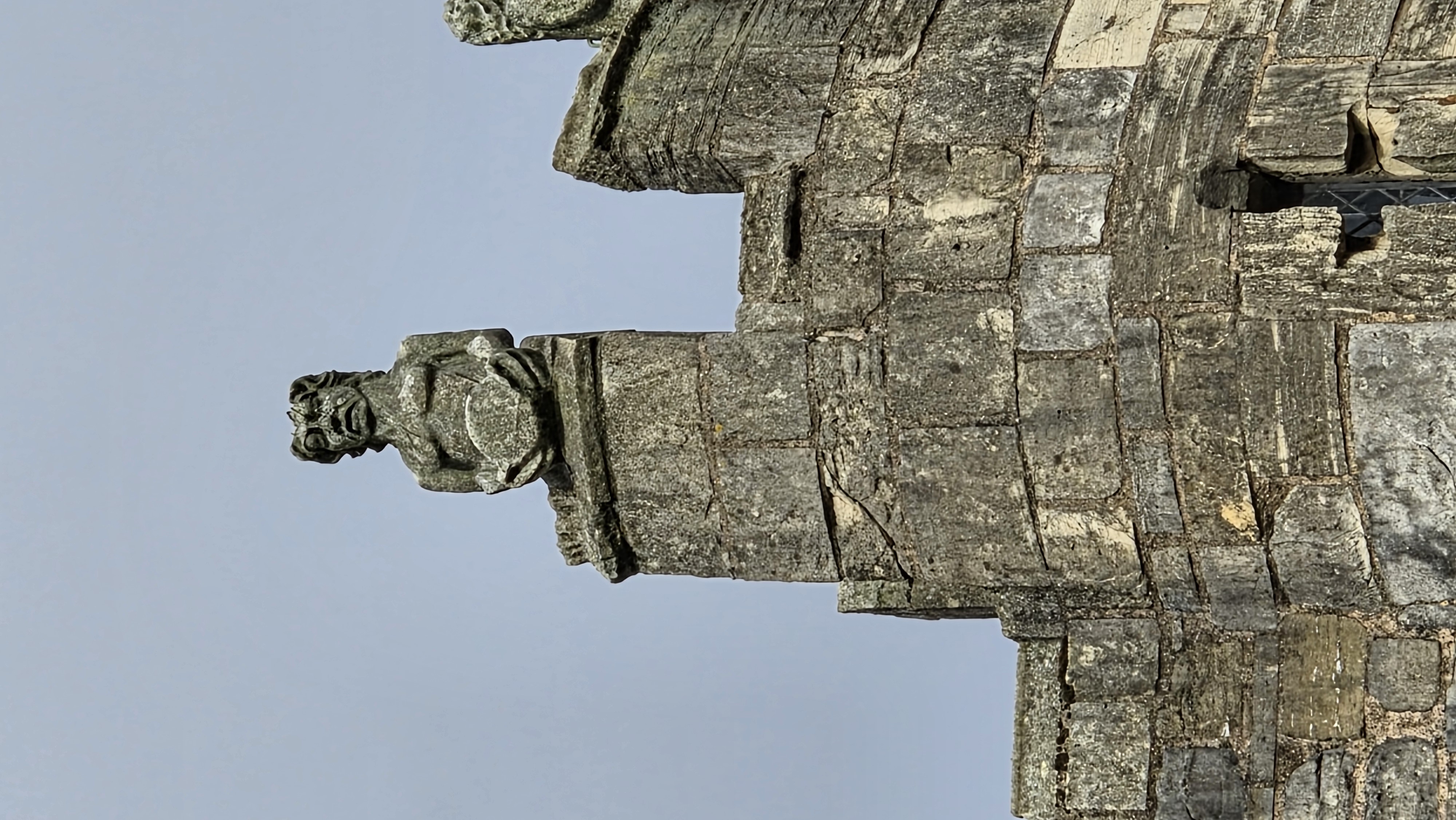 An eerie stone grotesque watches over the rooftops. York can feel like a two-thousand-year-old theme park. The Romans first put the settlement on the map, then the Vikings arrived, naming it Jorvik and making it their stronghold for a hundred years. Everywhere you look, from the Minster to The Shambles, there are artefacts strewn from across the centuries; and all sitting on ley lines just to boot (ley lines are believed by some to be invisible channels of energy that lie beneath the ground)
At any time of the evening, you will encounter guided ghost walks that dance and skirt around one another like murmuration through the gathering dusk. You can venture out with tour guides dressed as Georgian ladies, Victorian men in top hats; overblown caricatures hailing from all different eras.
A night at The Golden Fleece
The Golden Fleece is an early sixteenth-century Grade II-listed building that can be found - jostling for space on the crowded street known as The Pavement. Originally, the site had connections to the Merchant Guild, who used it as a location for trading wool. It was repurposed in 1656, and has since existed as a pub and inn. The bar is long and narrow, adorned with faux death masks of previous landlords, and a replica skull of Elizabeth Johnson, the last woman to be hanged at York’s Tyburn in 1800. In fact, The Golden Fleece is said to have been a favoured drinking spot of local hangmen on their way to the nearby gallows.
Plastic skeletons lean against the bar with their bony dogs, awaiting tourists to capture selfies. This area alone is said to be home to the ghost of a small Victorian boy run down by a carriage, a landlord who botched his own hanging, a grumbling old man sitting in an enclave, and One-Eyed Jack – a mysterious and malevolent highwayman. The room is a circus of dark and disorientating slanting floors and doorways, which create a sense of unease that would make Shirley Jackson jealous. It has that familiar smell of old bars: gravy, Brasso, spilled beer and the scent of cigarette smoke drifting through from the beer garden at the rear.
As I sit for a drink with friends, talking all things spooky, I suddenly look down to find my glass is no longer on the table and is now sitting on my lap (with nary a drop spilt). I ask if anyone saw me knock the glass, and we laugh it off as I push the drink further back. That is until about ten minutes later when during a pause in conversation, I lean far back from the table and we watch it again slide into my lap in leisurely slow motion.
Later that night, I check into St Catherine’s room alone, a space at the back of the first floor overlooking a walled courtyard. The rooms are roped off for privacy and accessed through steep staircases. The room is dark with pitched floors and walls, which I find make me vaguely nauseous whenever I go to the bathroom. Of course, the room has its own spook; an unknown lady in black who appears in the doorway and grabs at any limbs hanging out from under the bed clothes. I can hardly wait.
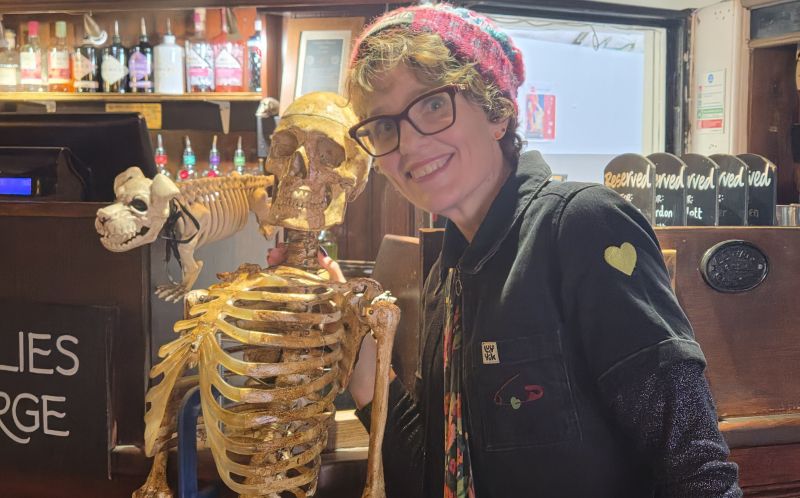 Poet Jennie E. Owen makes a few spooky acquaintances at The Golden Fleece in York.
The walls are festooned with paintings of Charles I (complete with head) and Charles II, both looking towards the bed accusingly. To the left is an antique wardrobe, which apparently is known to rattle of its own accord. The walls are painted in dark shades of green and red, even the front door has a drawing of an eye looking out at you. The overall feeling the art works give, is that of being observed.
Conjuring the Gothic through place
Historically, influential poets writing about hauntings might include the Romantic Samuel Taylor Coleridge, author of The Rime of the Ancient Mariner (1798) and the works of Edgar Allan Poe with his iconic poem The Raven (1845). Incidentally, I sit down on the large bed reading stories from a collection of ghost stories penned by M.R. James in the early twentieth century (a dare by my publisher to “get me in the mood”). All of these writers are iconic and fundamental in the Gothic sphere and well worth a visit by anyone new to the genre. We see images and ideas from their writing appearing again and again in the works of later authors.
One of the key benefits of place writing on location, is the opportunity to record details that you may otherwise overlook. Sensory observations and reflections on how a location makes you feel, mix seamlessly with historical facts and imagination to allow us to explore unusual connections. As a writer, I ask myself whether we can conjure the dead for the reader in this way?
I will admit that I slept with the lights on that night, having been woken suddenly by the disembodied (and sadly unintelligible) voice of a woman talking at about 3am. I managed to reason to myself and my poor racing heart, that the sounds must have been drifting in from the street or another room. Over breakfast in the bar, I shared my experiences with the family who had stayed in the rooms above mine. The daughter who had slept alone in The Shamble Suite, had woken to find the keys taken off the large wooden door fob and laid out neatly on the dresser. Compelling yes, spine-chilling in the way firsthand accounts often are. However, my scepticism remains (largely) unshaken. Ghosts make great stories and inspire writing, but I am happy to keep them locked away under “Fiction” for now at least. I may connect with the spirit of place through writing, but no actual ghosts were harmed in the writing of this article. I found York provided me with many tales and sensory experiences that would feed directly into my writing to provide authenticity and atmosphere, however what struck me most that Monday morning as I headed back to the station, was the sense of a town trying to right itself after the weekend tourists and their ghostly chaos have departed.
Optional writing exercise: Conjuring place
Creating a vivid and uncanny sense of place is important to any Gothic writer. Whether your poem or story takes place in a haunted castle, or the freezer aisle of a supermarket, one tip is to make use of all of the senses (sight, sound, touch, taste, and smell) to bring a setting to vivid and bloodcurdling life. How can you make a reader see a location in a new way? Inject the weird into the everyday? Spend ten minutes jotting down a description of one of the following settings:
- A cottage overlooking the sea
- A quiet bar in a haunted inn
- An urban street at dusk decorated for Halloween
Explore more about writing fiction
-
The Irish Gothic collection on OpenLearn
Read now to access more details of The Irish Gothic collection on OpenLearnWhat is it about Gothic stories that captures our imagination? And why do so many of its tropes and motifs lead to Ireland?

-
Start writing fiction: characters and stories
Learn more to access more details of Start writing fiction: characters and storiesStart writing fiction is a free course that helps you to get started with your own fiction writing, focusing on the central skill of creating characters.

-
What is poetry?
Learn more to access more details of What is poetry?Have you always wanted to try to write poetry but never quite managed to start? This free course, What is poetry?, is designed to illustrate the techniques behind both the traditional forms of poetry and free verse. You will learn how you can use your own experiences to develop ideas and how to harness your imagination.

Rate and Review
Rate this article
Review this article
Log into OpenLearn to leave reviews and join in the conversation.
Article reviews