
OpenLearn is turning 20! Yes, really. Since 2006, millions of learners from around the world have used The Open University’s home of free learning to discover something new.
To celebrate two decades of learning, we’ve delved into the archives, crunched some rather large numbers and uncovered 20 things you might not know about OpenLearn.
1. We arrived in 2006 – it was quite a year
OpenLearn was born in 2006, the same year Pluto was rather unceremoniously demoted from planet status and Turkey Twizzlers disappeared from school dinners.
Twenty years later, OpenLearn is still going strong. No comment from Pluto.
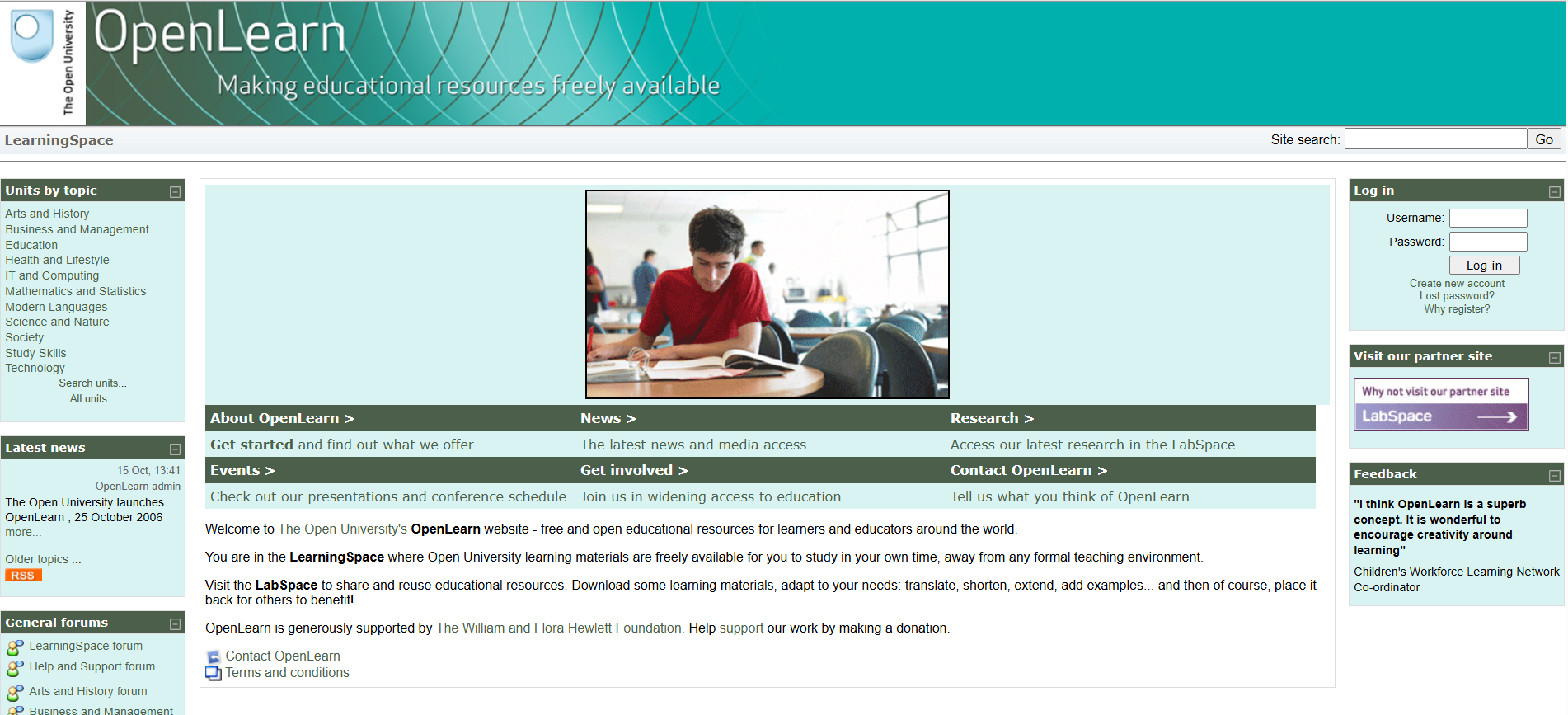 OpenLearn in 2006. Web design has also learned a few things since then.
2. We've passed 10 MILLION enrolments
In June 2026, OpenLearn officially passed a rather enormous milestone: 10 million enrolments on our free courses.
That's a lot of learning and not a single tuition fee.
3. 6.8 million people visited us in just one year
During the 2025–26 financial year, 6.8 million people used OpenLearn.
We'd invite you all round to celebrate our birthday but we're going to need a bigger cake.
4. We've grown. A lot.
When OpenLearn launched in 2006, we offered around 900 hours of learning.
Today, there are more than 10,000 hours across over 900 free courses.
Not bad for 20 years' work.
5. There are more than 900 free courses to choose from
There are currently over 900 free courses on OpenLearn, covering everything from health and psychology to languages, science, history, money and the arts.
So if you've ever said, “There's nothing to learn”… we're afraid we're going to have to disagree.
6. Completing every OpenLearn course would take you more than a year
Fancy completing the lot?
You'd need to study for more than 10,000 hours straight – the equivalent to around 428 days, or just over 14 months.
We strongly recommend taking breaks for sleeping, eating, drinking and occasionally seeing another human being.
7. We've reached more than 200 countries
People from more than 200 countries visited OpenLearn in the last year alone.
Free learning really does travel.
OpenLearn welcomed learners from more than 200 countries and territories in 2025–26. Darker shading indicates higher visitor numbers.
Note:
Some countries and territories in OpenLearn’s visitor data are not represented on this map due to mapping limitations.
8. In fact, most of our audience isn't in the UK
The Open University may be based in the UK but OpenLearn certainly isn't limited by borders.
Only 44% of our visits last year came from the UK, meaning the majority came from elsewhere around the world.
Turns out free learning has a pretty good passport.
9. Bookkeeping is our most popular course of all time
You might expect psychology, history or even creative writing to take the crown, but our most popular course by enrolments is Introduction to Bookkeeping and Accounting, with more than 157,000 enrolments.
Who knew bookkeeping had such a fan club?
10. But child psychology takes the completion crown
Our three most-enrolled courses are Introduction to Bookkeeping and Accounting, Understanding autism and Introduction to Child Psychology.
And of those three, Introduction to Child Psychology has clocked up an impressive 69,000 completions.
Apparently once you start learning about child psychology, you really do want to know how it ends.
11. 103,000 people have tested their photographic memory
Our most popular interactive is Do you have a Photographic Memory?
We've only got comparable data for the past two years, but in that time alone more than 103,000 users have put their memories to the test.
Can they all remember doing it? We'll have to ask.
 Got a photographic memory? Over 103,000 learners have tested theirs in the last two years.
12. We've awarded 446,177 digital badges
Since digital badges arrived on OpenLearn, we've awarded 446,177 of them to learners.
That's an awful lot of virtual pinning.
And yes, we're keeping a very close eye on that half-million mark…
13. One of our films has been watched 10.8 million times
Our film about the Silver Bridge disaster has racked up an extraordinary 10.8 million views on YouTube.
Not quite cat-video territory, perhaps, but we'll take it.
14. And OpenLearn videos have been viewed 77 million times
Altogether, OpenLearn content has amassed around 77 million views on YouTube.
Which means an awful lot of learning has happened without anyone having to leave the sofa. We approve.
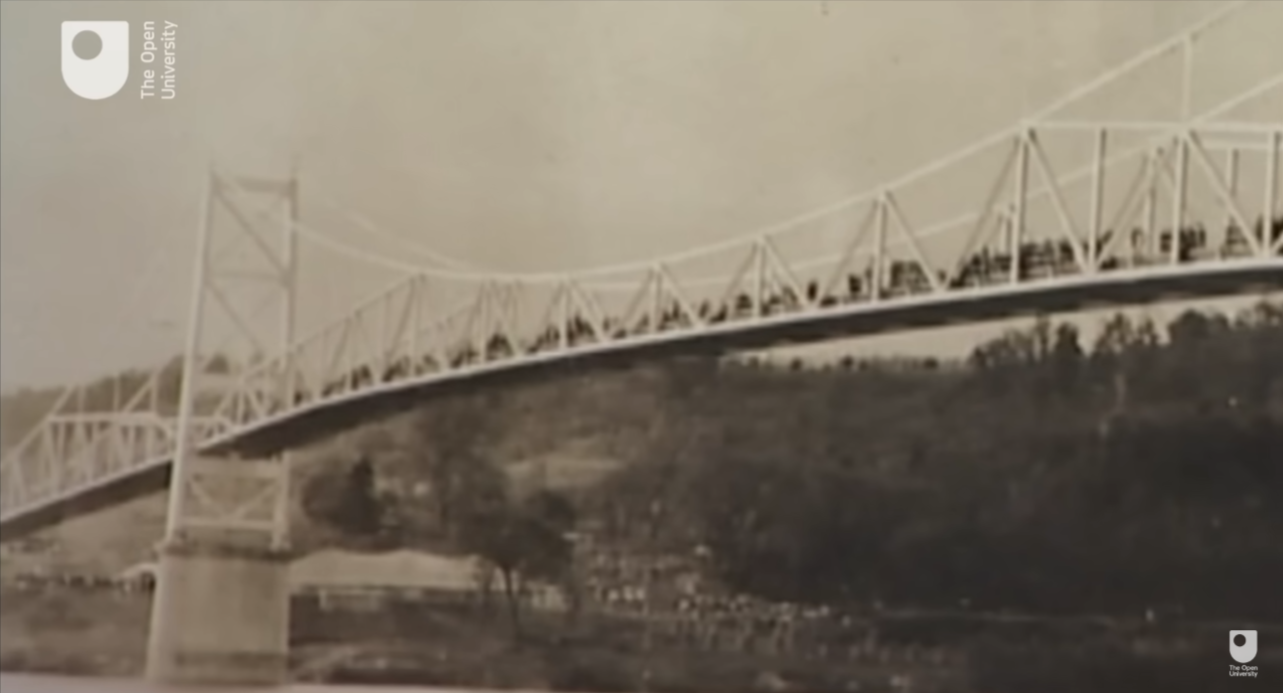 10.8 million views and counting – our film about the Silver Bridge disaster has reached quite the audience.
15. Why do we give all this learning away for free? Well…
You could say the late Queen told us to.
The Open University's Royal Charter sets out its mission to advance and disseminate learning and knowledge to promote the wellbeing of the community.
So making knowledge accessible isn't a nice little extra. It's part of why we're here.
16. You may already have studied part of an OU module without realising it
Around 5% of every Open University module is made available for free through OpenLearn.
Think of it as a little window into OU study – without having to commit to the whole house.
17. Yes, we really did have a course called Analysing Skid Marks
We promise this was educational.
The course was eventually retired in 2019, but some of its content lived on in Dynamics.
Who says academics don't have a sense of humour?
18. Some very old stories keep finding new audiences
Over the years, we've turned Homer's enormous epics The Iliad and The Odyssey into award-winning animations – because sometimes several thousand lines of ancient Greek poetry need a little help fitting into your lunch break.
And decades-old stories have a habit of becoming topical all over again.
Turns out Homer has staying power.
19. We've had a few familiar faces along the way
What do Martin Lewis, David Mitchell, Lauren Laverne and Helen Skelton have in common? They've all lent their expertise – or their voices – to OpenLearn over the past 20 years.
Money-saving expert Martin Lewis helped us create MSE’s Academy of Money, while David Mitchell voiced our 60 Second Adventures animations. Lauren Laverne welcomed learners to OpenLearn in animation form, and Helen Skelton lent her voice to our take on Antigone.
And they're far from the only familiar faces to have popped up over the years. Mathematician Bobby Seagull has worked with us on Managing my Money for Young Adults, Clive Anderson narrated The History of English in Ten Minutes, and Don Warrington brought the Iliad and Odyssey to life.
Not bad company for a free learning website.
20. We've covered some… eclectic subjects
In 20 years of OpenLearn, we've explored sperm, Shakespeare, chocolate, death, Jediism, time travel and naked Roman emperors – and that's barely scratching the surface.
Because learning doesn't always have to be sensible.
Sometimes you just really need to know whether time travel is possible.
 Chocolate, sperm, Roman emperors, time travel and origami Jedi… just another 20 years at OpenLearn.
Rate and Review
Rate this article
Review this article
Log into OpenLearn to leave reviews and join in the conversation.
Article reviews