
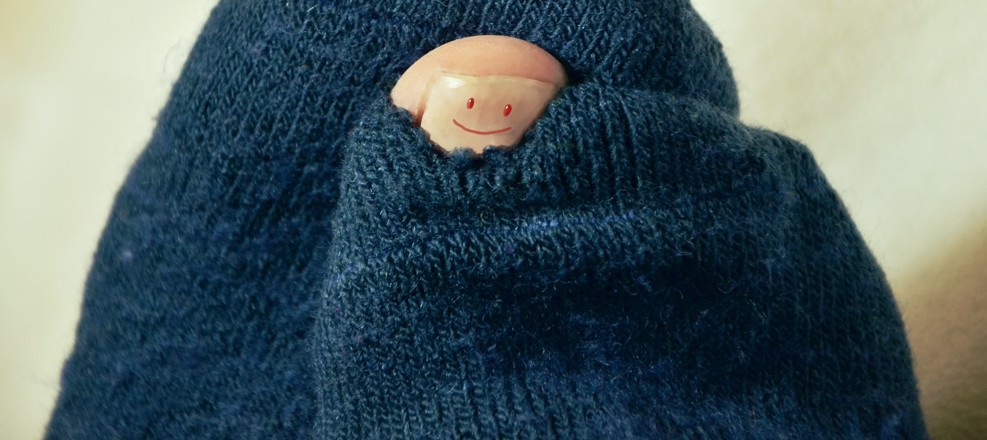
How many of your socks have holes in them?
Have you ever thrown away a t-shirt just because it had a tiny hole? Or maybe tossed out a pair of trousers because a button popped off? If you have – you're not alone. The truth is most of us were never taught how to fix our clothes. And even if we wanted to, we might not know where to go to get help.
On top of that, with ultra-fast fashion brands like Shein offering super cheap clothes delivered to your door the next day, it can feel easier to just buy something new. Who has the time, the tools, or the energy to sew anymore?
But, what if we did take the time?
What if we could keep wearing that cozy jumper our gran knitted for us? Or fix our favourite dress instead of watching it head off to landfill? What if that expensive winter coat just needed a patch or a new zip, and we gave it a second life?
Mending lets us keep the clothes that matter
Mending clothes lets us keep the stories and memories they carry. And it’s not just good for us – it’s good for the planet too. Fixing our clothes reduces waste, saves money, and helps cut down the fashion industry’s massive carbon footprint.
Did you know:
- a truckload of textile waste is sent to landfill or incinerated every second?
That’s the scale of the problem. But here’s the exciting part – you can do something about it.
Rethinking repair: what the research tells us
Here’s what was found:
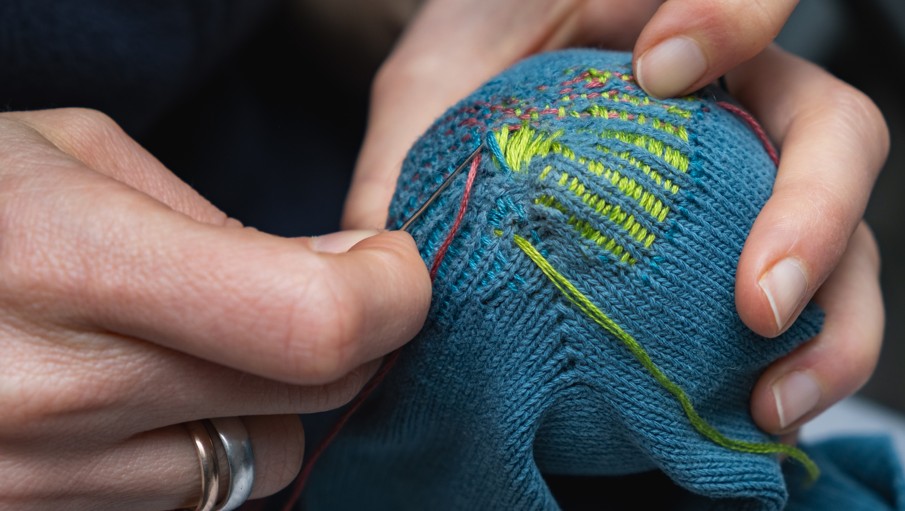
Meet the menders
Not everyone mends for the same reasons. To make sense of the data, a set of personas was created – imaginary but realistic characters that represent real patterns of behaviour. Let’s introduce them:
- The occasional mender: just fixes what they need, when they need it
These personas show us that a one-size-fits-all solution won’t work. A repair café might be perfect for the craft mender, but not very appealing to the delegating mender or someone who’s never picked up a needle.
So what do we do?
Stitching together a solution
To build a mending mindset across society, we need to bring together lots of threads. Here are just a few ideas:
So what will you do?
Next time you get a hole in your jeans or a rip in your sleeve – pause. Could you fix it? Could someone help you? Could this small act, this tiny stitch, be part of something much bigger?
Because in the end, mending isn’t just about clothes. It’s about caring for our belongings, for the planet, and for each other.
Don’t ditch it – stitch it!
Read more articles like this
-
STEM postgraduate research
Learn more to access more details of STEM postgraduate researchThis content hub highlights the diverse range of topics explored by postgraduate research students in STEM (Science, Technology, Engineering and Mathematics) at The Open University.
Try a FREE course on the environment
-
Environment: treading lightly on the Earth
Learn more to access more details of Environment: treading lightly on the EarthEnvironment: treading lightly on the Earth focuses on the problem of greenhouse gas emissions, especially carbon dioxide. This free course will give you an understanding of the nature and importance of carbon footprints of individuals and households. It will enable you to measure your own carbon footprint and explore what you could do to reduce ...

-
Eating for the environment
Learn more to access more details of Eating for the environmentThis free course explores the links between food, nutrition and environmental sustainability.

-
Could we control our climate?
Learn more to access more details of Could we control our climate?Climate crisis is one of the grand challenges we face as a society, but it can be hard to approach as a subject. Not only can the science at times seem dauntingly complex, but the solutions are also far from clear. This leaves many people feeling confused, guilty, anxious, angry, or else completely switched off from the subject. This course ...

-
Introducing environmental decision making
Learn more to access more details of Introducing environmental decision makingMany of the decisions we make have implications for our environment, particularly those concerning natural resources and waste. Taking account of environmental factors in decision making can be both complex and challenging. This free course, Introducing environmental decision making, considers decisions in their broader contexts and advocates a ...

-
Introducing the environment: Ecology and ecosystems
Learn more to access more details of Introducing the environment: Ecology and ecosystemsWhat is ecology and why is it important to our understanding of the world around us? This free course, Introducing the environment: Ecology and ecosystems, looks at how we can study ecosystems to explore the effect that humans are having on the environment.

-
Environmental management and organisations
Learn more to access more details of Environmental management and organisationsIt is believed that environmental management requires action at all levels and by organisations of all types and sizes. However it is not always clear what we mean by environmental management and the role that organisations do and could play. This free course, explores the different interpretations and viewpoints involved by using system ...

Rate and Review
Rate this article
Review this article
Log into OpenLearn to leave reviews and join in the conversation.
Article reviews