Understanding Mental Health (Part 2)
Key idea
Small, doable changes in any one dimension often ripple across the others. For example, better sleep, a values-guided action, or a supportive conversation can have wider benefits.
Mental health as a continuum and fluid system
Mental health is not an “on or off” state. It sits on a continuum that shifts over hours, days, and life stages. You may feel steady in some dimensions such as relationships while feeling strained in others such as sleep or workload, and that is normal.
A simple way to picture this is a slider that moves between Thriving, Coping, Struggling, and Crisis. People move in both directions over time.
Mental health also behaves like a fluid system. The dimensions interact in loops. Better sleep can lift mood and attention. Social connection can reduce stress. An unfair workload or stigma can push the whole system toward struggle. Small, values-guided actions can create positive ripple effects across the system.
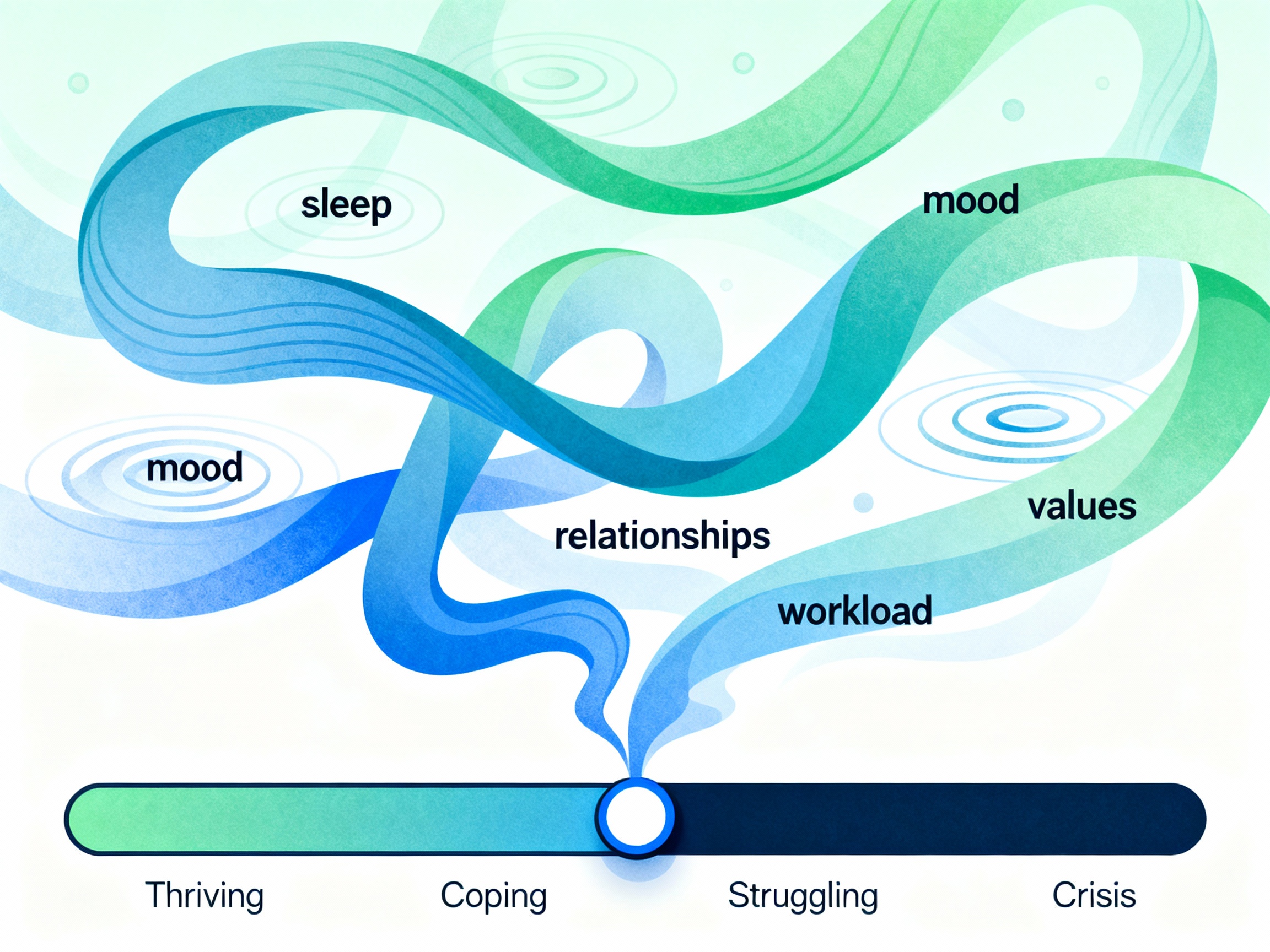
Image caption: Mental Health Continuum.
Final reflection
Understanding mental health as dynamic, interconnected, and fluid allows us to see both risks and opportunities. No single dimension tells the full story, and no state is fixed. By noticing shifts and making small changes, we can strengthen resilience and support ourselves and others in meaningful ways.