

2.1 Lifestyles in context
The Oxford English Dictionary defines obesity as:
The condition of being extremely fat or overweight; stoutness, corpulence.
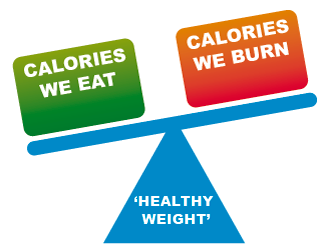
Obesity is frequently seen as a consequence of poor lifestyle choices – the underlying explanatory argument being that it is concerned with individual responsibility. But it is also about how our environment works, invisibly, to support obesity. There is more to obesity than an imbalance between the energy going into a person’s body compared to energy that it expends. Yet this was a view which informed government thinking over many years (Department of Health, 2011).
The Black Report on Inequalities in Health (Department of Health and Social Security, 1980) has been described as a seminal document in debates about health. This report judged material and structural factors (such as income, housing and employment) to be the main contributors to health inequalities. In her review of The Black Report, Professor Dame Margaret Whitehead (1987) concluded that material and structural factors severely limit a person’s choice of lifestyle. In other words, living and working conditions impose severe restrictions on an individual’s ability to choose a healthy lifestyle.
Subsequently published reports such as The Acheson Report (Acheson, 1998) and, more recently, The Marmot Review (Marmot et al., 2010) and Health Equity in England: The Marmot Review 10 years on (Marmot et al., 2020) support this perspective and highlight the importance of social, cultural, political and economic elements, which are at times labelled ‘structural’ factors. Based on this, it has been suggested that an individual’s efforts to change their lifestyle will frequently fail unless the foundations for such changes are established through economic and social supports.
In the next activity, you’ll read an article that challenges the use of individual lifestyle choices as a means to reduce obesity. Martin Cohen argues instead that obesity is an issue that should be tackled at a societal level.
Activity 3 Obesity as a societal issue
Read ‘It’s poverty, not individual choice, that is driving extraordinary obesity levels [Tip: hold Ctrl and click a link to open it in a new tab. (Hide tip)] ’ (Cohen, 2018), then answer the questions below.
1. According to the article, what is obesity a product of?
Discussion
Cohen argues that despite a medicalisation of the issue, obesity is ultimately a product of social inequality, and it requires a collective response.
2. According to the article, who is usually treated as being responsible for obesity?
Discussion
The author writes that obesity is usually cast as the responsibility of individuals or families, and not as a social problem like low educational achievement.
3. According to the article, how supportive is the food industry of public health initiatives?
Discussion
At the end of the article, the author suggests that the food industry has resisted public health initiatives. This is presumably because of the impact on profits.
The social determinants of health
Social problems such as insecure and erratic employment, inadequate education, stress, depression and a lack of social cohesion all contribute to obesity. According to Cohen, the answer is collective action and tackling the issues which allow ‘obesity germs’ to ‘breed’.
Research evidence suggests that people’s ability to change or choose a lifestyle depends upon a range of social and environmental factors. This evidence takes the form of both quantitative and qualitative research. You have already seen how quantitative research is key in terms of exploring aspects of a health issue such as obesity, whereby obesity can be determined using a statistical measure like BMI. In the next section, you will explore the role of qualitative evidence in furthering our understanding of health issues.