

6 Socio-cultural perspective on extreme endurance sports
Participation in extreme endurance sports has risen significantly in the 21st Century. In 2005 there were fewer than 1000 events worldwide with 89,597 finishers, while in 2019 these figures had risen to 7000 events and 682,156 finishers (Berger et al., 2024). However, these types of ultra-endurance events are not necessarily accessible to everyone as they demand significant amounts of time and finance that may be beyond many people.
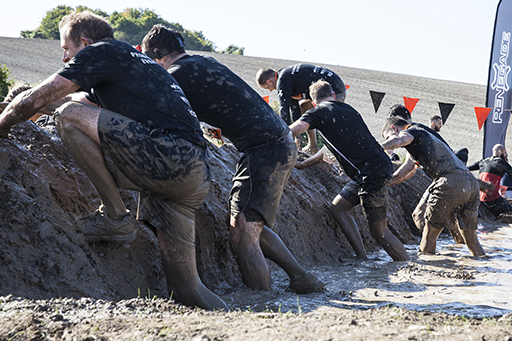
One type of extreme event that has gained popularity in the UK is the phenomenon that is the Tough Mudder. In Activity 5 you will look at the Tough Mudder website and assess why it may be popular.
Activity 5 Paying money for manufactured suffering
Go to Tough Mudder [Tip: hold Ctrl and click a link to open it in a new tab. (Hide tip)] . Explore the website and in particular read the stories of participants in the ‘Learn more’ section. Then answer the following questions:
- What does Tough Mudder involve?
- What do participants say they gain from completing the event?
Comment
You will have found out that Tough Mudder courses involve tackling obstacles, including one where you have to avoid electric shocks, whilst running 5k or 15k. The aim is not to beat anyone but to challenge your strength, stamina and ‘mental grit’ and also working as a team to clear the obstacles. They are sold as being more interesting than running a marathon where the only challenge is running for a long time.
There are many different reasons for competing in the Tough Mudder and stories mention sense of achievement, doing something other people don’t, and raising money for charity. One of the founders of Tough Mudder, Will Dean, believes that its success is partly a reaction to our risk-adverse society where people who work at desks seek out these raw experiences. Then they share their achievements on social media (Bailey, 2017).
As well as being a way for people to experience danger in a safe society the success of Tough Mudder can be assessed in other ways and one way is to see it as a means to monetise extreme events. The Tough Mudder brand was valued at over £100m in 2017 and has events across 11 countries. Entry fees are expensive and there is merchandise and clothing available. This shows that people are willing to experience hardship and pain in a commercialised setting.