
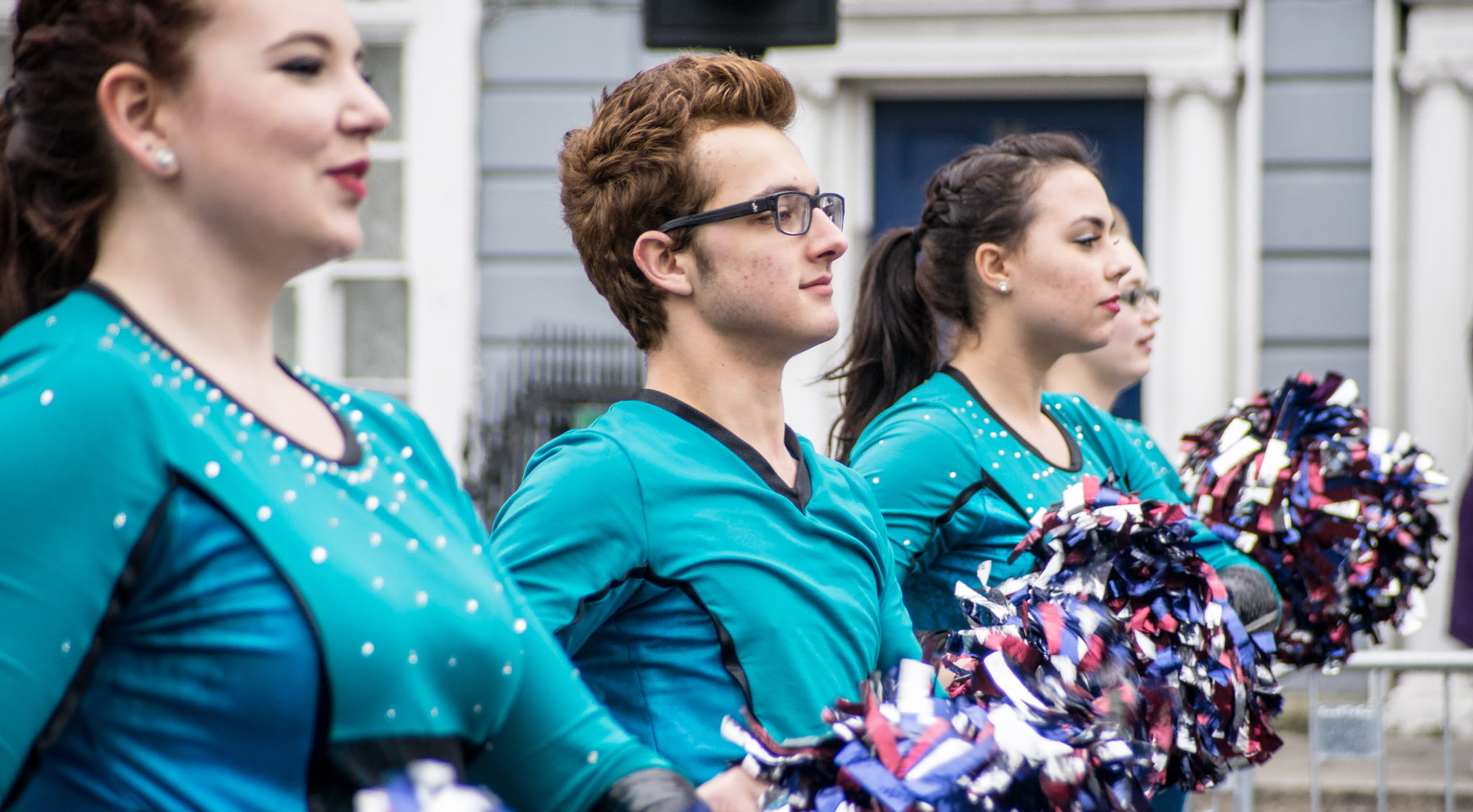
Saint Patrick was not Irish, despite being a symbol of the nation globally and especially at this time of year. Research has shown that he was either Welsh or from the north of England with others claiming he may have come from Bath in Somerset.
Irish identity and stories of migration
Just like Saint Patrick’s identity, Irish identity itself is not wholly green and crystal clear, with rising tensions regarding immigration, emigration and what constitutes Irishness post pandemic.
In recent years, Ireland has seen significant shifts in migration from other parts of the world, including regions beyond our European neighbours. The majority of these people are under 45 and constitute a new workforce and an emerging new Irish population with a focus on contributing and looking for a better life. A familiar story to generations of Irish who left economic strife to head to Australia, North America and the UK over the last 200 years.
However, there is a shift in social views regarding this new inward migration trend including a focus on refugees, asylum seekers and those from Ukraine. This period in time is not aligned with a wealthy prosperous Ireland like the Celtic Tiger years were, where there was plenty to go around for all, with deepening economic tensions, and many Irish living pay cheque to pay cheque and struggling to find homes to rent and live. We are now seeing a rise in anger and frustrations, as well as far right racial attacks and protest marches with more aggressive nationalism.
Irishness, community, identity: more academic resources
-
Change in the West of Ireland
Read now to access more details of Change in the West of IrelandIntroducing a collection of articles asking 'How can unique and distinctive regions, like the West of Ireland, retain the qualities that make them unique while continuing to modernise and interact with the wider world?'

-
Voluntary Gravedigging in the West of Ireland
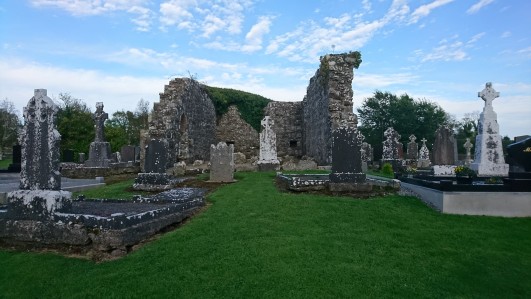
Read now to access more details of Voluntary Gravedigging in the West of IrelandDanny Conway describes the unexamined tradition of men voluntarily digging the grave when a neighbour dies, focusing on communities in the West of Ireland.
Level: 1 Introductory
-
Coming to America: The Making of the Irish-American Diaspora
Read now to access more details of Coming to America: The Making of the Irish-American DiasporaWhy did the Irish emigrate to America in such vast numbers for over three centuries? What was their experience in America? What impact did they make on American life?

Level: 1 Introductory
Consequences of Irish migration narratives
The land of a hundred thousand welcomes is becoming less welcoming as its own people struggle to make ends meet. This Saint Patrick’s Day will be celebrated in both Northern Ireland and the Republic of Ireland but with it is an undercurrent of an identity crisis, after half a decade of anti-immigrant protests across the island in almost a dozen towns and cities.
Saint Patrick, a migrant, a slave, stricken by poverty and led by his faith came to Ireland penniless. In the centuries since, Irish people have left facing the same misfortune at home. As we move into the next decade, the tensions between those at home and those who come to Ireland to call home are rising and rising.
As a journalist, media educator and Irish citizen, I see that the role of media and social media in stoking these flames of discontent is ever more clear and echoes research from established academics including Dikwal-Bot and McIntyre. Their studies show how whiteness has come through as a message from established far right leaders to disconnected and disconcerted young Irish men regarding what it means to be Irish in this decade. Tommy Robinson, an Irish passport holder, has tapped into this as a far-right leader with his own populism and micro fascism agendas. Fellow voices in this sphere with connections to Ireland include Andrew Tate with Cork lineage and Conor McGregor who unsuccessfully attempted to run for president just a few months ago, pushing an Irish first nationalistic agenda.
Possible futures for Irish identities
"Down south was charting its own course in the shadows of turmoil across the border. Dublin was alive back then, Ireland was full of being a “new country”, we had a female president who talked funny but was mega smart, stand up and bow Mrs. Robinson. And, no, I know what you are thinking but here’s to you Mrs. Robinson, our first female president. U2 were conquering the airwaves and our tiny nation of just 4.5ish million people was smashing it in soccer. When a country does well in sports, birth rates often reflect it. In 1990, Italia 90 for you soccer/football folks the BEBO (a pre-Facebook social media site)Generation emerged. There are lots of us. We knew jobs were important because there weren’t a lot when we were small. We gathered education was vital and we understood that we were proud to be part of this “New Ireland”. Little did we know it would all come crashing down."
J. Mahon, Through Irish Eyes - p.5
With unemployment rates holding steady at just under 5% and waves of young educated and dynamic Irish people leaving in 2026 we could be facing a vacuum where Saint Patrick’s day becomes more than just national pride and collective spirit and instead runs the risk of being a parade that is focused on one type of Irish and not new and emerging types and communities within a nation that needs a diverse and skilled workforce to move forward at a time of great change and even greater instability.
References
Population and migration estimates, April 2024 (2024) Key Findings Population and Migration Estimates, April 2024 - Central Statistics Office. Available at: https://www.cso.ie/en/releasesandpublications/ep/p-pme/populationandmigrationestimatesapril2024/keyfindings/ (Accessed: 27 April 2026).
Reimagining identity and belonging in Ireland. (n.d.). Identities Journal Blog. https://www.identitiesjournal.com/blog-collection/reimagining-identity-and-belonging-in-ireland
Rogers, A. (2025, October 21). Hundreds of anti-immigrant protesters burn vehicle, attack police in Dublin. Al Jazeera. https://www.aljazeera.com/news/2025/10/21/hundreds-of-anti-immigrant-protesters-burn-vehicle-attack-police-in-dublin
Dikwal-Bot, D., & McIntyre, A. P. (2025). ‘Ireland is full’: Populist grievance, microfascist desire and transnational whiteness in Irish anti-immigration discourse online. European Journal of Cultural Studies. https://doi.org/10.1177/13675494251396218
Andrew Tate’s influence on young Irish boys. (n.d.). RTE Radio. https://www.rte.ie/radio/podcasts/22193537-andrew-tates-influence-on-young-irish-boys/
McGinn, R. (2026, March 5). Numbers out of work in Ireland steady at 4.6pc. Irish Independent. https://www.independent.ie/irish-news/numbers-out-of-work-in-ireland-steady-at-46pc/a1041009132.html
Moloney, A. (2026, February 8). Health service ‘bleeding expertise’ as nearly 7,000 Irish medics register in Australia. Irish Independent. https://www.independent.ie/irish-news/health-service-bleeding-expertise-as-nearly-7000-irish-medics-register-in-australia/a1419272593.html
Mahon, James Patrick (2016). Through Irish Eyes. Galway, RoI: Book Hub Publishing.
More FREE resources on Saint Patrick and Irish history
-
Happy Saint Patrick's Day
Read now to access more details of Happy Saint Patrick's DayMarch 17th is St. Patrick's Day. Find out more about the patron saint of Ireland and discover Ireland's culture and heritage.

-
The Life of Saint Patrick
Read now to access more details of The Life of Saint PatrickWho was Saint Patrick? This extract from Alban Butler's 18th Century work on the lives of the saints tells the story of Ireland's patron saint.

-
Happy Saint Brigid's Day
Read now to access more details of Happy Saint Brigid's DayWhen is Saint Brigid's day? Who was Saint Brigid? And how big is this day's significance? Find out more from our related resources.

-
Coming to America: The Making of the Irish-American Diaspora
Read now to access more details of Coming to America: The Making of the Irish-American DiasporaWhy did the Irish emigrate to America in such vast numbers for over three centuries? What was their experience in America? What impact did they make on American life?
-
Wholly Trinity: Abortion, Art and Activism in Ireland
Watch now to access more details of Wholly Trinity: Abortion, Art and Activism in Ireland"…art can assist people to learn not only about the objective forces at work in the society in which they live, but also about the intensely social character of their interior lives. Ultimately, it can propel people toward social emancipation." (Angela Davis).This short film, produced collaboratively by The Open University, Alliance for Choice ...


Rate and Review
Rate this article
Review this article
Log into OpenLearn to leave reviews and join in the conversation.
Article reviews