
The growth of many sport mega-events seems unstoppable. Take, for example, the FIFA men’s football World Cup which for the 2026 tournament has expanded to 48 teams from 32, with 104 games being played across the USA, Canada and Mexico in just six weeks. This tournament attracts a global audience and is projected to generate approximately £10bn in revenue for FIFA (Hughes, 2026).
Are the Games still popular?
Unlike the men’s World Cup, the Commonwealth Games (CWG) are increasingly plagued by a lack of popular interest and rising costs making it a financial liability for many cities to host. In fact, the last two CWGs have seen late changes to the host city – first Birmingham in 2022, when original hosts Durban (South Africa) were replaced due to financial concerns and then Victoria (Australia) pulled out from the 2026 Games for similar reasons, with Glasgow stepping in this time. For the first time in 72 years the BBC will not be showing any live coverage of the 2026 games, while not all tickets were sold for the events. The future for the CWG doesn’t seem encouraging. 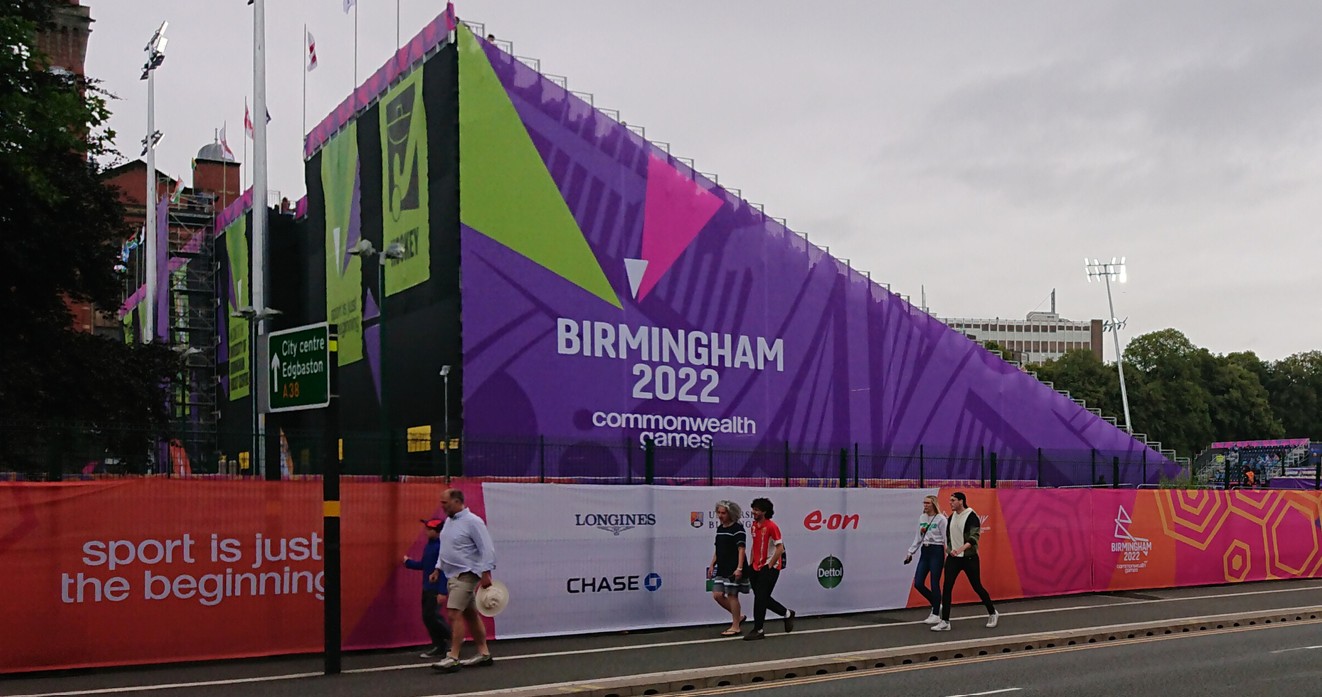
Will there be enough public interest in future Commonwealth Games to make it a viable event?
What then can the CWG do to adapt the way they are organised to ensure its future viability? This is a question that is being addressed by Commonwealth Sport (the governing body for the games) and the Glasgow 2026 organisers who are attempting to re-position the games for a new ‘era’. The ‘Story of Change’ document, published by the Glasgow Organising Committee, outlines four key components to this re-positioning:
- The ‘Green’ Games – embedding sustainable practices and contributing to Net Zero goals.
- The Inclusive Games – increasing para-sport opportunities and reducing barriers to participation.
- The Welcoming Games – focusing on local involvement (e.g. volunteers), wellbeing and belonging.
- The Financially Responsible Games – reducing the burden on public funding and ensuring long-term financial sustainability to secure future city hosts.
These seem quite reasonable aspirations and yet each of them comes with certain tensions that may not be easily resolved. They all highlight problematic aspects of both the CWG and sport mega-events more generally, meaning the journey to a new ‘era’ for the games may not be a smooth one. Let’s look a little closer at these four components.
First, although many sports seek to promote their sustainability credentials, mega-events like the CWG are also ripe for ‘greenwashing’ – which is when organisations can manipulate figures and exaggerate claims to conceal the true environmental impact of them (Boykoff, 2025). Faithfully living up to sustainability promises will be a sizeable challenge for the CWG.
Associating the CWG with ideals of inclusion and welcoming is not new, since it has often been informally called the ‘friendly games’. Disabled athletes have been included from 1962, first in a separate tournament for para-athletes and the, since 1994, incorporated into the CWG. The 2022 games also saw the first time that women competed for more medal events than men. However, the colonial history of the CWG is difficult to ignore, with all competing nations at one time being under the rule of the British Empire. Many are still unable to reconcile the values of inclusion or friendliness with the often violent and exploitative experiences of British colonialism. The CWG also has an uneasy association with the South African apartheid regime, which led to national boycotts across the 1970s and 1980s while the CWG continued to include South Africa during this period.
Finally, in terms of funding, the 2026 Games organisers have claimed that:
Glasgow 2026 is being realised with £150 million of investment, with the competition being entirely privately funded. Working in partnership with the public sector, but not costing the taxpayer a penny, Glasgow 2026 will be powered by commercial partnerships, broadcast rights and ticket sales; as well as investment from Commonwealth Sport.
(Glasgow Organising Committee, 2026, p. 2)
This represents a significant shift from previous Games, where public funding has not only been necessary but essential on the basis that hosting sporting mega-events contributes to a range of public policy goals which can include, according to Mckenzie et al. (2024):
• increased health and wellbeing through more physical activity participation
• improved social inclusion and community cohesion
• funding new sport and transport infrastructure.
With the Games now funded almost entirely by private organisations this may lead to a shift away from these ‘public’ policy goals towards activities and outcomes designed to generate private profits. This could even shape the sports that are selected for the games – focusing on those that can generate the most financial return for corporate sponsors and other investors.
The future is at stake
A lot is riding on the Glasgow 2026 Games and (perhaps more importantly) the next games in 2030 which are due to be hosted in Amdavad in India. Locating the CWG in India has huge potential to increase the popularity of the Games across the Asian sub-continent. As with most sport mega-events, the success of local athletes such as Indian javelin star Neeraj Chopra would offer a big boost in capturing public interest.
So, where does the CWG go after Glasgow 2026? It will have to continue to evolve to find ways to compete with other sport mega-events for the public’s attention. It may need to offer innovative ideas for new events (including e-sports, for example) and better market the Games to resonate with the public. Maybe it could look to Africa? Nearly 40% of the CWG competing nations are from that continent and the CWG receives significant media coverage there, particularly when the African athletes achieve success (Slater, 2024). Could the CWG find renewed appeal among its global partners beyond just the UK?
Visit our dedicated Sports and fitness hub
-
Sport and Fitness Hub
Learn more to access more details of Sport and Fitness HubWelcome to the Sport and Fitness Hub. Enjoy exploring our range of free courses, articles and interactives to exercise your body and mind.

Study a free course
-
Exploring sport coaching and psychology
Learn more to access more details of Exploring sport coaching and psychologyThis course investigates how scientific and management ideas contribute to success, referencing unique sporting case studies and insights that will change how you view and study sport. You will consider how the mind, the body, the environment and training techniques all contribute to optimum fitness.

-
Communication and working relationships in sport and fitness
Learn more to access more details of Communication and working relationships in sport and fitnessExplore the personal skills that underpin so much work in sport and gyms. We often hear employers refer to the importance of these interpersonal relationships or ‘soft skills’ in sport and fitness, and in this unique course you’ll build valuable insights into understanding workplace communication, motivation and self-awareness and how this can ...

-
The impact of technology on children's physical activity
Learn more to access more details of The impact of technology on children's physical activityThis free course, The impact of technology on children's physical activity, explores the impact of technology on children’s physical activity levels. It examines the different types of technology that children have access to and the ways in which they engage with it. As part of this discussion this course looks at information from a range of ...

-
Physical activity: a family affair
Learn more to access more details of Physical activity: a family affairThis free course, Physical activity: a family affair, aims to explore the effects that the family has on the amount and nature of physical activity a child participates in. The beliefs and behaviours of the family environment are the key psycho-social factors we investigate here.

-
Sporting women in the media
Learn more to access more details of Sporting women in the mediaThe mass media (e.g. radio, TV, internet) has become one of the most powerful institutional influences in society. This free course, Sporting women in the media, explores whether gendered inequalities exist in sport by evaluating the media coverage. The media can be highly influential in shaping perceptions about gender in sport and headlines ...

-
Exploring the psychological aspects of sport injury
Learn more to access more details of Exploring the psychological aspects of sport injuryHave you ever experienced a sport injury? Have you ever thought there could be a psychological dimension to sport injuries, as well as a physical one? Sport injury is relatively common among sport and exercise participants, and while the physical impact of injury is often easy to recognise, the psychological impact is less obvious. In this ...

Rate and Review
Rate this article
Review this article
Log into OpenLearn to leave reviews and join in the conversation.
Article reviews