
When we think of truth what we usually envisage is facts, evidence and certainty. Ghost stories would seem to belong to the opposite world: imagination, superstition and the supernatural. But I think that fictional ghost stories are deeply concerned with truth, not necessarily the truth of whether ghosts exist, but with emotional and moral truths.
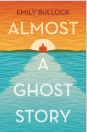 When writing my new novel Almost a Ghost Story, I discovered halfway through the process that I was writing a ghost story, and this sent me on a quest to discover what ghost stories are and how they function. I wanted to understand how realism and the supernatural can work together in creative writing.
Although ghost story traditions differ across cultures, many focus on the same concerns: love beyond death, injustice, revenge, remembrance and respect for ancestors. These fictional stories aren't trying to prove to the reader that ghosts exist; they are exploring what people continue to carry long after events have ended and people have ceased to exist. Ghost stories use creative writing techniques to blur the boundary between reality and imagination, not to deceive the reader but to encourage the reader to think differently about truth itself. One way to do this is to invoke the spirit of realism.
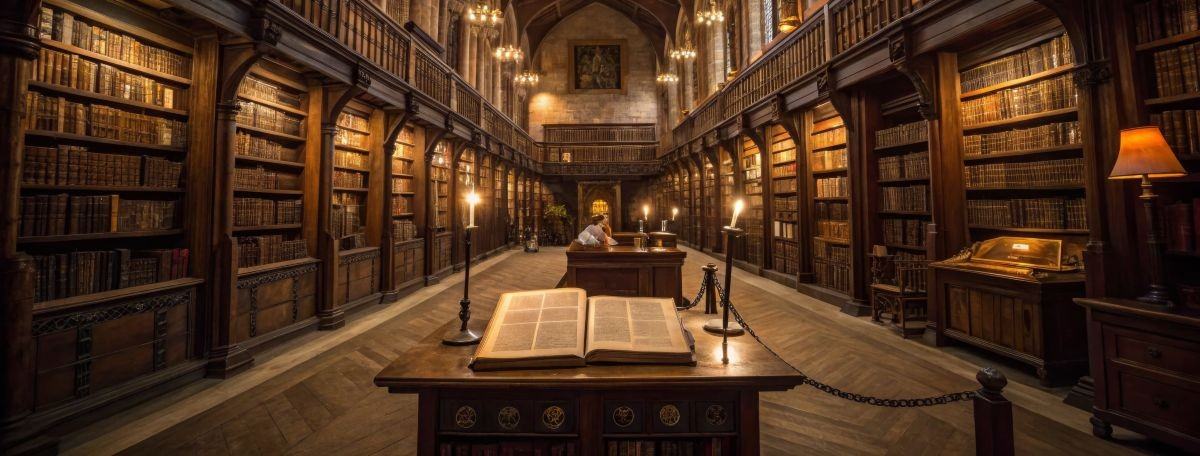
When reading collections of short ghost stories, what I noticed most of all is how realistically most of them begin. Take M.R. James – his stories don’t usually start with thunder or castles. Instead, he gives us libraries, quiet villages, off-season seaside towns and academics carrying out their research. His narrators are often scholars, clergymen, antiquarians – people the readers of the time were inclined to trust. Alongside these realistic settings can come letters, maps, parish records, archaeological discoveries and eyewitness accounts. These documentary fragments don't prove ghosts exist or that the hauntings in the story really happened, but what they do is create a convincing framework of plausibility.
M.R. James argued that a ghost story shouldn't persuade readers that ghosts are real. Instead, they should leave the reader 'pleasantly uncomfortable', just uncertain enough to suspend disbelief. The uncertainty is crucial because the purpose of the stories is to show what happens when certainty begins to fail and doubt is introduced to these ‘realistic’ worlds. The reader’s experience begins to mirror the protagonist’s experience as they realise that ordinary explanations may not be enough, and the story becomes psychologically unsettling.
Ghost stories can destabilise truth because they refuse to offer simple answers, and this is often reflected in a story's open or unresolved endings. The stories aim to leave the reader wondering whether what they have witnessed is supernatural, psychological or symbolic. In doing so, they remind the reader that truth is not always limited to facts; sometimes stories reveal emotional, cultural or moral truths that cannot be measured by scientific evidence alone.
If factual truth becomes uncertain, emotional truth becomes stronger. Ghost stories are driven by recognisably human emotions: characters open forbidden books because they're curious; they steal sacred objects because they're greedy; they return to places because they're grieving. And throughout, fear connects the reader with the characters. Whether or not we believe in ghosts, we recognise these emotions immediately. In many ways, the ghost itself becomes secondary, and the haunting reveals emotional truths rather than supernatural ones.
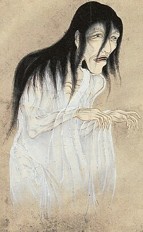 Melissa Edmundson, in Avenging Angels: Ghost Stories by Victorian Women, writes that many ghost stories conceal social problems beneath supernatural plots. Victorian and Edwardian writers couldn't always discuss domestic abuse, child vulnerability, repressed sexuality or trauma openly, and so the ghost in the story becomes a language for the unspeakable. What appears as a haunting often represents emotional wounds that society preferred to ignore. Of course, there are plenty of contemporary short story writers working with ghosts too. One of my recent favourites is Where the Wild Ladies Are by Aoko Matsuda (translated by Polly Barton). Matsuda draws inspiration from traditional Japanese ghost tales in her collection, which is full of female ghosts and comments on the changing roles of women in Japanese society.
What makes a good ghost story?
From reading hundreds of short ghost stories, these are some of the creative writing techniques that I found time and time again:
- Grounding the story in reality makes the supernatural feel believable.
- Location shapes the story; it is developed as much as the characters.
- There is clarity about the ghost’s origins, powers and limitations.
- The protagonist’s backstory is important: Why are they experiencing the haunting?
- A third-person narration can lend narrative authority to a story.
- Stories are anchored in emotional truths: exploring fear, loss and the unknown.
The American author Ursula K. Le Guin wrote that “Fantasy is probably the oldest literary device for talking about reality.” This is where I think the truth of ghost story narratives lies, because they destabilise factual certainty whilst revealing emotional certainty. They blur the boundary between reality and imagination, not to deceive us, but to encourage us to think differently about truth itself.
Want to write your own ghost story? Look at these:
-
The Irish Gothic in the twentieth and twenty-first centuries
Read now to access more details of The Irish Gothic in the twentieth and twenty-first centuriesHow does the tradition of Irish Gothic unfold in creative writing in the twentieth century - and beyond?
-
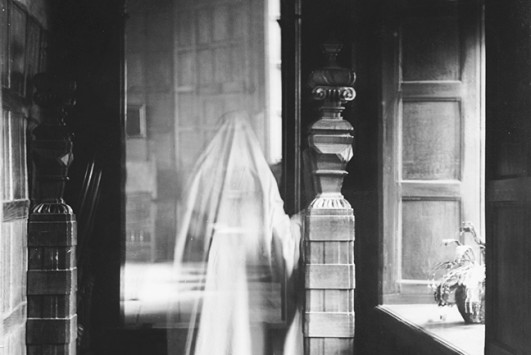
Spectres, Monsters, Fairies and Vampires: An introduction to the Irish Gothic
Read now to access more details of Spectres, Monsters, Fairies and Vampires: An introduction to the Irish GothicWhat are the defining features of Irish Gothic - and how can you use them in your creative writing?
-
Start writing fiction: characters and stories
Learn more to access more details of Start writing fiction: characters and storiesStart writing fiction is a free course that helps you to get started with your own fiction writing, focusing on the central skill of creating characters.


Rate and Review
Rate this article
Review this article
Log into OpenLearn to leave reviews and join in the conversation.
Article reviews