

Introduction
Sport has the power to bring people and communities together, to promote social inclusion and encourage connections and friendships between people from all different backgrounds. Perhaps because sport is associated with so many positive aspects of life, discrimination such as racism can be mistakenly viewed as something that only really exists outside of sport. Sport organisations have begun to acknowledge that sport is not always as inclusive and accessible to all as people might assume. It is recognised that sport harbours elements of institutional racism that can cause barriers for racially minoritised people to participate and gain success, not only as players but also in roles like coaching. There are, unfortunately, many examples where racially minoritised players have been subjected to racist abuse, bullying and unfair treatment.
In the UK, high-profile sports like professional football have become important vehicles to promote wider social campaigns for racial equality and anti-discrimination. Campaigns such as Kick It Out and The Premier League’s No Room for Racism are well supported by professional sportspeople, coaches and sport organisations – people involved in sport are increasingly encouraged to challenge and report discrimination whenever they witness or experience it, to help make their environments welcoming and inclusive places for everyone. While there is support for these initiatives, it can sometimes be hard for people to know how they can contribute to ensuring sport is welcoming to all and play their own small part in helping community cohesion and inclusion.
This OpenLearn course is designed to help empower coaches – either actively coaching or thinking of coaching in the future – and other people who hold supporting roles in sport settings to confidently and competently support ethnically diverse participants. Completing this course will help you to ensure that every participant you coach or support feels welcomed, able to ‘be’ their authentic selves and play sport in an environment that encourages them to enjoy themselves and thrive to reach their sporting potential.
While the course is designed primarily for coaches supporting children and young people in youth sport settings, many of the principles outlined in the course can apply to coaching adults too. Although the course is not just for coaches, for simplicity the term ‘coach’ will be used as a general term for anyone supporting people in a sport related setting.
Edited video to be moved to course description page when finished
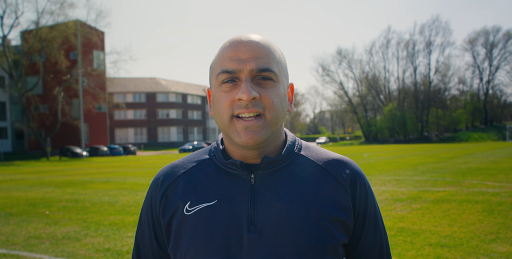
The video below provides a short introduction to the course from Asad Qureshi – an experienced community coach and coach educator who was part of the original project team that developed the anti-racist coaching (ARC) model of practice which underpins the content of the course.
Transcript
[MUSIC]
ASAD QURESHI: Hi. I’m Asad Qureshi, and since my early 20s, I’ve been coaching different sports in my local community. I’ve coached children and young people from many different ethnic, cultural and religious backgrounds. Coaching diverse groups of players is rewarding and enjoyable, but it’s important to recognise the differences between individuals. Over the years, I’ve done many coaching courses, but never really come across anything designed to prepare me for working in diverse playing environments.
I’ve had to learn through my own experience and picking up tips from other coaches. This OpenLearn course has been created to support coaches to work more sensitively and effectively with ethnically diverse players. It will give you the skills and confidence to allow the people you coach feel welcome, be themselves, and thrive in the sports they love, whatever their backgrounds. It includes tips like really trying to get to know players and their families and being aware of their ethnic, cultural and religious needs across the season.
This course is based on a research project that I was involved with, talking to over 30 coaches about how they support players from diverse backgrounds. You’ll be introduced to the anti-racist coaching ARC model that was developed from the research, and includes 6 key principles for a coach to use in their practice. I’m passionate about the role that coaches can play in promoting anti-racism and ensuring children and young people from all backgrounds have the best possible experiences playing sport.
It’s simple. Learning to be an anti-racist coach will make you a better coach. In this OpenLearn course, you’ll hear more from me and other coaches sharing some of the tips we’ve picked up over the years coaching diverse player groups. We hope you find it useful, and you’ll try out some of the things you learn about in your own coaching.
[MUSIC]
After studying this course, you should be able to:
- identify the benefits to coaches and participants of adopting anti-racist coaching practice
- compare anti-racist coaching practice with your current coaching practice
- demonstrate a variety of ways to share anti-racist coaching practice with others
- identify the difference between non-racist and anti-racist positions.
Tips for completing the course
In the ‘Summary’ at the end of each session, you will find a link to the next session. If at any time you want to return to the start of the course, click on ‘Full course description’. From here you can navigate to any part of the course.
It’s also good practice, if you access a link from within a course page (including links to the quizzes), to open it in a new window or tab. That way you can easily return to where you’ve come from without having to use the back button on your browser.
You will see that each session contains a glossary at the end, which contains definitions of some key terms used. When working through the course, you will also see these glossary terms highlighted. You can use your cursor to hover over these highlighted words to see the definition appear as you come across them.
Once you have completed the course you will have the opportunity to complete a short survey to tell us what you thought about it. You will find the link to this at the end of the course. We would love to get your feedback so please spare a few minutes at the end to complete it if you can.
You can now go to Session 1 [Tip: hold Ctrl and click a link to open it in a new tab. (Hide tip)] .