
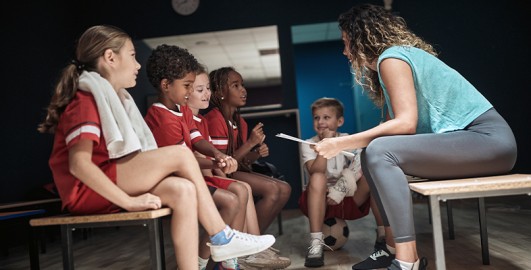
1 The many roles of a youth sports coach
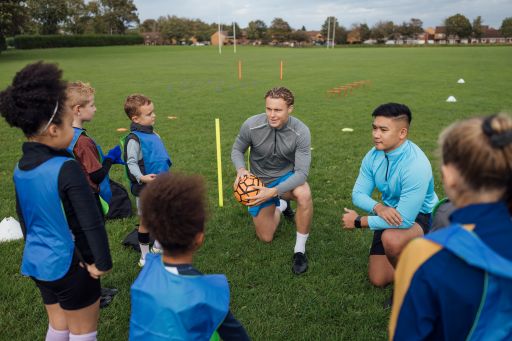
If you are currently coaching children and young people (or adults), or have another supporting role in sport, what is it you enjoy most about what you do? As much as it may be exciting to see players learn new skills, techniques and explore new tactics and compete in their sport, seeing young people in particular have fun, making friends with people from many different backgrounds and playing a role in their wider development as they grow up is probably just as or even more rewarding to you.
It can be easy to forget the role that a coach can play in shaping a young person’s development. For some children, at some periods in their life, their sports coach may be the most influential adult to them – perhaps even above teachers and family members. The coach can also be an extremely influential person in an adult sportsperson’s life. This can come with responsibilities far beyond improving a player’s sporting skills and abilities. Whether it is a role that a coach actively seeks or has never really considered, or would even rather avoid, a sports coach is an important role model and mentor – with the potential to impact them in both positive and negative ways.
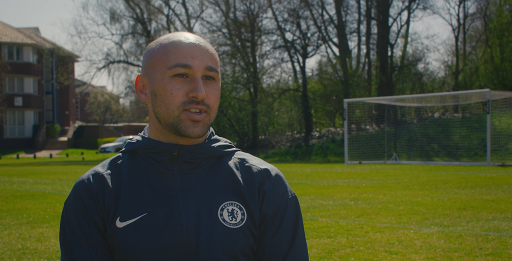
The video below introduces you to one of the coaches who will feature across this course, Sulayman (Sully) Hafesji-Wade. In this clip, he shares his views about what his role as a youth football coach is.
Transcript
SULAYMAN HAFESJI-WADE
My name is Sulayman Hafesji-Wade, and I’m the under-10s head coach at Chelsea’s Academy. I’ve been coaching for over a decade, so maybe 14 or so years now in different settings. Grassroots settings, University football, Academy football, and now at a Premier League Academy side. I guess the reason I started coaching was initially for my love and desire for working with young people and my enjoyment of coaching sport, of coaching football.
The role of a coach is really widespread. I don’t think it’s just necessarily around coaching the sport that we get an opportunity to do and whether that be technical, tactical, social, psychological developments that we’re making in young people, but it’s an opportunity to teach, to be a really positive role model. I guess, to uphold real key values and behaviours across young people. We’re really clear that we’re helping shape and develop young people, as well as young players. So I think the role of a coach is real widespread.
It is clear that the coach has significant responsibilities that go well beyond simply teaching sport techniques and skills to players. For players to thrive in their sporting environments they need to feel safe, comfortable and confident. The next section considers how youth sport can sometimes not always feel this way for some young people.