

3 Developing anti-racism among players
A coach can be one of the most important role models and mentors in a person’s life – and their responsibilities can go well beyond simply developing sport-specific skills and techniques. One of the core pillars of the model of culturally relevant pedagogy (introduced in Session 1) is the importance of developing an anti-racist consciousness among people, so they can gain a stronger understanding of the world around them, how it is organised and how they can help transform it for the better.
As an ARC influencer, the coach can play an important role in supporting people to develop a critical understanding of the world around them and how ideas of ‘race’, ethnicity, religious and cultural difference can impact people’s lives. They can also help to empower people to actively contribute to an anti-racist sporting environment and be sure to play their part in creating a welcoming and inclusive space for people of all ethnic backgrounds to feel they can be their true, authentic selves and not feel under pressure to ‘conform’ to certain cultural norms and expectations. Sport is often a place where people meet, interact and become friends with others they might otherwise rarely come into contact with. The coach can help to develop cultural competence among their young players too, by seeking to value and celebrate cultural differences between themselves.
Another way to build confidence and feelings of safety for all players is a consistent and clear approach to incidents of racial abuse and discrimination, ensuring that all incidents – small or significant – are recognised and not ignored or downplayed. It is important that players are also encouraged and empowered to share any incidents they experience or witness with their coach.
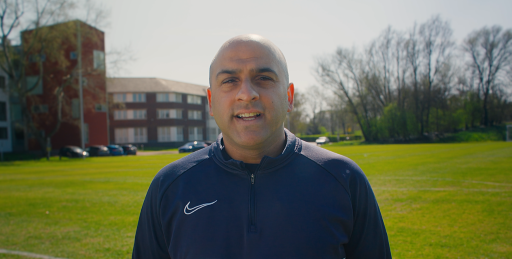
Watch the video below where coach Asad reflects on an incident of racist abuse and how he initially handled the situation.
Transcript
ASAD QURESHI
I’d a player who said he was racially abused on a pitch. Now, my reaction to that was, concentrate on the game. Don’t let it put you off, and go score some goals. Because that’s maybe how I would have reacted to it. But it didn’t work for that young person. He was really angry, really annoyed, and he essentially lost his head-- lost concentration.
So I realised the advice I’ve given him was totally wrong. It’s the advice I’d give to myself, but it wasn’t suitable for him. So I realised that, and it took-- I had a bit of a moment, a bit of time where, I’ve got this wrong. What do I do? And then I was able to clear my thoughts, and then able to speak to the player and apologise to him. But I actually did it in front of the full group.
And I think what it did was it let everybody know this is how we deal with things as a team, and this is what our coach is about, and this is what he will try to do. And in that particular instance, I had to explain to the player, these are the processes we go through from a formal basis. So it almost becomes an education piece for the player and the team.
So to go through it all was actually a real positive, and I was able to spin it. I think the hardest bit is that time in between when you’re not sure what to do, and you’ve got it wrong but you’re not sure how to deal with it. I think it’s just about being brave, and then accepting what you’ve done wrong, and then putting something in place.
And I think, from that particular moment, I got a lot of respect from the players and teams, because I said I was wrong, and this is what we do in the future if this happened. And then everybody knew from then they were in safe hands.
The coach plays a crucial role here in educating the players about all forms of discrimination, such as racism, and can use cultural touch points and references, such as music, where possible, to help educate the players around racism and anti-racism. The next activity explores this further with another scenario to consider.
Activity 2 Encouraging anti-racism among young players
Scenario: players playing music containing racist and misogynistic language
Imagine you are a coach of an under 16s rugby team, getting ready to deliver your team talk to the players just before a match. You have encouraged the players to listen to music before the games and each week someone new chooses a playlist as a way to share their music tastes. This week, one player chooses some songs with lyrics that repeatedly use a racially offensive word. You look around and see some players joining in and singing the lyrics while others stay quiet and look uncomfortable. It also makes you feel very uneasy.
Read the questions below and then have a go at writing an initial answer to each of them.
- How would you respond in this situation?
- How might you encourage the players to openly discuss this matter and agree what music is/isn’t acceptable for everyone?
- How might these conversations help encourage a culture of anti-racism among the players?
Discussion
Having attempted to answer the questions, click on each question above to reveal the responses to these questions by the authors of this course.
- You may consider quietly asking the player who has chosen the playlist to skip songs which contains lyrics at least some players find offensive. Explain the reasons why, briefly, with the player and then highlight this decision, briefly, with the rest of the team.
- After the game, you could discuss this decision in more detail with the rest of the team and allow them to share their thoughts and opinions on what music should be played in future and why. The players could explore the varied responses to such music and language and that to create an inclusive ARC environment, they must respect each other’s positions and avoid playing music that may offend some of them.
- By taking this collaborative approach, the coach is empowering the players to take their own responsibility in co-creating the ARC environment for the team. By more sensitively choosing the music that is played in future, shows respect and the development of cultural competence among them.
Having now considered the ways a coach could influence other coaches and colleagues while also helping to develop an anti-racist consciousness among their young players, the next section explores some ways that a coach can help create and then sustain a wider anti-racist environment within their organisation.