
How Cybercrime Harms Businesses

What is Cybercrime?
Cybercrime refers to criminal activities that involve a computer, network, or digital device. These crimes range from financial fraud and identity theft to ransomware attacks and state-sponsored cyber espionage. As technology evolves, so do the techniques and scale of cybercriminal operations, making cybersecurity a critical global concern.
In 2023 alone, losses to American businesses from cybercrime surpassed $12.5 billion, marking a 22% increase from the previous year (FBI IC3, 2023).
Cybercrime now poses a greater economic threat than natural disasters and the illegal drug trade combined, with projections estimating total damages will reach $10.5 trillion annually by 2025 (Cybersecurity Ventures, 2020).
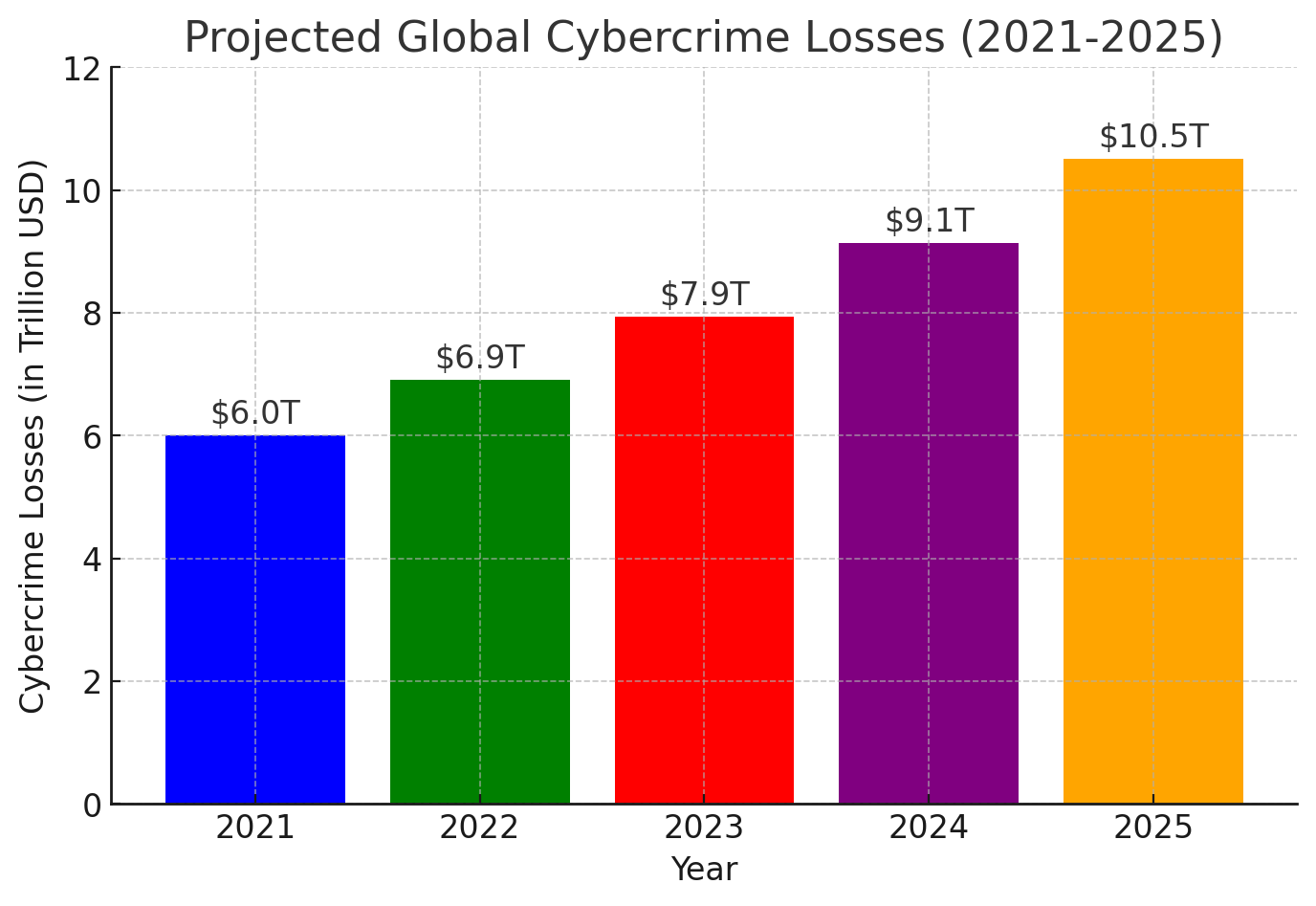
Image Description for Accessibility Purposes
A graph chart illustrates the trend of rising global cybercrime losses from 2021 to 2025, stating the following numbers: 2021: $6.0T, 2022: $6.9T, 2023: $7.9T, 2024: $9.1T, 2025: $10.5T.
How Cybercrime Harms Businesses and Companies
Cybercrime is one of the biggest threats businesses face today, causing severe financial losses, reputational damage, and operational disruptions. Companies are prime targets for cybercriminals due to the valuable data they hold, including customer information, intellectual property, and financial records. Some key ways cybercrime harms businesses include:
Financial Losses: Cyberattacks cost businesses millions in direct financial losses, legal fees, and regulatory fines. The average cost of a data breach in 2024 reached $4.88 million, the highest ever recorded (IBM, 2024; UpGuard, 2024).
Business Disruptions: Ransomware attacks can shut down operations, leading to significant downtime and lost revenue. For example, the MGM Resorts ransomware attack in 2023 cost over $100 million in damages (FBI IC3, 2023).
Reputational Damage: A major data breach can severely impact customer trust. Studies show that 60% of small businesses close within six months of a cyberattack due to loss of consumer confidence (Cybersecurity Ventures, 2020).
60% of small businesses close within six months of a cyberattack.
Intellectual Property Theft: Hackers steal trade secrets, research data, and proprietary software, undermining a company’s competitive edge.
Regulatory Penalties: Companies failing to secure their data face heavy fines under regulations like GDPR, CCPA, and HIPAA. Regulatory fines for data breaches can reach millions of dollars.
Supply Chain Attacks: Cybercriminals exploit vulnerabilities in supply chains, impacting multiple businesses at once. In 2023, 15% of breaches involved third-party suppliers (Verizon, 2024).
With cybercrime evolving at an alarming pace, businesses must invest in cybersecurity professionals, tools, and strategies to safeguard their assets and ensure long-term success.
In conclusion, it is evident why businesses need cybersecurity—protecting themselves against attacks is far more cost-effective than dealing with the financial and operational losses caused by a cyber breach.
- 15% of breaches involve 3rd-party suppliers.
- Fines for data breaches can reach millions.
- The average cost of a data breach is $4.88 million.
- 60% of small businesses shut down after a cyberattack.
- Cyberattacks keep increasing year over year.
Cybersecurity Ventures. (2020). Cybercrime to cost the world $10.5 trillion annually by 2025. Retrieved from cybersecurityventures.com/cybercrime-damages-6-trillion-by-2021/
FBI IC3. (2023). 2023 Internet Crime Report. Retrieved from ic3.gov/AnnualReport/Reports/2023_ic3report.pdf
IBM. (2024). Cost of a Data Breach Report. Retrieved from ibm.com/reports/data-breach
UpGuard. (2024). What is the Cost of a Data Breach in 2024? Retrieved from upguard.com/blog/cost-of-a-data-breach-2024
Verizon. (2024). 2024 Data Breach Investigations Report. Retrieved from verizon.com/business/resources/reports/dbir/