
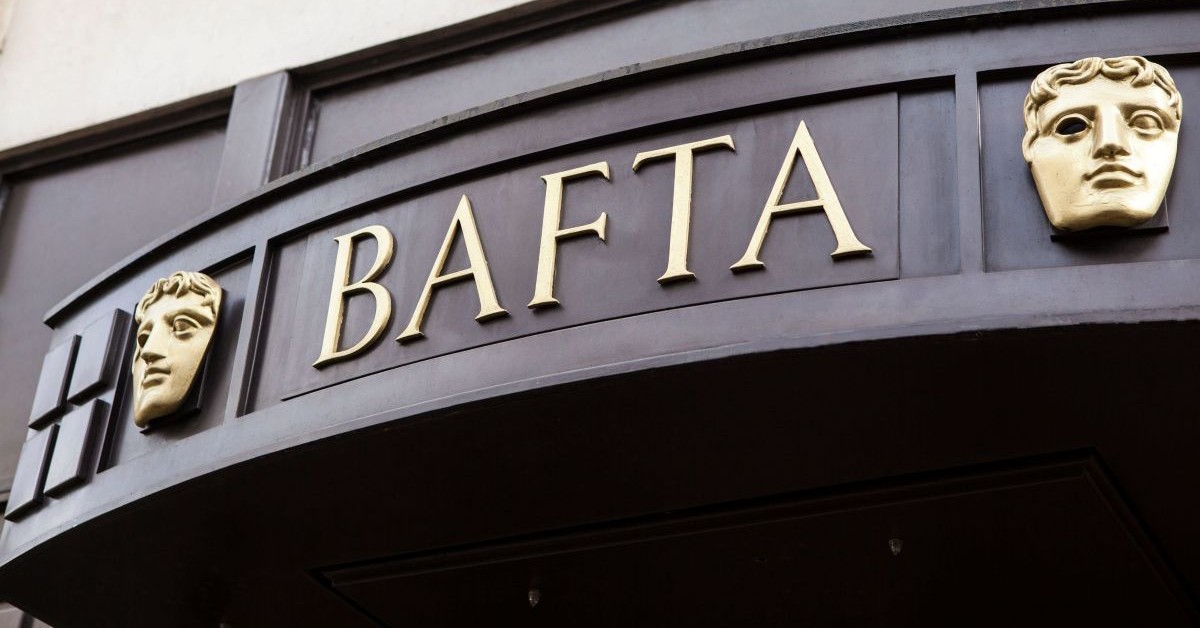
In February 2026, the BBC rushed out an apology for broadcasting a racial slur during the BAFTA Awards. The incident happened when John Davidson, a guest at the ceremony who has Tourette syndrome, shouted the N-word while actors Michael B. Jordan and Delroy Lindo, both of whom are Black, were up on stage presenting an award. Although the ceremony was broadcast on a delay, the word wasn’t edited out of the programme, and naturally caused severe distress both for people in the audience and viewers at home.

What is Tourette syndrome?
Tourette syndrome (or Tourette’s) is a neurological condition that sits under the umbrella of neurodiversity. It is estimated to affect 200,000–300,000 people in the United Kingdom. It is a tic disorder, which means that its main features are involuntary sounds and movements. These symptoms can manifest in many different ways. According to the NHS, movements might include jumping, jerking, twitching or shrugging. Sound-based tics can include whistling, repeating phrases or swearing. According to Tourettes Action, only 10–30% of those with Tourette’s will have swear-related tics, known as Coprolalia. Coprolalia is thought to occur due to faulty inhibition in the brain, and words which are taboo or obscene, which we normally suppress, might be more likely to be expressed. Despite these being the least common tics, they are the ones that often draw the most attention.
Utterances that create discomfort
The episode at the BAFTAs was understandably much criticised, but it also highlights an uncomfortable clash between two distinct properties of language. On the one hand, there was the use of a word widely considered to be one of the most offensive slurs in society. On the other, its utterance was the result of a neurological condition over which the speaker had no control. It thus brings two forms of social responsibility into conflict: the right of communities not to be confronted with language which has historically been used to demean and oppress them; and the right of people with neurological conditions to participate in public life without stigma.
From a sociolinguistic perspective, words take their meaning from how they’re used in context. Slurs, for example, aren’t merely unpleasant insults – they draw on long and painful histories of exclusion and discrimination. In the case of the N-word, this history has strong associations with slavery, segregation and racism. And when it’s used to insult someone, this history gives the word much of its force.

Sociolinguists often illustrate the importance of context through the distinction between the use and mention of a word. To use a word is to deploy it in its ordinary communicative role; to mention a word, on the other hand, is simply to refer to it as a linguistic entity. For example, in the following sentence the word ‘apple’ is used to refer to the fruit: ‘She picked an apple from the tree’. Contrast this with a sentence such as ‘“Apple” comes from the Old English word “æppel”’. In this case, the sentence is about the word itself, not the fruit, so ‘apple’ is mentioned rather than used. Applying this to slurs, mentioning an offensive word shouldn’t, in principle, carry the same meaning as using it to target and insult someone.
In practice, however, this distinction is becoming harder to maintain for some particularly offensive words. Even when they appear in analytical or descriptive contexts, certain words can still provoke strong adverse reactions. So the N-word today is rarely spoken even when people are quoting or analysing it rather than deploying it as an insult. The current feeling in public conversation is that some terms are harmful regardless of how they’re used.

The BAFTAs incident adds another dimension to this debate because the utterance wasn’t intentional at all. And it creates a situation in which two interpretations coexist which can’t be easily reconciled. For many viewers, hearing the slur during the BAFTAs was understandably shocking and distressing. An emotional response of this sort is shaped by the social history of the word and by people’s lived experience of hearing it. At the same time, expecting John Davidson to ‘control’ or modify his utterances misunderstands the nature of the condition that produced them.
We can perhaps think of this in terms of a distinction between harm and blame. The utterance caused harm in the sense that it exposed Michael B. Jordan, Delroy Lindo and the audience to language deeply associated with racist intent. But assigning moral blame is far more complicated if the speech was involuntary. Which is why, in a case like this, the responsibility lies less with individuals than with institutions. Broadcasters can often take practical steps to anticipate potential risks and ensure that delayed transmissions allow incidents like this to be edited out. It was this that the BBC failed to do. Consulting experts on the neurological and sociolinguistic implications could have helped shape a broadcasting strategy that balanced the rights of those involved with the need to avoid causing unnecessary distress. But the incident also underscores the need for greater public awareness of language issues of this sort, particularly given the persistence of stereotyped representations of Tourette syndrome.
More related free learning resources
-
Neurodiversity Hub
Learn more to access more details of Neurodiversity HubExploring how minds work differently and brilliantly. This hub brings together free OpenLearn courses, articles and personal stories on autism, ADHD, dyslexia and more.
-
Race and Ethnicity Hub
Learn more to access more details of Race and Ethnicity HubThis award-winning hub offers fresh perspectives on race, racism and ethnicity through free courses, articles, interactives and audio/visual materials.

-
Swearing today: have our attitudes changed?
Read now to access more details of Swearing today: have our attitudes changed?Are people less fussed about swearing today than they were in the past? This article (with an associated film ‘Why do we swear?’) looks at attitudes towards offensive language.

-
Describing language
Learn more to access more details of Describing languageThis course introduces you to the basics of describing language. Using examples from English, you’ll learn how words are built, how they fit together to make sentences, and what labels like noun, verb and adjective mean. You’ll see how language patterns in regular ways and how the meaning of a sentence is more than the sum of its parts. This ...

-
Understanding ADHD
Learn more to access more details of Understanding ADHDThis course explores the experience of ADHD from the perspective of those who are diagnosed with the condition, and those who care for them. It covers the contribution of scientific research to understanding ADHD, with a focus on assessing the effectiveness and mechanism of action of treatments and therapies.

-
Diversity and inclusion in the workplace
Learn more to access more details of Diversity and inclusion in the workplaceDo you feel concerned about a lack of diversity in your workplace? Is this something you want to address? Perhaps you’d like to feel more informed on a personal level before taking it further organisationally? This free course introduces you to the benefits and complexities of developing and supporting a diverse and inclusive workforce. It ...

Rate and Review
Rate this article
Review this article
Log into OpenLearn to leave reviews and join in the conversation.
Article reviews