
6.1 Challenges with tourism
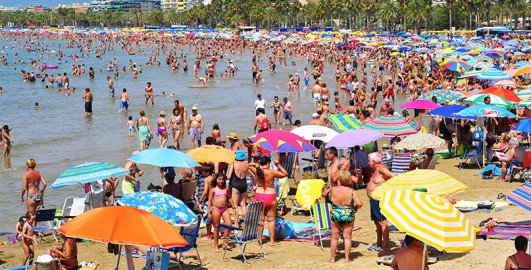
There are two main challenges with tourism that we will look at in this section. The first is overtourism, which was briefly mentioned at the start of the course in relation to what was happening in Spain and the Canary Islands. This means that growth – and bringing more people into a country or an area – becomes so important that people who live there, or the environment, is very much secondary. ‘Our Common Future’ identified that if economic growth (such as tourism) is not sustainable then it should not be considered desirable. This so-called ‘desperate addiction’ very much goes against that principle.
The second challenge is touristification. The result of touristification is often that local people leave particular areas of cities and, in the worst cases, leave the cities entirely.
First, watch the following video by German broadcaster DW. This video is a good introduction to some of the problems experienced in very popular destinations. Watching this video will take around 6 minutes. When you have finished, please check your understanding by answering the questions below.
1) How did Raoul Bianchi define overtourism?
Discussion
He said that overtourism meant tourists exceeded the carrying capacity of certain destinations.
2) How were local people ‘squeezed out of the market’?
Discussion
Houses that were available for local people were in short supply, there was house price inflation, rental properties had disappeared to become holiday lets and foreigners and hotel developers were allowed to buy houses (and land).
3) What had Amsterdam done to try to help solve its problems?
Discussion
Amsterdam had raised tourist taxes on accommodation, it had banned tour buses from the city centre and it had limited the number of cruise ships that could dock at ports.
4) Did any of what was said in the video surprise you?