
Venice
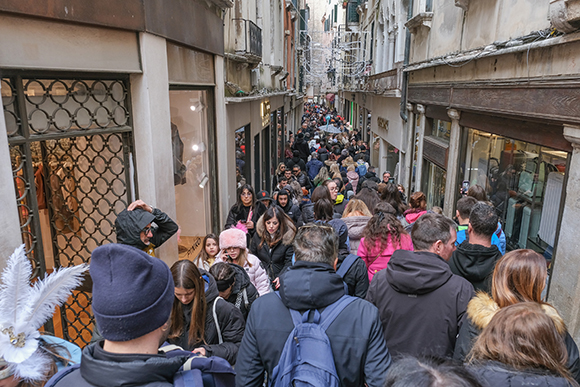
A number of other countries have expressed concerns about overtourism and touristification Below is a picture of Venice in Italy showing how overcrowded it can get at Carnival or in the peak holiday seasons. The company Responsible Travel says that Venice often ‘looks more of a theme park than a living, breathing city’ and details the depopulation that has resulted. You may be interested in reading what it says about Overtourism in Venice [Tip: hold Ctrl and click a link to open it in a new tab. (Hide tip)] for yourself?
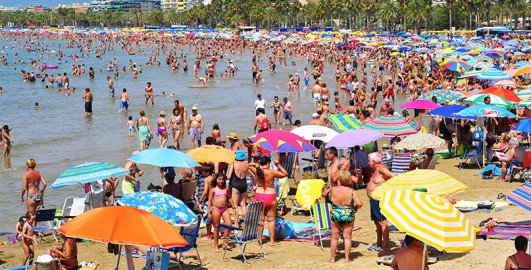
Problems with overtourism have also started discussions in relation to safety. Recently there have been efforts by the Vietnamese government to limit negative behaviours of tourist boats in the scenic area of Ha Long Bay following accidents in 2025 (where a boat capsized) and 2026 (when there was a fire on a cruise ship). Now boats need to be equipped with radios and GPS alongside providing full passenger lists. There are also boat inspections and checks taking place to try to make sure all passengers on all boats are safe.
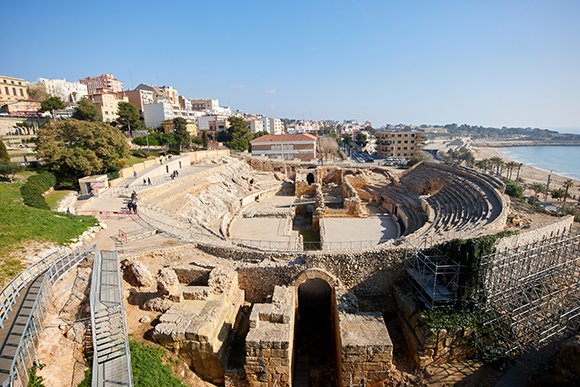
Although Venice is still hugely overtouristed, it has had some success in reducing visitors in its centre and in encouraging them to go to quieter areas. Venice now levies a tax for tourists staying in its centre, which is normally incorporated into the price of the hotel tourists stay in. This ensures money remains in the city and can help fund facilities for residents. Venice is also trying to push tourists away from its centre to places that are similar but quieter. For example, if a tourist wanted to stay in Venice they might instead be encouraged to stay on the islands of Burano or Murano across the Lagoon. Both islands have the same character as Venice but without the crowds and without the tourist tax. If this emphasis on relocating tourism to other places was being followed in Barcelona, tourist offices may suggest a tourist wanting to stay there should instead base themselves in Girona (with its 11 bridges and some incredible museums) or Tarragona (which has a Roman amphitheatre), both a short train ride away. Girona and Tarragona are both interesting but there is far less tourist pressure. Looking back at the discussion of safety and overtourism in Vietnam, tourists might similarly be encouraged to take a boat ride around Bai Tu Long – 30km away from Ha Long Bay – with the same incredible scenery but far fewer boats operating.
Where would you advise tourists to travel outside of your nearest city?
Discussion
My nearest city is Nottingham. If Nottingham suffered from over-tourism there are a number of other destinations tourists might choose to visit instead. Depending on their interests, for example, Newark is a town with a number of historic buildings, including a castle, and it borders Sherwood Forest. Lincoln is another beautiful city with a castle and a cathedral. Alternatively, perhaps tourists might like to go to Leicester to see its cathedral or the King Richard III Visitor Centre and the site of the Battle of Bosworth? Although Bosworth doesn’t have a train station, the others do (Newark has two train stations) and it is relatively easy to travel to each by bus from each other.
Overtourism is especially problematic where sites are vulnerable because they are very old and precious and where accessing money quickly by management to make repairs, or to have guards, is difficult. In 2026, UNESCO, which is responsible for designating and supporting World Heritage Sites (such as the Taj Mahal in India or the 17 sites in Kyoto, Japan) noted in its ‘World Heritage’ publication that ‘properties are facing increasingly complex challenges including development pressures, climate change, natural hazards, inadequate and insufficient maintenance and conservation’. Responsible Travel commented that ‘Unless the tourism industry changes its track, tourism could become one of the most problematic, and unwelcome, industries on the planet’. This highlights the importance of addressing challenges and in engaging in responsible behaviour with the aim of ensuring sustainability.