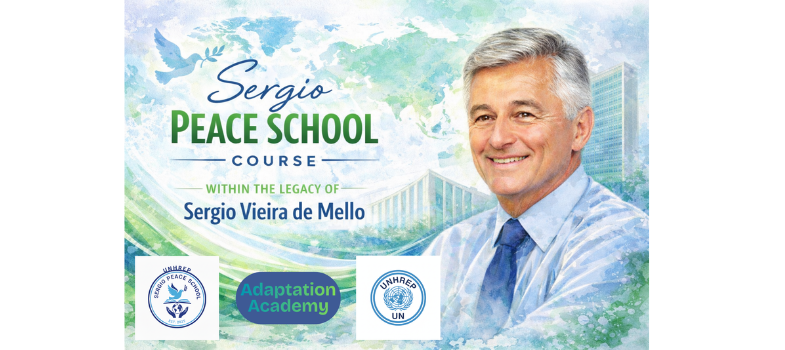
Module 1A: East Timor Peacebuilding
In this module, students will explore the United Nations’ peacebuilding efforts in East Timor, with a special focus on the leadership and legacy of Sérgio Vieira de Mello. East Timor’s transition from Indonesian occupation to independence represents one of the most complex and instructive modern peacebuilding cases, encompassing human rights protection, state-building, and reconciliation. Students will analyze the multidimensional strategies employed by the UN, the challenges faced in promoting sustainable peace, and the critical role of ethical diplomacy in achieving long-term stability.
1. Historical Context of East Timor
East Timor, a small Southeast Asian nation, experienced decades of political turmoil and violent occupation following Portugal’s withdrawal in 1975. The subsequent annexation by Indonesia led to widespread human rights abuses, including mass killings, forced displacement, and systematic suppression of local political expression (Kingsbury, 2009). By the late 1990s, the Timorese population was living under extreme conditions of insecurity, with limited access to food, health services, and education.
The UN intervened in 1999 after a UN-sponsored referendum in which the East Timorese overwhelmingly voted for independence. The transition to sovereignty was accompanied by violence perpetrated by pro-Indonesian militias, leaving thousands dead and hundreds of thousands displaced (Rees, 2012). This crisis underscored the urgent need for a multidimensional peacekeeping and reconstruction mission.
2. The UN Mission and Sérgio Vieira de Mello’s Leadership
Sérgio Vieira de Mello, serving as the UN Transitional Administrator for East Timor, played a pivotal role in coordinating the international response. His leadership exemplified the principles of ethical diplomacy and human rights advocacy. Sérgio emphasized inclusive governance, community participation, and the protection of human dignity as central to sustainable peace (Chopra & Hohe, 2004).
Under his guidance, the UN established the United Nations Transitional Administration in East Timor (UNTAET), which was tasked with:
-
Maintaining security and law enforcement
-
Administering humanitarian aid and basic services
-
Establishing governmental institutions and legal frameworks
-
Facilitating political transition to full independence
Sérgio’s approach reflected his deep understanding that peace is not merely the absence of conflict but the active cultivation of justice, dignity, and community resilience (Guterres, 2005). He prioritized local engagement, consulting with East Timorese leaders, civil society, and ordinary citizens to ensure that international interventions respected local culture and needs.
3. Human Rights and Justice in East Timor
Human rights protection was a cornerstone of UNTAET’s strategy. The UN mission established mechanisms to investigate human rights abuses, document violations, and support accountability processes (Kingsbury, 2009). This included the creation of judicial institutions capable of prosecuting crimes committed during the occupation and fostering reconciliation among communities.
Sérgio Vieira de Mello’s philosophy emphasized that peace without justice is fragile. By integrating human rights monitoring and accountability measures into the transitional governance structure, the mission sought to prevent cycles of revenge and instability. For example, he supported the Special Panels for Serious Crimes, which prosecuted perpetrators of violence, while simultaneously advocating for restorative justice programs to facilitate healing within communities (Rees, 2012).
4. Building Political Institutions and Governance
A key challenge in East Timor was establishing legitimate political institutions in a society emerging from decades of authoritarian rule. Sérgio recognized that effective governance required a delicate balance between international oversight and local empowerment. UNTAET implemented structures for administrative management, legal reform, and electoral processes while training East Timorese civil servants and leaders (Chopra & Hohe, 2004).
The 2001 Constituent Assembly elections marked a critical milestone in this process. They were designed to empower the Timorese people to draft a new constitution and assume responsibility for governance. Sérgio’s approach ensured that these institutions were not merely symbolic but grounded in human rights principles and democratic participation. This process exemplifies the broader lesson that peacebuilding must address structural governance as well as immediate humanitarian concerns (Kingsbury, 2009).
5. Integrating Climate, Environment, and Human Resilience
Although East Timor’s peacebuilding is often studied through the lens of political transition and human rights, environmental factors also played a critical role. The country faced challenges such as deforestation, soil erosion, and food insecurity, which heightened social vulnerability and risk of conflict (Rahman, 2016).
Sérgio advocated for integrating sustainable development and climate resilience into peacebuilding programs, including:
-
Community-based agricultural programs to restore livelihoods
-
Infrastructure projects designed to withstand environmental hazards
-
Education initiatives linking environmental stewardship with civic responsibility
This integration highlights the modern understanding that sustainable peace requires attention to both human and ecological systems. By connecting climate adaptation with governance and human rights, the mission strengthened the resilience of East Timorese communities against future shocks (IPCC, 2022).
6. Lessons from Sérgio Vieira de Mello’s Approach
Sérgio’s work in East Timor offers several key lessons for students studying peacebuilding:
-
Human dignity is central: Peacebuilding must prioritize the protection of individual and collective rights.
-
Local participation is critical: Sustainable peace requires empowering communities to take ownership of their future.
-
Ethical diplomacy matters: International actors must balance neutrality with moral responsibility to protect civilians.
-
Integration of multiple dimensions: Political, human rights, and environmental strategies are interconnected and must be addressed holistically.
-
Flexibility and adaptability: Peacebuilding requires creative problem-solving in complex and volatile contexts (Guterres, 2005).
Students are encouraged to reflect on these lessons and consider how they might apply similar principles in future contexts, whether in diplomacy, international development, or local peace initiatives.
7. Reflection and Discussion
Reflection prompts for this module include:
-
How did Sérgio Vieira de Mello’s ethical leadership shape the success of the East Timor mission?
-
What strategies in East Timor successfully integrated human rights, governance, and climate resilience?
-
How can these lessons inform contemporary peacebuilding efforts in other conflict-affected regions?
-
What personal role can you envision in promoting ethical diplomacy and sustainable peace?
Students may use discussion forums, reflective journals, or group exercises to share insights and engage critically with these questions.
Conclusion
The East Timor peacebuilding mission demonstrates the complex interplay of human rights, governance, environmental resilience, and ethical diplomacy in achieving sustainable peace. Sérgio Vieira de Mello’s leadership exemplified the principles of human dignity, local empowerment, and global responsibility, providing a model for contemporary peacebuilders. By studying this case, students gain practical insights into how multidimensional strategies can transform post-conflict societies, highlighting the importance of integrating ethical, political, and environmental considerations in peacebuilding initiatives.
Inspirational Quote:
"Peace begins with dignity, care for others, and care for our Earth." — Inspired by Sérgio Vieira de Mello
References
Chopra, J., & Hohe, T. (2004). Participatory peacebuilding: A case study of East Timor. Journal of Peacebuilding & Development, 1(1), 53–68.
Guterres, A. (2005). Sérgio Vieira de Mello: A legacy of peace and diplomacy. United Nations Publications.
IPCC. (2022). Climate change 2022: Impacts, adaptation, and vulnerability. Intergovernmental Panel on Climate Change.
Kingsbury, D. (2009). East Timor: The international community and state-building. Cambridge University Press.
Rahman, M. M. (2016). Climate adaptation and community resilience in East Timor. Journal of Environmental Management, 182, 45–53.
Rees, S. (2012). Peacekeeping and post-conflict reconstruction: Lessons from East Timor. Routledge.