
My OpenLearn Profile
Personalise your OpenLearn profile, save your favourite content and get recognition for your learning
Minerals and the crystalline state
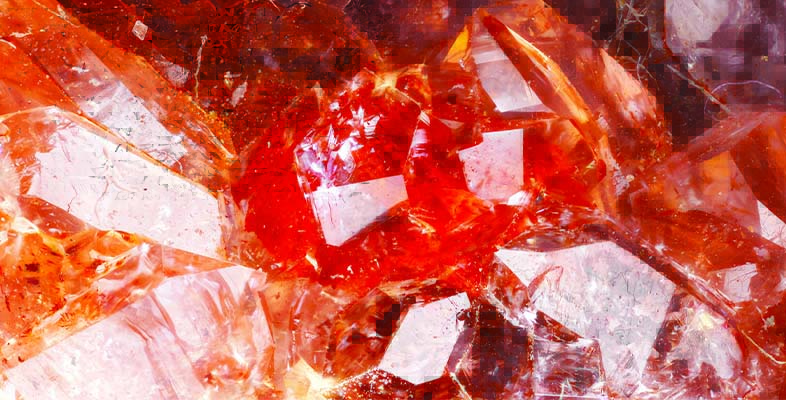
Rocks are made of minerals and, as minerals are natural crystals, the geological world is mostly a crystalline world. This free course, Minerals and the crystalline state, introduces the study of minerals and crystal structures, using online text and interactive activities, including questions and answers, video clips, slidecasts and a Digital Kit.
Course learning outcomes
After studying this course, you should be able to:
- give, with an appropriate example, the meaning of the terms phase, phase boundary and phase transformation, and interpret stability fields in terms of pressures and/or temperatures using a phase diagram
- describe and recognise, giving examples, various physical properties of minerals, including lustre, cleavage, hardness and density
- describe, giving mineral examples, the main differences between metallic, ionic and covalent structures and their type of bonding
- explain the significance of various types of defects in crystals
- explain the meaning of the terms lattice, unit cell, reflections and rotational symmetry, and how these relate to crystal systems.
First Published: 20/08/2014
Updated: 22/03/2016
Rate and Review
Create an account to get more
Track your progress
Review and track your learning through your OpenLearn Profile.
Statement of Participation
On completion of a course you will earn a Statement of Participation.
Access all course activities
Take course quizzes and access all learning.
Review the course
When you have finished a course leave a review and tell others what you think.