
Find out more about The Open University's Arts and Humanities courses and qualifications.
1. What first got you interested in history?
 I always find this sort of question interesting, and a bit tricky, as I have not always been ‘into’ history – I didn’t study it at GCSE or A Level, for instance (choosing geography and sociology instead) – but I sort of grew to love it over time. To hedge my bets a bit, I studied an interdisciplinary joint degree (English and History) and really enjoyed seeing how the two disciplines overlapped. But, when it came to completing my dissertation, I was fascinated by the historical research process, and loved delving into the archives (and still do!).
So, in academic terms, I suppose I went into history at a fairly high level, but I was always motivated by a love of the building blocks of history – evidence, analysis and communication – as well as an open-mindedness to different disciplines and research methods. In the latter case, my previous life as an OU student (in the early 2000s), on the Social Sciences programme, was formative – I picked up a lot about sociological approaches and ideas, some of which I still use today in my research.
2. What is your specialist area and how did you end up focusing on this?
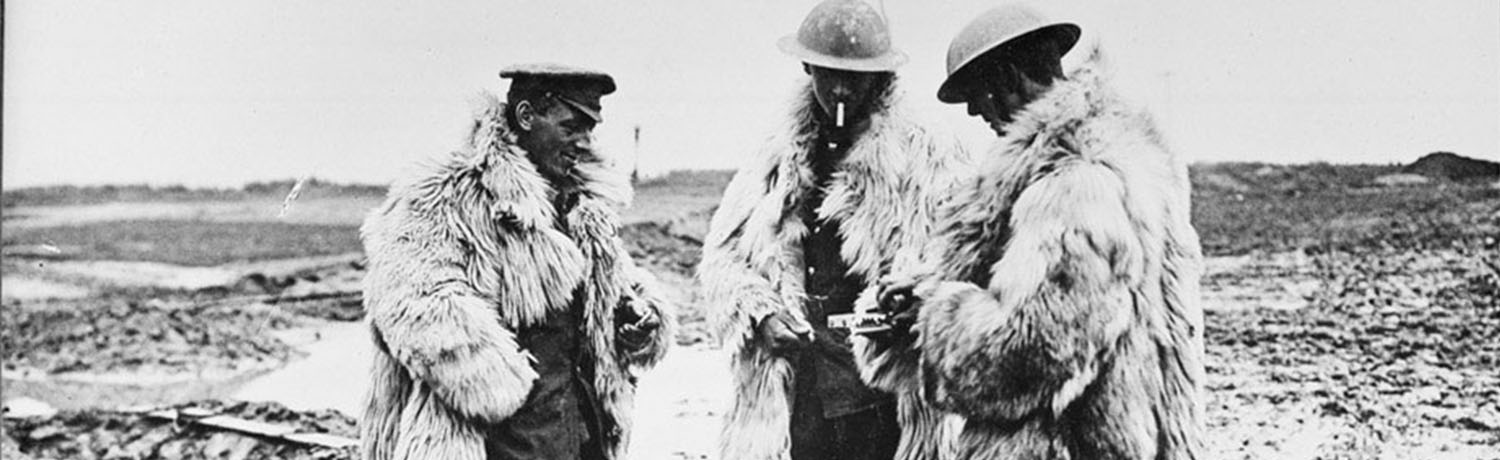
The latter two years of my undergraduate degree coincided with the start of the First World War centenary period. There actually wasn’t that much First World War on my degree, but the general buzz of discussion, and a lot of well-publicised public events and projects, served to get me more interested in the conflict. I think it may have been a passing mention in a lecture about interwar popular culture – something about soldiers chewing gum and smoking cigarettes in wartime having a lasting influence. That was the catalyst, and I began to delve deeper into the topic, looking for smoking in novels and advertisements, as well as in soldiers’ diaries and letters during my first forays into the archive.
3. What is it about your specialist area that fascinates you?
I’m really interested in how ordinary people, whether civilians or combatants, endure conflicts. My first book (based on my PhD thesis) had this focus, and looked at how people in coastal communities in England sought to deal with the threat of aerial bombardment during the First World War.
Historically, endurance has often been found through the use of intoxicants that are readily to hand, such as alcohol and tobacco. There is a sort of physical (or pharmacological) and psychological effect to the use of drugs in wartime – they have tangible effects on the body and brain (such as the ‘kick’ of nicotine that appears to induce a sense of fleeting calm), while the belief that they help combat stress contributes to a sort of mental strength.
4. What is your research project about?
I’m writing my second book at the moment, which pushes forward my interest in wartime endurance and resilience. This one is focused on smoking in wartime British society and culture during the period c. 1850 to c. 1950. I’m looking at smoking from as many angles as I can within this context, including the economics of tobacco supply, the everyday experience of smoking on the battlefront and the ‘home front’, and the presence of tobacco and cigarettes in wartime visual culture (such as paintings, adverts, films and photographs).
5. Why did you decide to pursue this project?
The first article I ever published, back in 2016, was about smoking among British soldiers during the First World War. It was, in fact, based on my undergraduate dissertation, which I tweaked to make it suitable for an academic journal. I’ve maintained this research interest ever since, and thought it was about time I conducted a more substantial research project on the topic – hence the monograph I’m writing now.
6. What is the project’s argument?
The main thrust of the book’s argument is that tobacco has been ‘hidden in plain sight’ (anthropologist Andrew Russell’s words) in the history of modern war, in that smoking, and particularly cigarette consumption, became so ubiquitous during the twentieth century that its significance has not been fully appreciated. Basically, tobacco was associated with a range of ideas and phenomena during the nineteenth and twentieth centuries, not least notions of wellbeing (which is very counterintuitive today, given all we know about smoking’s harms), masculinity, soldierly conduct, and many other things.
7. What is its significance to your specialist area, the broader field of history, and our understanding of human experience?
My focus on the use of tobacco as a quasi-medicine for stress management brings the project in line with recent work by historians on other intoxicants, including alcohol, cocaine and amphetamines, and their use in wartime. Some historians sideline tobacco though, because it has pretty much always been permitted (making it a ‘soft drug’, alongside tea and coffee), as opposed to generally illicit ‘hard drugs’ which have been subjected to tighter control regimes in many countries.
In a broader sense, I hope this project can showcase my approach to social and cultural history – one that brings together a wide range of primary sources, a bit like a magpie (picking up whatever looks useful and contributes to making my argument) and is not afraid to dabble in theory and insights from other disciplines, such as psychology and the health sciences.
8. What were the most enjoyable, and difficult, parts of the project?
It’s still ongoing, so the most challenging part is finding time to write. As always, I most enjoy the process of collecting data from primary sources at archives. For this project, I have consulted a range of documents, from government papers and memoranda to the personal correspondence of soldiers and sailors, to newspapers and magazines, and visual art, among many other sources. This work also allows me to travel, both to the archives (mainly in London at places like the Imperial War Museum, The National Archives and the National Army Museum, but also online in the Mass-Observation Online resource) and to conferences to discuss aspects of the project with other historians – it’s always fun to see new places and have spirited discussions and be able to call it work! This included a recent conference in Potsdam, part of which took place on an actual German army base – a bit more interesting than the usual university seminar rooms where conferences tend to take place!
9. Tell us about the sources that you used, and the challenges that came about using them.
As I’ve said, I have looked at a range of sources so far in my project. In itself, this presents a challenge, as I have to get to grips with different approaches to analysis. Visual sources, like paintings and photographs, of course need different analytical techniques to those used when closely reading government policy documents or soldiers’ letters, for instance. But I suppose the overarching approach is much the same – placing these different sources in their historical context and cross-referencing what they tell me.
10. Can you choose one or two ‘favourite’ sources and tell us about them?
There’s a particular cache of soldiers’ letters that I looked at a while ago in the Leeds University Special Collections, where you could literally follow the man’s transition from non-smoker to heavy nicotine addict! It seemed to be the sheer amount of tobacco that was around that did it, as the soldier couldn’t avoid cigarettes at the front. So, he went from swapping his cigarette rations for sweets to asking family members to send more out to him. A great source when you’re arguing that smoking and modern warfare are intertwined!
11. What advice would you give to those who want to study history, whether as part of a degree at university, or beyond a university context?
History is not only something fun and interesting to study (though it definitely is those things!). Arguably, a decent grasp of history is key to understanding the world we live in, and is an integral part of being an engaged citizen in a democracy. We lose sight of history at our peril! History isn’t just for enthusiasts and academics either – the research and communication skills you learn when studying it can be applied in a range of professional contexts, and can help build personal confidence.
12. What are you planning to work on next?
I’ve got quite a lot to be getting on with at the moment with my book, but when I can I’d like to do some collaborative work with psychologists, to look at the history of stress management in a way that engages with contemporary theories and practices used by psychological professionals.
Read more from our Opening up history series
-
Opening up history: anti-nuclear activism during the Cold War
Read now to access more details of Opening up history: anti-nuclear activism during the Cold WarDr Luc-André Brunet is a senior lecturer in Contemporary International History at The Open University. As part of our Opening up history series, we speak to him about his current project on anti-nuclear activism.
-
Opening up history: art in the Reformation
Read now to access more details of Opening up history: art in the ReformationIn this Opening up history conversation we speak to Dr Roisin Watson about her research on how Protestants used images and objects to express their faith in the Reformation.
-
Opening up history: eighteenth century ideas of national independence
Read now to access more details of Opening up history: eighteenth century ideas of national independenceAs part of our Opening up history series, we speak to Dr Anna Plassart, senior lecturer in History about her current research.
-
Opening up history: political culture in eighteenth-century Ireland
Read now to access more details of Opening up history: political culture in eighteenth-century IrelandDr Suzanne Forbes is a senior lecturer whose current research focuses on ‘controverted’ elections in eighteenth-century Ireland. OpenLearn speaks to her as part of our Opening up history series, where we delve into the thoughts and work of OU historians.
-
Opening up history: religion and politics in the Elizabethan era
Read now to access more details of Opening up history: religion and politics in the Elizabethan eraHistorian Dr Neil Younger recounts his fascination with the Elizabethan era and the political dynamics of this period, which has led him to his current research project.
-
Opening up history: teaching transatlantic slavery in British schools
Read now to access more details of Opening up history: teaching transatlantic slavery in British schoolsIn this Opening up history conversation we speak to Dr Katie Donington, senior lecturer in Black, African and Caribbean History at The Open University, about her most recent project focusing on the teaching of slavery in British schools.

Like this? Try a FREE course
-
Banning the bomb: a global history of activism against nuclear weapons
Learn more to access more details of Banning the bomb: a global history of activism against nuclear weaponsIn this free course you will learn about the global anti-nuclear movement that has worked for decades to prevent the use of nuclear weapons, with the ultimate aim of abolishing them altogether. You will see how opposition to nuclear weapons has been an important cause on every continent. Beginning in 1945, this course will equip you with ...

-
What do historians do?
Learn more to access more details of What do historians do?What do historians do? In this free course you will explore some of the ways that historians work to develop our understanding of the past. You will learn about three aspects of the historian’s craft through three topic areas: landscapes, infant health and criminal justice. Through the activities in the course, you will experience a wide range ...

-
Empires: power, resistance, legacies
Learn more to access more details of Empires: power, resistance, legaciesEmpires have existed throughout most of human history. They have spanned the globe. They have influenced the way we are governed, our systems of trade, how we use technology, our relationships with the natural world. They have shaped how we have seen, mapped and divided the world. They have profoundly affected how we have understood and ...

Rate and Review
Rate this article
Review this article
Log into OpenLearn to leave reviews and join in the conversation.
Article reviews