

Find out more about The Open University's Arts and Humanities courses and qualifications.
1. What first got you interested in history?
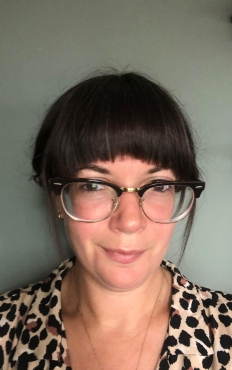 My grandmother was a great lover of history; she wanted to study it at university, but she became profoundly deaf when she was a teenager and then the Second World War intervened. She would tell me stories about Tudors and Stuarts, and she also visited local schools to recount her memories of the Blitz in London. Her love of history was infectious, and she inspired my interest in the past.
2. What is your specialist area and how did you end up focusing on this?
I studied for my MA in Art Gallery and Museum Studies during 2007, the bicentenary of the abolition of the slave trade. The Heritage Lottery Fund gave £20 million to cultural organisations to mark the anniversary so I wrote my dissertation about the politics of representation in relation to slavery, race and public history. I wanted to know more about the origins of racial thinking that underpinned collecting practices and displays, which meant going further back in time to consider the history of transatlantic slavery. I joined the Legacies of British Slave-ownership project team at University College London (UCL) as a PhD student and wrote my thesis on George Hibbert, a proslavery West India merchant and art, book and botany collector. This research eventually became my first monograph The Bonds of Family: Slavery, Commerce and Culture in the British Atlantic World (MUP, 2020).
3. What is it about your specialist area that fascinates you?
The history, legacies and representation of slavery continue to shape the world we live in today. We can discern the social, cultural, political and economic afterlives of slavery within the present. I find the way that this history connects people, places, and ideas over time fascinating – it gives meaning to the work, even if that meaning can sometimes be difficult and complicated to grapple with.
4. What is your research project about?
My most recent project focuses on the teaching of slavery in British schools. Between 2008–13, transatlantic slavery was a compulsory part of the national curriculum and it is still frequently taught. Despite the sensitivity of the subject there is little support for teachers to help them understand the historiography or develop appropriate pedagogical strategies for engaging with the topic. I partnered with professional educators at the Institute of Education, UCL to develop a teacher training programme and a book based around a series of key principles for teaching. We hope it will start a dialogue about how and why we teach this history.
5. Why did you decide to pursue this project?
There are a lot of public misconceptions about the history of transatlantic slavery, especially in an era of increased polarisation and misinformation. The history of slavery, including its impact on the development of racial thinking and the legacy of racism, are challenging issues to confront in the classroom. Teachers need to be supported to deliver the critical skills and knowledge that students need to navigate these complexities.
6. What is the project’s argument?
We argue teachers need to engage with evidence-based historical knowledge and appropriate pedagogical approaches so that they can teach the history of slavery ethically and effectively. Providing accessible training, information and resources is key to making sure that teachers have the tools they need to transform their practice.
7. What is its significance to your specialist area, the broader field of history, and our understanding of human experience?
My commitment to the project is rooted in the belief that historical research should be accessible outside of the academy. I hope that the project will demonstrate to other historians working in different fields the value of partnering with educators to bring their work into the classroom so that young peoples’ experience of learning about the past will inspire them to become the next generation of historians.
8. What were the most enjoyable, and difficult, parts of the project?
The most enjoyable part of the project was working with the students and teachers that have participated in the different education initiatives that underpinned the work. One student described her learning process as ‘mental reparations – it repaired me mentally’ – it is a huge privilege to have that kind of impact. The extraordinary dedication and innovation of the teachers was also inspiring, especially given the huge constraints of time and workload that they face.
9. Can you choose one or two ‘favourite’ sources and tell us about them?
One of the key resources that we drew on for source material for teachers was a project that I previously worked on – The Legacies of British Slave-ownership. It is an online database of slave-owners put together using archival documents covering the period 1763–1833. It includes digitised information drawn from the slavery compensation records, slave registers, plantation records, inventories, wills, maps and almanacs. The data is searchable by area making it an ideal way to connect slavery with local history, closing the geographical distance between the Caribbean and Britain. It is also organised by legacy strands so that teachers can easily identify recognisable case studies that help students connect the past to the present. Teachers do not have time to trawl through archives looking for material so digital academic projects can provide a way for them to access historical sources more easily.
10. What advice would you give to those who want to study history, whether as part of a degree at university, or beyond a university context?
History is such a powerful subject, it gives us the critical analytical skills to make sense of the world around us. It also has the potential for building shared understanding. I have worked in public and academic history, and both have demonstrated to me the ways that telling different stories about the past can build connection and community. In an increasingly fractious age that is work worth doing.
11. What are you planning to work on next?
I want to examine the relationship between slavery and industrialisation through a study of the Greg family who owned both Quarry Bank Mill and plantations in Dominica and St. Vincent. The framework offers an opportunity to consider the intersections of race and class within different labour histories in Britain and the Caribbean. It also provides a route into thinking about how slavery and empire shaped one of the defining moments in British history.
Read more from our Opening up history series
-
Opening up history: anti-nuclear activism during the Cold War
Read now to access more details of Opening up history: anti-nuclear activism during the Cold WarDr Luc-André Brunet is a senior lecturer in Contemporary International History at The Open University. As part of our Opening up history series, we speak to him about his current project on anti-nuclear activism.
-
Opening up history: art in the Reformation
Read now to access more details of Opening up history: art in the ReformationIn this Opening up history conversation we speak to Dr Roisin Watson about her research on how Protestants used images and objects to express their faith in the Reformation.
-
Opening up history: eighteenth century ideas of national independence
Read now to access more details of Opening up history: eighteenth century ideas of national independenceAs part of our Opening up history series, we speak to Dr Anna Plassart, senior lecturer in History about her current research.
-
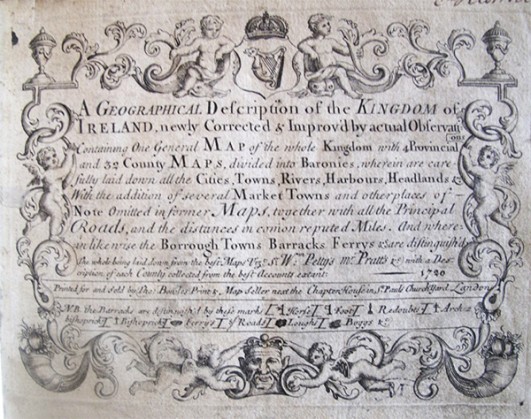
Opening up history: political culture in eighteenth-century Ireland
Read now to access more details of Opening up history: political culture in eighteenth-century IrelandDr Suzanne Forbes is a senior lecturer whose current research focuses on ‘controverted’ elections in eighteenth-century Ireland. OpenLearn speaks to her as part of our Opening up history series, where we delve into the thoughts and work of OU historians.
-
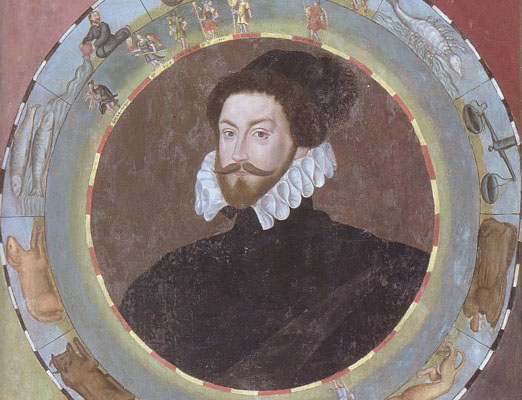
Opening up history: religion and politics in the Elizabethan era
Read now to access more details of Opening up history: religion and politics in the Elizabethan eraHistorian Dr Neil Younger recounts his fascination with the Elizabethan era and the political dynamics of this period, which has led him to his current research project.
-
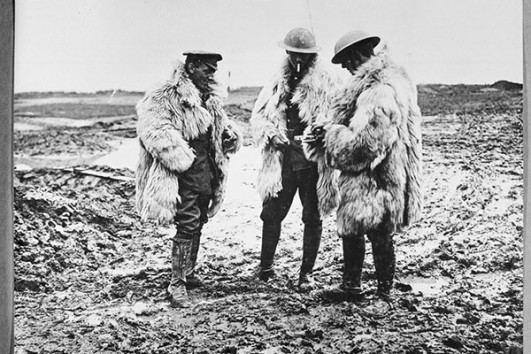
Opening up history: the intersections of tobacco consumption and modern war
Read now to access more details of Opening up history: the intersections of tobacco consumption and modern warDr Michael Reeve is a lecturer in Modern British History at The Open University. We speak to him here about his current research on smoking in wartime Britain, as part of our Opening up history series.
Like this? Try a FREE course
-
Empires: power, resistance, legacies
Learn more to access more details of Empires: power, resistance, legaciesEmpires have existed throughout most of human history. They have spanned the globe. They have influenced the way we are governed, our systems of trade, how we use technology, our relationships with the natural world. They have shaped how we have seen, mapped and divided the world. They have profoundly affected how we have understood and ...

-
Historical perspectives on race
Learn more to access more details of Historical perspectives on raceRace is not biological. It is a social construction. Yet we know that in our contemporary world and in history, this construction has real consequences. From enslavement and colonisation to resistance and revolution, the stories of people of colour are often left untold in accounts of the past. This free course, Historical perspectives on race, ...

-
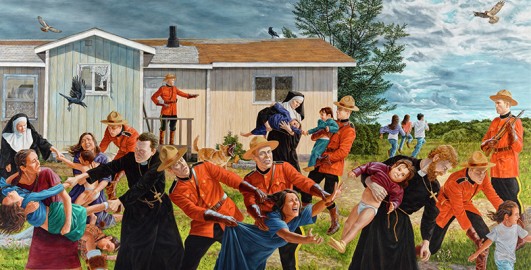
Who gets to be a human? Religion in colonial histories and Indigenous resistance
Learn more to access more details of Who gets to be a human? Religion in colonial histories and Indigenous resistanceThe global challenge of growing inequalities is intricately linked to the distinction made between those historically regarded as human and those who have not been. The division between ‘civilised’ and ‘non-civilised/primitive’ played a vital role in justifying the colonisation and enslavement of those who were deemed ‘lesser human’, ‘other ...
Rate and Review
Rate this article
Review this article
Log into OpenLearn to leave reviews and join in the conversation.
Article reviews