
Find out more about The Open University's Arts and Humanities courses and qualifications.
1. What first got you interested in history?
 Honestly, I can’t remember a time when I wasn’t fascinated by history.
2. What is your specialist area and how did you end up focusing on this?
Like many, I studied the Tudors at A-Level, and loved the period, especially the reign of Elizabeth, though I never did (and in some ways still don’t) find Elizabeth herself exceptionally compelling. Over one summer holidays I read J. E. Neale’s biography of Elizabeth, published in 1934 and which is still arguably the best account of her life. I was fascinated by the political dynamics of the period – the interaction of a relatively small group of (mostly) men at Elizabeth’s court who decided how England would navigate the treacherous waters of late sixteenth-century Europe.
3. What is it about your specialist area that fascinates you?
Primarily, I’m interested in how political systems work – how different people, in different social circumstances and with different ideas and objectives and wishes – deal with each other to influence events and produce the outcomes that we can observe. Within that, partly due to the major debates being conducted by other historians in the field, I’ve focused a lot on warfare and the effect of religious change on early modern politics, despite not being especially interested in war or at all religious! Ultimately, since I was studying for my first university degree, Elizabethan England is simply the period and place where I feel I belong.
4. What is your research project about?
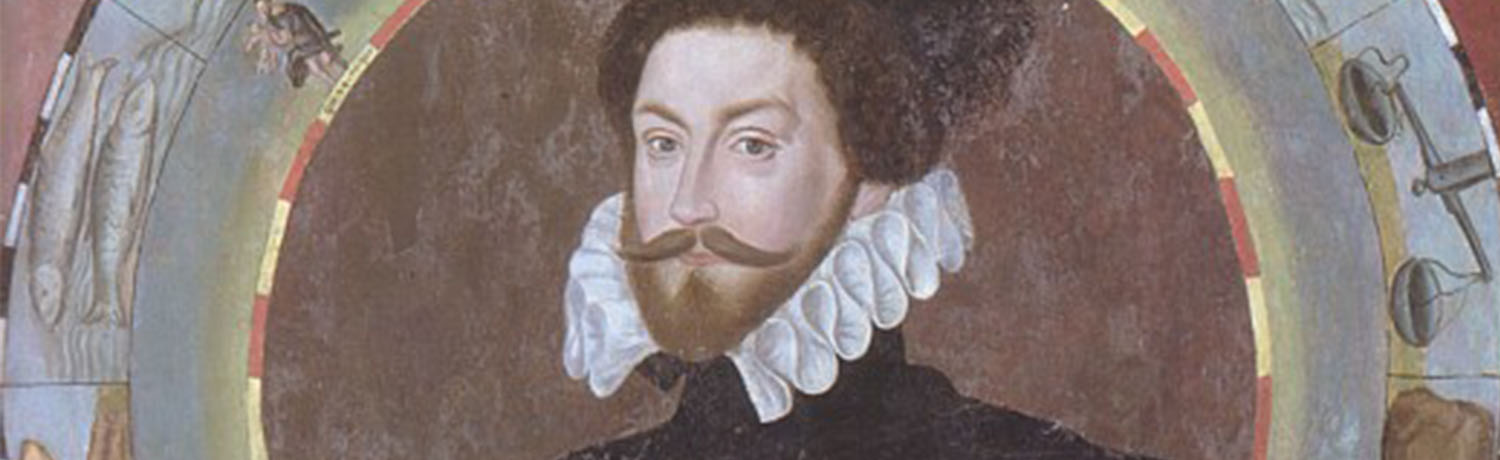
The book is in the form of a biography of a political figure, one of the most traditional historical formats, and focuses on Christopher Hatton, a courtier and politician under Elizabeth I. Hatton was a royal favourite, meaning his place at court was not due to birth or exceptional political talents or skills, but purely the fact that Elizabeth liked and trusted him, which in early modern personal monarchies, gave him political significance and power. The book gives as thorough an account of the man and his career as I could achieve with the available sources.
5. Why did you decide to pursue this project?
I arrived at this project entirely by accident; I happened to be reading an old biography of Hatton, which mentioned quite casually that many of the people Hatton was close to were Catholic or religiously conservative; some, indeed, were involved in the so-called Babington plot to assassinate the queen. This astonished me, since after all Elizabeth was the great Protestant heroine; how could her favourite Hatton be associated with people like this? I started pulling on this thread, and it quickly became clear that this was interesting enough to be the subject of an article, and later that a book would be needed to do it justice.
6. What is the project’s argument?
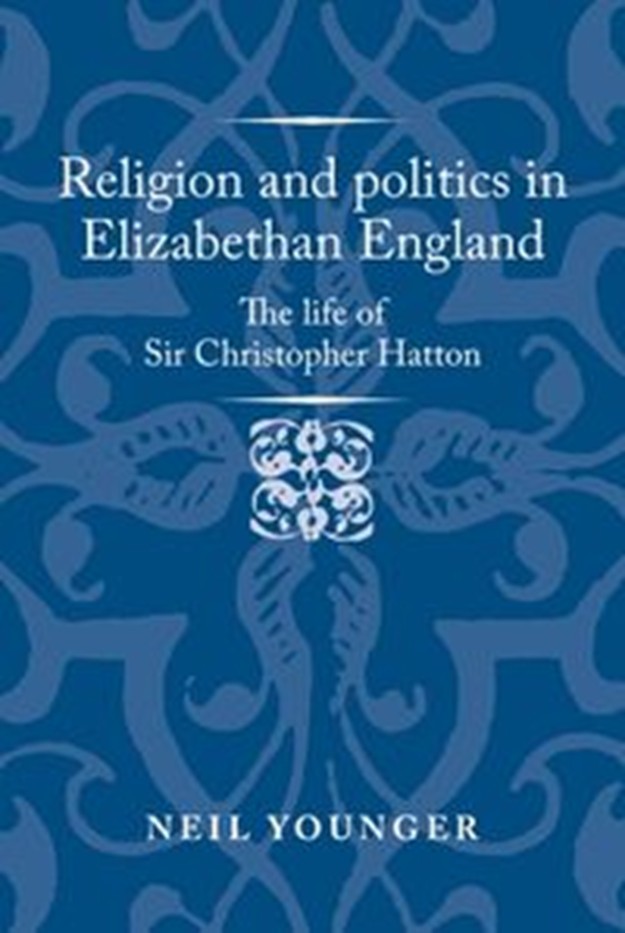 The argument arises directly from Hatton’s religious position: as I explored Hatton further, it became clear that everywhere one looked in Hatton’s life, one found Catholic links. Since Catholicism was a persecuted religion in Elizabethan England, there seemed no reason for this unless Hatton had some sympathy for Catholicism himself, or at least was not hostile to it, as many Elizabethan ministers were. At a certain point, I concluded that Hatton must have been a Catholic, or something like a Catholic.
7. What is its significance to your specialist area, the broader field of history, and our understanding of human experience?
The book explores the implications of that original insight, because if Elizabeth’s government was not as universally Protestant as historians believed, many things start to look different. It affects our assessment of the political debates of the period and personal relationships within the government. It may help explain some of the major decisions Elizabeth made – the fact that she was so cautious about executing Mary Queen of Scots, or supporting foreign Protestants abroad, or that she was often as worried about puritans as about Catholics, and so on.
8. What were the most enjoyable, and difficult, parts of the project?
As with most research projects, the most fun part was the start, when I was investigating Hatton’s networks. I did hundreds or thousands of internet searches of Hatton’s contacts (family, servants, allies at court and in the counties), then built up a picture of who they were, what they believed, what their networks were, and so on. This would have been virtually impossible without internet searching and the existence of digitised online sources. After that came the much harder work of writing it all up.
9. Tell us about the sources that you used, and the challenges that came about using them.
One important reason why Hatton had been neglected by historians is that he’s very poorly documented; historians are always dependent on their sources. Hatton’s papers were lost or destroyed, so historians have not paid much attention to him. This is why I started by exploring Hatton’s networks of personal relationships, on the basis that a person can be fairly accurately judged by the company they keep.
10. Can you choose one or two ‘favourite’ sources and tell us about them?
I was intrigued to find that Hatton splashed out on the right to mark swans with his personal monogram: in 1583 he bought the ‘Swanne marke of the Romane H’ – a 16th-century equivalent to a personalised numberplate. Very late in the writing, I also discovered a book from1604, which satirically described Hatton’s servants in their local environment in the London church of St Andrew’s Holborn – an inconsequential point, but it was striking to find the people I’d become familiar with in this obscure work, behaving more or less as I’d guessed.
11. What advice would you give to those who want to study history, whether as part of a degree at university, or beyond a university context?
For me, the essence of being a historian (as opposed to simply reading about history) is being critical: refusing to take other people’s word for it, demanding to see the evidence, always asking ‘how do you know that?’.
12. What are you planning to work on next?
Having done two fairly narrowly-focused books, I want to broaden out and write an account of the whole of Elizabeth I’s reign. There are endless biographies of Elizabeth, but surprisingly enough there’s no book giving a straightforward political history of the reign in a single, manageable volume.
Read more from our Opening up history series
-
Opening up history: anti-nuclear activism during the Cold War
Read now to access more details of Opening up history: anti-nuclear activism during the Cold WarDr Luc-André Brunet is a senior lecturer in Contemporary International History at The Open University. As part of our Opening up history series, we speak to him about his current project on anti-nuclear activism.

-
Opening up history: art in the Reformation
Read now to access more details of Opening up history: art in the ReformationIn this Opening up history conversation we speak to Dr Roisin Watson about her research on how Protestants used images and objects to express their faith in the Reformation.
-
Opening up history: eighteenth century ideas of national independence
Read now to access more details of Opening up history: eighteenth century ideas of national independenceAs part of our Opening up history series, we speak to Dr Anna Plassart, senior lecturer in History about her current research.
-
Opening up history: political culture in eighteenth-century Ireland
Read now to access more details of Opening up history: political culture in eighteenth-century IrelandDr Suzanne Forbes is a senior lecturer whose current research focuses on ‘controverted’ elections in eighteenth-century Ireland. OpenLearn speaks to her as part of our Opening up history series, where we delve into the thoughts and work of OU historians.
-
Opening up history: teaching transatlantic slavery in British schools
Read now to access more details of Opening up history: teaching transatlantic slavery in British schoolsIn this Opening up history conversation we speak to Dr Katie Donington, senior lecturer in Black, African and Caribbean History at The Open University, about her most recent project focusing on the teaching of slavery in British schools.

-
Opening up history: the intersections of tobacco consumption and modern war
Read now to access more details of Opening up history: the intersections of tobacco consumption and modern warDr Michael Reeve is a lecturer in Modern British History at The Open University. We speak to him here about his current research on smoking in wartime Britain, as part of our Opening up history series.
Like this? Try a FREE course
-
Early modern Europe: an introduction
Learn more to access more details of Early modern Europe: an introductionThe early modern period from 1500 to 1780 is one of the most engaging periods for historical study. Beginning with the upheavals of the Reformation, and ending with the Enlightenment, this was a time of fundamental intellectual, social, religious and cultural change. At the same time, early modern Europe was rooted in and retained many of the ...

-
The many guises of the emperor Augustus
Learn more to access more details of The many guises of the emperor AugustusThis free course focuses on Rome’s first emperor, Augustus, who lived from 63 BCE to 14 CE. The rule of Augustus marked a significant political change in Rome, and Augustus’ position as emperor was initially fragile and controversial. Key to his success in holding onto power was his masterful use of visual propaganda to cement his position and ...

-
The ethics of cultural heritage
Learn more to access more details of The ethics of cultural heritageThis free course, The ethics of cultural heritage, provides the basic theory behind the protection of cultural property in war zones and is presented in three parts: the protection of cultural property; the legal basis for that protection; and accounts of proportionality (that is, on deciding whether or not there is a feasible alternative to ...

Rate and Review
Rate this article
Review this article
Log into OpenLearn to leave reviews and join in the conversation.
Article reviews