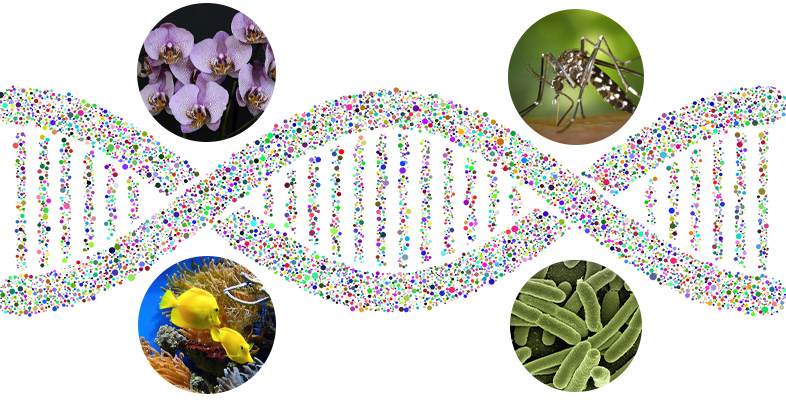
Metagenomics, the study of genetic material directly recovered from biological and environmental samples, is revolutionising biomedicine and environmental science. This free course will help you to learn how metagenomics works and how it can be used in a wide range of applications such as studying microbes, diagnosing disease, and contributing to biodiversity conservation.
Course learning outcomes
After studying this course, you should be able to:
understand the basic concepts in metagenomics
demonstrate an understanding of how metagenomics data are generated and interpreted
explain the differences between metagenomics and targeted sequencing
understand potential applications and limitations of metagenomics in microbiology, infectious diseases, and conservation science
make sense of information presented in different ways, including written, numerical, and audio-visual.
The course provides a well-balanced introduction to a subject that most will find of great interest.
Aside: I have already taken the courses listed within...
"If you enjoyed this course, you may want to explore the following OpenLearn resources" ...and look forward to further courses in this area!
Miscellaneous notes:
1.2 Sequencing the genetic material
The question appears superfluous, given that the information was given immediately prior?
1.3 Making sense of the sequences
Question 1: "Table 1 (completed) DNA sequences found in the two ponds and reference organism sequences"
For Pond A, there is a CATACA matched against "Alga", instead of "Water hyacinth".
Question 3: Pond B contains Bacterium, Fish species A, Fish species B, Frog, Water flea, and Water hyacinth, a total of SIX, rather than the 7 given in the answer? Out of the 8 known, THREE were Water flea.
2.2 Detecting antimicrobial resistance in the environment
Question 5: The answer states "highlighting manure as a key reservoir and potential dissemination point for resistance genes within agricultural systems and into the wider environment", however, the results that yielded this statement were surely localised to Alabama (rather than Tennessee) "notable state-specific variations"?
Aside: I have already taken the courses listed within...
"If you enjoyed this course, you may want to explore the following OpenLearn resources" ...and look forward to further courses in this area!
Miscellaneous notes:
1.2 Sequencing the genetic material
The question appears superfluous, given that the information was given immediately prior?
1.3 Making sense of the sequences
Question 1: "Table 1 (completed) DNA sequences found in the two ponds and reference organism sequences"
For Pond A, there is a CATACA matched against "Alga", instead of "Water hyacinth".
Question 3: Pond B contains Bacterium, Fish species A, Fish species B, Frog, Water flea, and Water hyacinth, a total of SIX, rather than the 7 given in the answer? Out of the 8 known, THREE were Water flea.
2.2 Detecting antimicrobial resistance in the environment
Question 5: The answer states "highlighting manure as a key reservoir and potential dissemination point for resistance genes within agricultural systems and into the wider environment", however, the results that yielded this statement were surely localised to Alabama (rather than Tennessee) "notable state-specific variations"?