
1.1 Preparing the genetic material
The process begins with collecting an environmental or biological sample. Different samples are collected in different ways. For example, water from a river is collected by submerging a sterile bottle below the water surface. Regardless of the sample and how it is collected, the important thing is to make sure that the genetic material is not degraded. Scientists usually add chemical preservatives that ‘fix’ DNA and RNA, or keep samples cold and away from heat or direct light.
The genetic material cannot be used as it is directly from a sample but must be isolated and cleaned from contaminants that can interfere with the steps required for metagenomics. These steps also help in making the genetic material more concentrated and easier to sequence later.
During extraction, the cells are opened up (lysed) to release their contents. The DNA and RNA are then purified using specialised chemicals, more often using commercially available extraction kits which come in a column format.
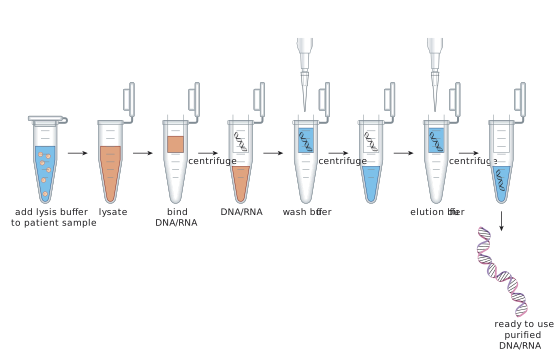
While in most cases scientists look for DNA, there are many viruses (like flu or the Ebola virus) which have a genome made of RNA. The sample extraction process is similar to DNA. However, RNA cannot be sequenced directly and must first be turned into DNA. This is accomplished using a particular chemical reaction called reverse transcription.
Now that the genetic material from the sample is ready, it can proceed for the next step.