
Learning Outcome 3: Verify and Update Existing Data
Information Sheet 3.3-1:
Maintaining Data Integrity
Data within T2MIS is not static; it exists in a dynamic environment where verification and updates are necessary to maintain its accuracy and reliability over time. Maintaining data integrity—the overall accuracy, completeness, and consistency of data—is a critical ongoing process essential to the credibility of the TESDA certification system.
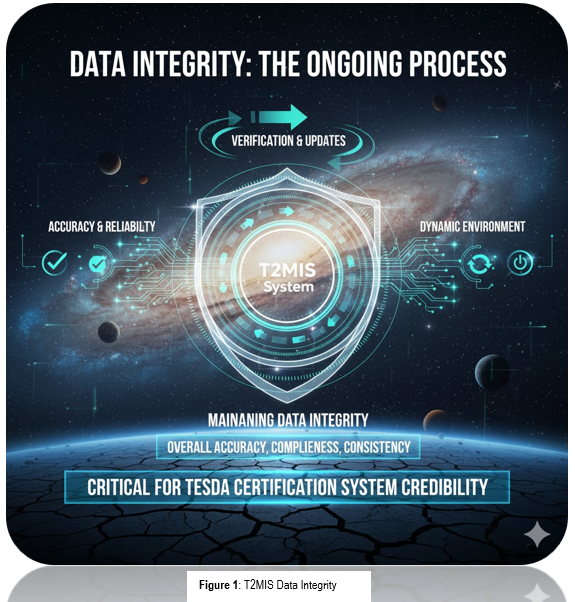
This topic addresses the disciplined procedures for verifying the correctness of existing data and implementing authorized updates, ensuring that T2MIS remains a true and trustworthy reflection of assessment records
Verifying Authenticity: Before making changes, verify the authenticity of the data according to established guidelines. This may involve using specialized verification tools or cross-checking new information against a reliable source.
The Pillars of Data Integrity in T2MIS
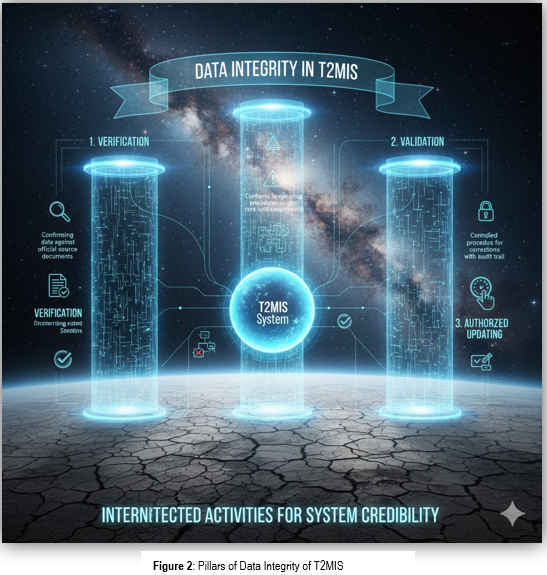
Data integrity is upheld through three core, interconnected activities:
- Verification: The systematic process of confirming that data already in T2MIS is correct, consistent, and matches the information on the official source documents.
- Validation: The process of checking that data not only matches the source but also conforms to operating procedures and guidelines (e.g., a candidate cannot be marked "Competent" if a core unit is "Not Yet Competent").
- Authorized Updating: The controlled procedure for correcting errors, adding new information, or amending records based on verified discrepancies, always with proper authorization and an audit trail.
Modifying and Updating Data: If verification shows that a record is incorrect, you must request the correction of the existing data immediately. This should be done carefully, following standard operating procedures.
The Updating Process: Correcting Errors and Managing Changes
When verification uncovers a discrepancy, a strict updating protocol must be followed to maintain integrity.
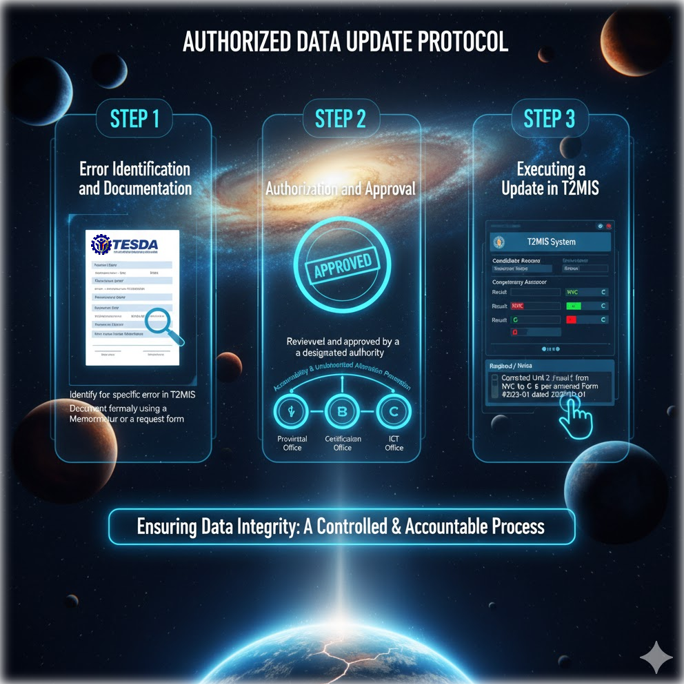
The Authorized Data Update Protocol:
Step 1: Error Identification and Documentation
- Identify the specific error in T2MIS.
- Document it formally using a Memorandum or a request form. This form must include:
- Reason for the Change (e.g., "Encoding error," "Reassessment result")
- Duplication of Candidate's Name
- Change of Competency Assessor
Step 2: Authorization and Approval
- The Memorandum or Request Form or Feedback Form must be reviewed and approved by a designated authority, typically from the Provincial Office to the TESDA Central Office (Certification Office or Information and Communication technology Office). This ensures accountability and prevents unauthorized alterations.
Step 3: Executing the Update in T2MIS
- The ICTO personnel of TESDA log into T2MIS.
- Navigates to the correct candidate record and makes the specific, approved change.
- Critical Action: Adds a note in the system's "Remarks" or "Notes" field explaining the change and referencing the Data Change Request Form number and date (e.g., "Corrected Unit 2 result from NYC to C per amended Form"). This creates a crucial digital audit trail.
Verifying and updating data in T2MIS is a fundamental stewardship activity that protects the value of TESDA certifications. It is a disciplined cycle of checking, authorizing, and correcting that ensures the digital system remains aligned with physical reality.
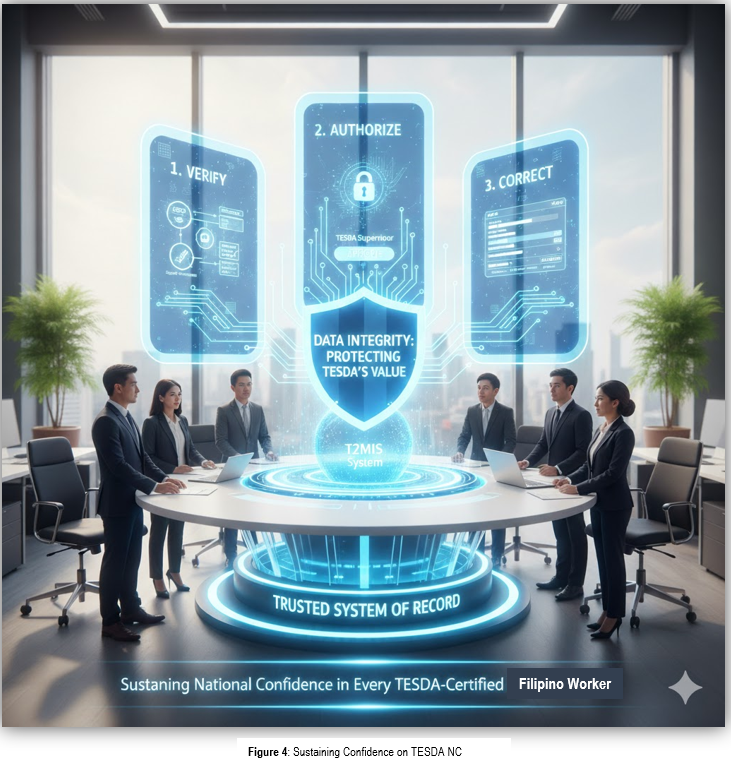
By adhering to a strict protocol centered on authorization, documentation, and audit trails, Assessment Centers transform T2MIS from a mere repository of information into a dynamic, reliable, and trusted system of record. This unwavering commitment to data integrity is what ultimately sustains national confidence in the competency of every TESDA-certified Filipino worker.