
My OpenLearn Profile
Personalise your OpenLearn profile, save your favourite content and get recognition for your learning
Artists and authorship: the case of Raphael
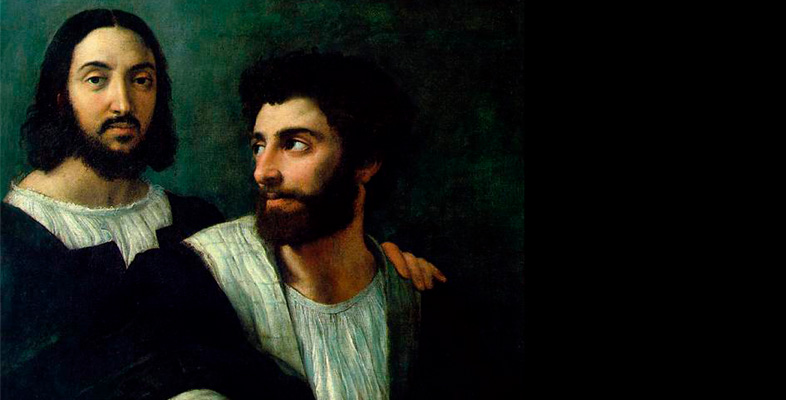
Individual artists have been the traditional focus of art history, but how do we evaluate the figure of the artist? This free course, Artists and authorship: the case of Raphael, takes the life of Raphael as a case study. You will examine sixteenth-century sources to explore the creation of artistic authorship in the early modern era. The course explores past and current approaches to the artist in terms of authorship, identity and subjectivity. You will consider issues such as the relationship between the artist's life and work, the enduring notion of 'genius' and the artist as a source of meaning.
Course learning outcomes
After studying this course, you should be able to:
- understand how both primary and secondary sources need to be read critically to identify and evaluate arguments and approaches
- understand and evaluate biography as a form of writing with its own traditions and conventions
- demonstrate a critical awareness of differing approaches to art history
- comprehend and engage with a range of ideas about selfhood and subjectivity.
First Published: 11/02/2016
Updated: 04/06/2018
Rate and Review
Create an account to get more
Track your progress
Review and track your learning through your OpenLearn Profile.
Statement of Participation
On completion of a course you will earn a Statement of Participation.
Access all course activities
Take course quizzes and access all learning.
Review the course
When you have finished a course leave a review and tell others what you think.
Also, whilst there are references to Raphael's 'workshop' (in direct contrast to its absence in respect of Michelangelo), Raphael’s authorship surely requires engaging with the workshop as a creative system:
- Centralised design control (Raphael as chief designer)
- Distributed execution (assistants handling drapery, backgrounds, architecture)
- Quality‑control bottlenecks (Raphael’s finishing touches)
- Standardised stylistic templates (cartoons, modelli, pattern books)
- Specialised labour divisions (Penni for colour, Giulio for dynamism, etc.)
- Brand consistency (everything still “looked like Raphael”)
Onward to Goya...