

5.2 Cost
Concern over supply is not the only reason for recycling elements. Recycling can be cost effective too. For example, consider aluminium – the most abundant metal on Earth.
Aluminium is extracted using electrolysis from aluminium oxide found in the mineral bauxite. In this process you require a metal ore which has been heated to a temperature high enough to convert it into a liquid. But this is particularly problematic in the case of aluminium extraction, as aluminium oxide requires a temperature of 2000oC in order to melt it. This would be incredibly energy consuming and too expensive to be economically viable.
Instead, aluminium oxide is dissolved in molten cryolite, Na3AlF6 , which has a much lower melting point then aluminium oxide, meaning the electrolysis reaction can be carried out at about 950oC.
However, even so, aluminium extraction is still a highly energy-intensive process.
Aluminium production on Anglesey
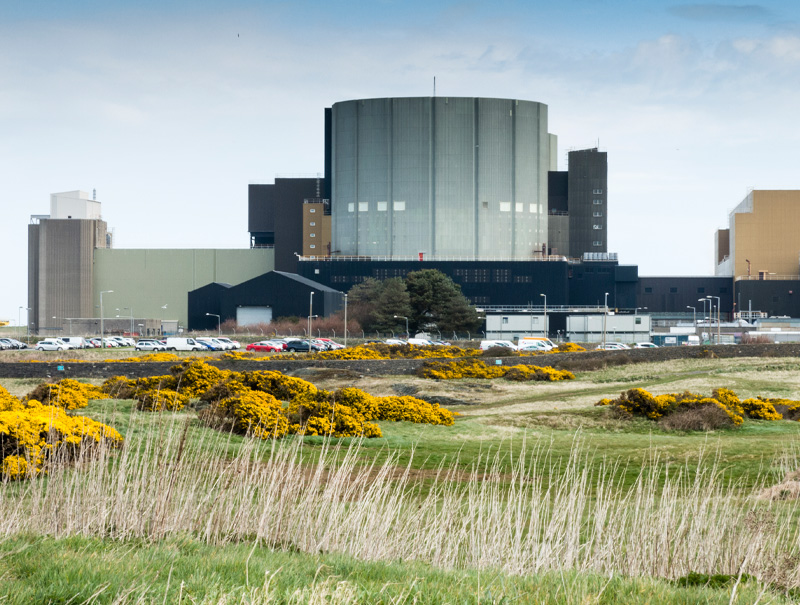
For many years, aluminium production was carried out on the island of Anglesey in North Wales and used over 12% of the total electricity consumption of Wales. Electricity was supplied by the nearby Wylfa nuclear power station (below), the closure of which in 2010 led to production of aluminium on the island also coming to an end, as an economically viable source of electricity was not available.
So, even though there is plenty of aluminium ore around (look back at Figure 7), recycling aluminium (Figure 8) which involves re-melting the metal, saves almost 95% of the energy required to recover aluminium from its ore, making it a more economical source of the metal.

In fact the physical and chemical properties of aluminium must be thanked for this saving:
- Aluminium melts at 660oC, which means the aluminium-recycling process operates at a much lower temperature than extraction by electrolysis.
- Aluminium is resistant to corrosion owing to the formation of a thin oxide layer on its surface, which protects the underlying metal and is another plus point in favour of recycling.