

5.1 Supply
The Periodic Table is the iconic depiction of all the known chemical elements, organised by atomic number. It is one of the iconic images most of us remember from our school days, perhaps even being taught weird mnemonics to help us remember at least a fair chunk of it.
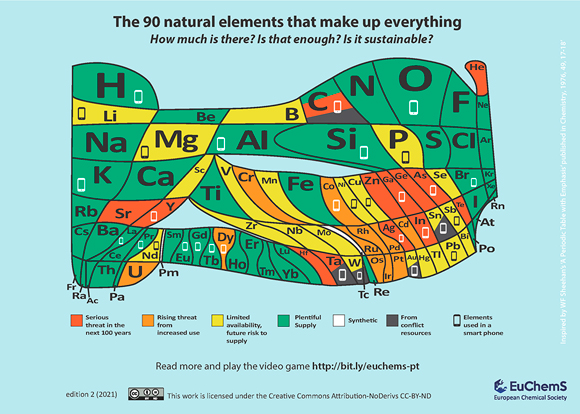
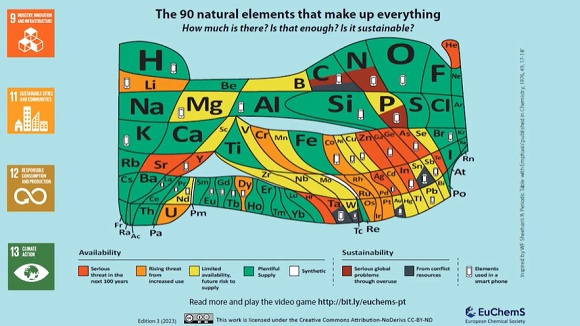
But Figure 5.2 shows a somewhat different version of the Periodic Table. In this case the area occupied by each element represents its abundance: the greater the area, the more common the element is. Importantly it also highlights those natural elements that are being overused and are running out.
Activity 4 Sustainability and The Periodic Table
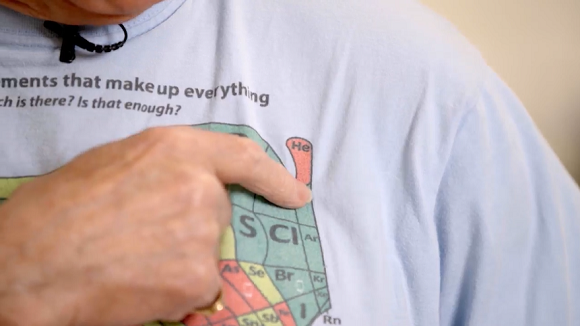
You can find out more about the way the elements are represented in Figure XX and in the two videos below, including the drive to recycle elements in low abundance.
Transcript: Video 5 The Periodic Table and sustainability (part 1)
Transcript: Video 6 The Periodic Table and sustainability (part 2)
-
What role does the element indium play in mobile phones?
-
The compound of indium, indium tin oxide (ITO) enables touchscreens to work – it is electrically conducting, sticks to glass and is transparent.
-
What is the important clinical application of helium, which means it is essential we have a continued supply of the gas?
-
Liquid helium is the coolant used in MRI scanners. As you saw in Video 5.1, hospitals tend to recycle helium.
-
Why is the use of helium filled party balloons justifiably frowned upon, and why are they banned in Gibraltar?
-
Helium is a finite resource; there are only a few places on earth where it is found. The gas readily escapes into outer space if released and lost for ever, its use in balloons would there seem incredibly wasteful. In addition, given the likelihood plastic balloons may end up in the sea, thus harming marine life, the Gibraltar government has banned their use.
So you have seen that many ‘at-risk’ elements are found in consumer electronics, such as mobile phones and computers.
Could remove if reuse of Video 5.3 (external) is a problem.Technologies are being developed that can be utilised for the recovery of metals from electronic devices and electronic waste (e-waste) – this is part of so-called urban mining, where valuable materials are recovered from urban waste of various types .
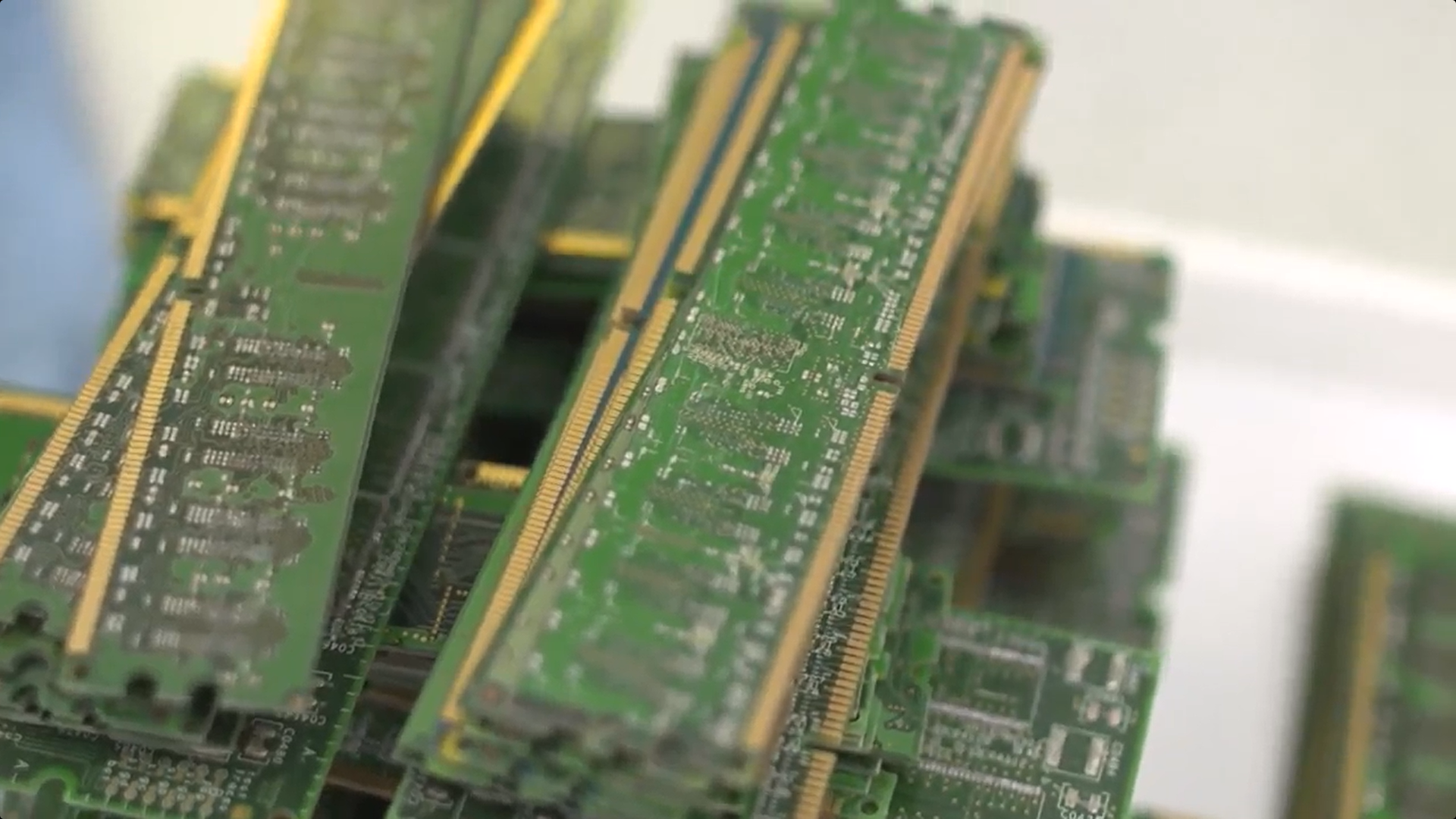
Best known for the manufacture of UK coins, the Royal Mint based in Llantrisant, South Wales is carrying out ‘urban mining’, using innovative chemical processes to recover precious metals. Working in partnership with an international clean technology partner, it is using room-temperature chemistry to leach gold from printed electronic circuit boards. This gold is precipitated out and formed into ingots that can be used in a range of products – another example of a circular economy.
This work is described in the following video.
Transcript: Video 7 Extracting gold from e-waste
Best known for the manufacture of UK coins, the Royal Mint based in Llantrisant, South Wales is carrying out ‘urban mining’, using innovative chemical processes to recover precious metals. Working in partnership with an international clean technology partner, it is using room-temperature chemistry to leach gold from printed electronic circuit boards. This gold is precipitated out and formed into ingots that can be used in a range of products – another example of a circular economy.