The standard view of this forum does not always work well with
assistive technology. We also provide a simpler view, which still contains all features. Switch to simple view.
My OpenLearn Create Profile
- Personalise your OpenLearn profile
- Save Your favourite content
- Get recognition for your learning
Already Registered?
Page path
Course content
View course content
- ExpandAbout this course
- Welcome
- You can enrol at any time, with each course runnin...
- Welcome
- ExpandHelp & Support
- ExpandIntroduction
- Welcome to the course! Let's start off by watching...
- E-tivity: Introduce yourself (10 minutes)
- Setting personal objectives
- Welcome to the course! Let's start off by watching...
- ExpandWeek 1 - The multidisciplinary approach and the NICE Guideline on MND (NG42)
- ExpandWeek 2 - Your MDT: who is in your team?
- ExpandWeek 3 - The patient view of multidisciplinary care
- ExpandWeek 4 - Communication: making it happen
- ExpandFAQs
- What computers or devices can I use? Do I need special software like Word? How do I read a PDF?
- I can’t see much of the screen because of the banner at the top. How can I fix this?
- I'm not that familiar with MND - is there any material to help me prepare?
- Where are all the tests and quizzes I expect to find on an online course?
- Live chat or Zoom meetings would make the course much better - why don't you have these?
- A link isn’t working- what do I do?
- I have completed an activity but I don’t see a ‘tick’ - is it broken?
- How will I know if someone has replied to my discussion post?
- Why don't I get email notifications?
- Why do I have to post and reply on the discussion boards to complete the course?
- I think I've completed everything but the site still says only xx% completed. What can I do?
- How do I know when I’ve completed the course?
- How can I download my Badge or Certificate or make it public?
- I have finished the course - how do I stop getting emails?
- I can't find an answer here - can I talk to/email someone?
- What computers or devices can I use? Do I need special software like Word? How do I read a PDF?
About this course
- 8 hours study
- 3Level 3: Advanced
- Course description
Course rewards
Free Statement of Participation on completion of these courses.
Earn a free digital badge if you complete this course, to display and share your achievement.
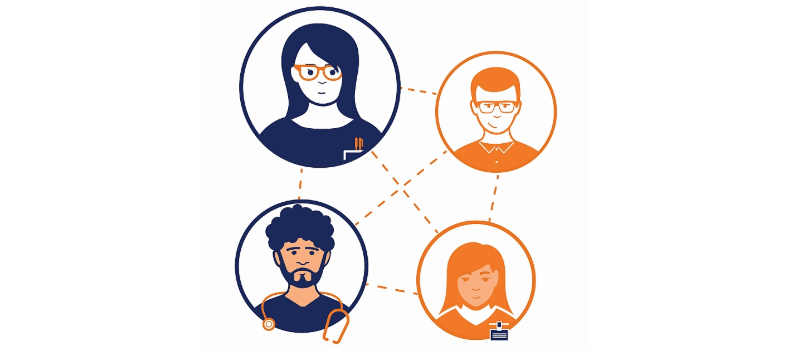
Multi-disciplinary Working - making it effective for Motor Neurone Disease
If you create an account, you can set up a personal learning profile on the site.
For further information, take a look at our frequently asked questions which may give you the support you need.
If you have any concerns about anything on this site please get in contact with us here.