
Mycenaean art
View
Along the southwest coast of Greece, there existed during the Late Helladic period from 1600 to 1100 BC and several population nuclei very similar to those of the Minoan Crete.
The modest graves of this period only contained clay vessels and some bronze weapons. But in 1600 BC, the dead began to be buried deep in sepulchre wells, shortly afterwards in conical stone chambers known as tenement tombs that reached their heyday in 1300 BC in impressive wall constructions formed by concentric rows of carved stone blocks with great accuracy.
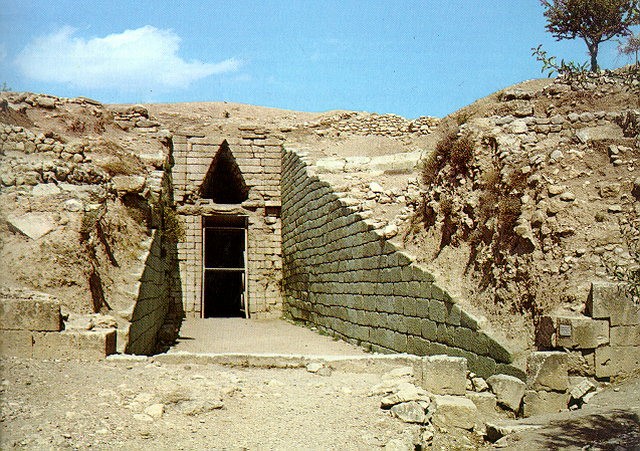
Except for some details such as the shape of the columns and various decorative motifs, Mycenaean architecture owes little to the Minoan tradition.
The palaces of the continent were fortresses set on hills and surrounded by defensive walls of huge blocks of stone, a type of construction completely unknown in Crete, but similar to Hittite fortifications.Last modified: Thursday, 9 April 2020, 5:18 AM