Etruscan Art
The flourishing of the Etruscan civilization coincides with the archaic period of Greece. It was during this time especially in the late 6th and early 5th centuries BC that ethereal art has reached its full force.
Working in a very different cultural environment, they have retained their own, well-marked identity.
Of the Etruscan temples only the stone foundations were preserved because of the buildings were made of wood. It seems that the Etruscans, although masters of masonry art rejected for religious reasons the use of stone in the construction of sanctuaries, whose layout bears a general resemblance to the simpler Greek temples, but with certain characteristics of their own, partly adopted later by the Romans.
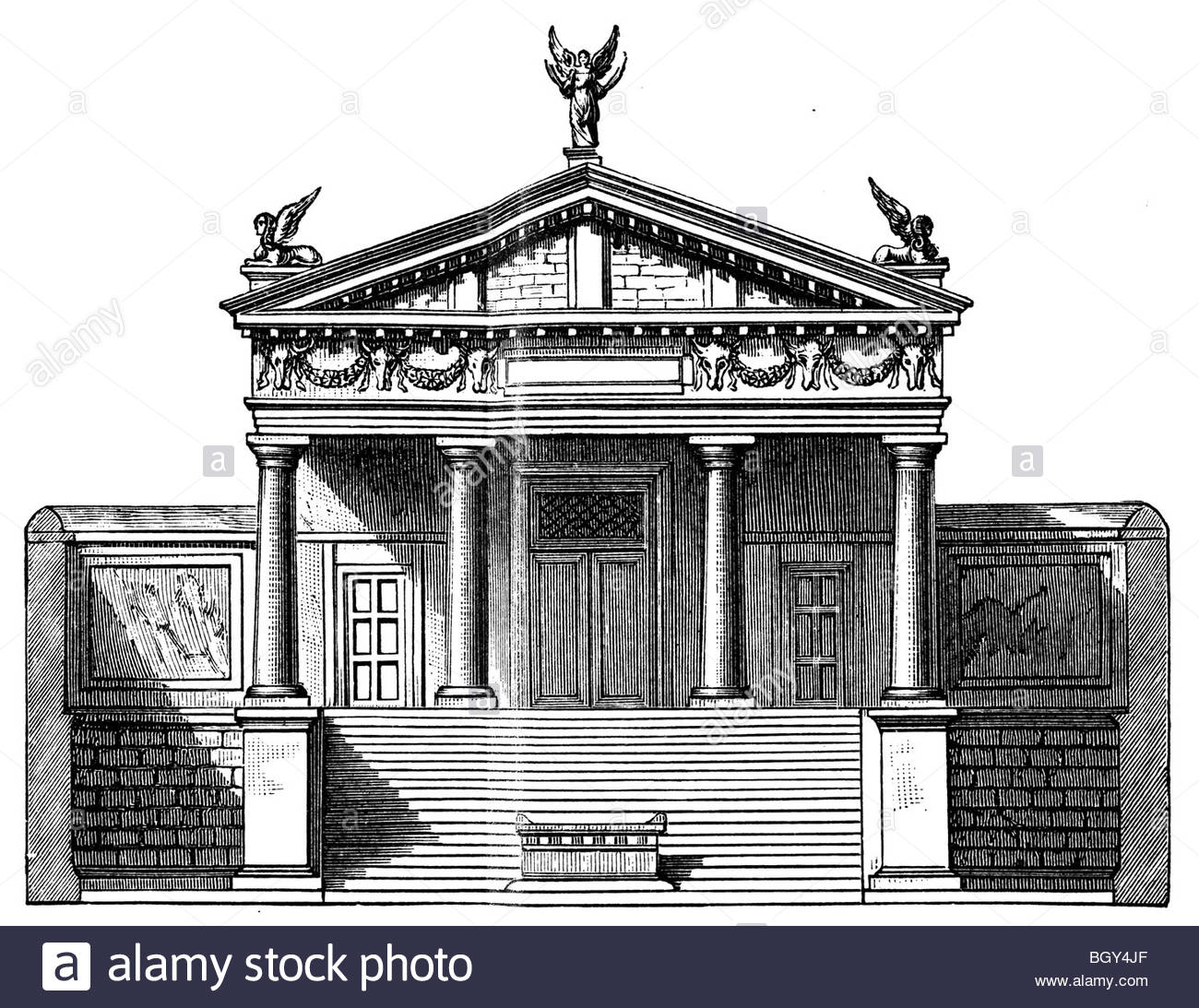
The whole building is based on a high potting of the podium, no larger than the cella, with steps only on the south side, which lead to a deep portico, supported by two rows of four columns each and the cella.
This is generally divided into three compartments, because of the Etruscan religion dominated by a triad of gods, the predecessors of the Romans Juno, Jupiter and Minerva.
The Etruscan temple thus had a squat quadrangular shape, without the elegance of the Greek sanctuaries and closest to the domestic architecture.
The plastic decoration usually consisted of terracotta plates covering the architrave and roof eaves. Only from 400 BC, one or two large scale terracotta groups are found.
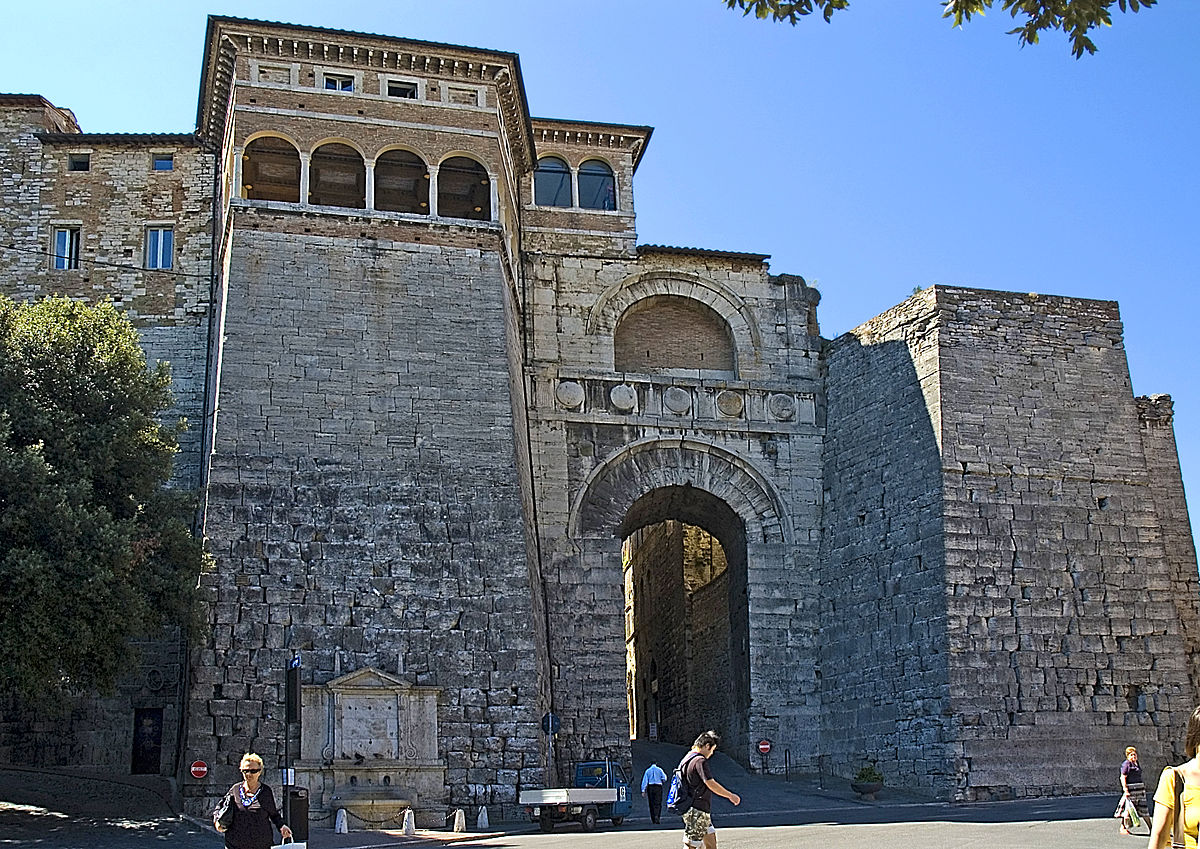
The arches were constructed of wedge-shaped blocks ie the so-called staves pointing to the centre of the semicircular opening.