archaic period
During the archaic period, we witnessed the outbreak of the artistic genius of Greece, not only in the painting of vases but also in the monumental architecture and sculpture. The new themes that distinguish the Orientalizing style from the geometric such as animal fighting, winged monsters, and combat scenes penetrate Greece mainly through ivory reliefs and imported metalwork from Phoenician and Syria where both Mesopotamian influences were felt as well as those from Egypt. These objects were found in Greek soil which allows giving as well as proven this way of transmission.
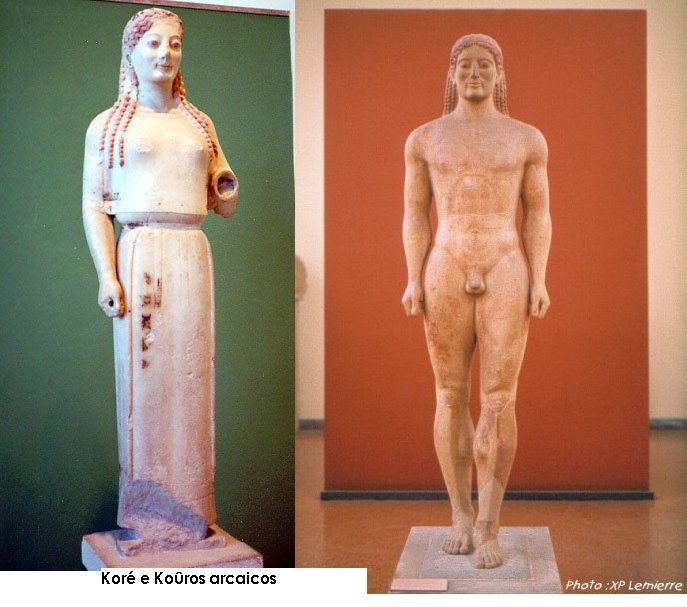
The Greek statues of the archaic period represent both female and male figures being called the Korai female figures that are represented always dressed and the kouroi male figures always naked.
The oldest stone temples we know, such as the Artemis in Corfu, show the essential traits of the Doric order well defined shortly after 600 BC. It is to be assumed that the early builders of stone buildings were inspired by three sources: Egypt, Mycenae and the pre-archaic Greek architecture of wood and brick.
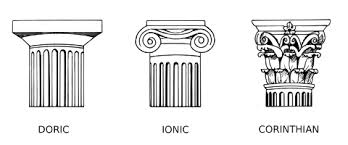
An order in architecture is a certain assemblage of parts subject to uniform established proportions, regulated by the office that each part has to perform. Coming down to the present from Ancient Greek and Ancient Roman civilization, the architectural orders are the styles of classical architecture, each distinguished by its proportions and characteristic profiles and details, and most readily recognizable by the type of column employed. The three orders of architecture—the Doric, Ionic, and Corinthian—originated in Greece. To these the Romans added, in practice if not in name, the Tuscan, which they made simpler than Doric, and the Composite, which was more ornamental than the Corinthian. The architectural order of a classical building is akin to the mode or key of classical music; the grammar or rhetoric of written composition. It is established by certain modules like the intervals of music, and it raises certain expectations in an audience attuned to its language
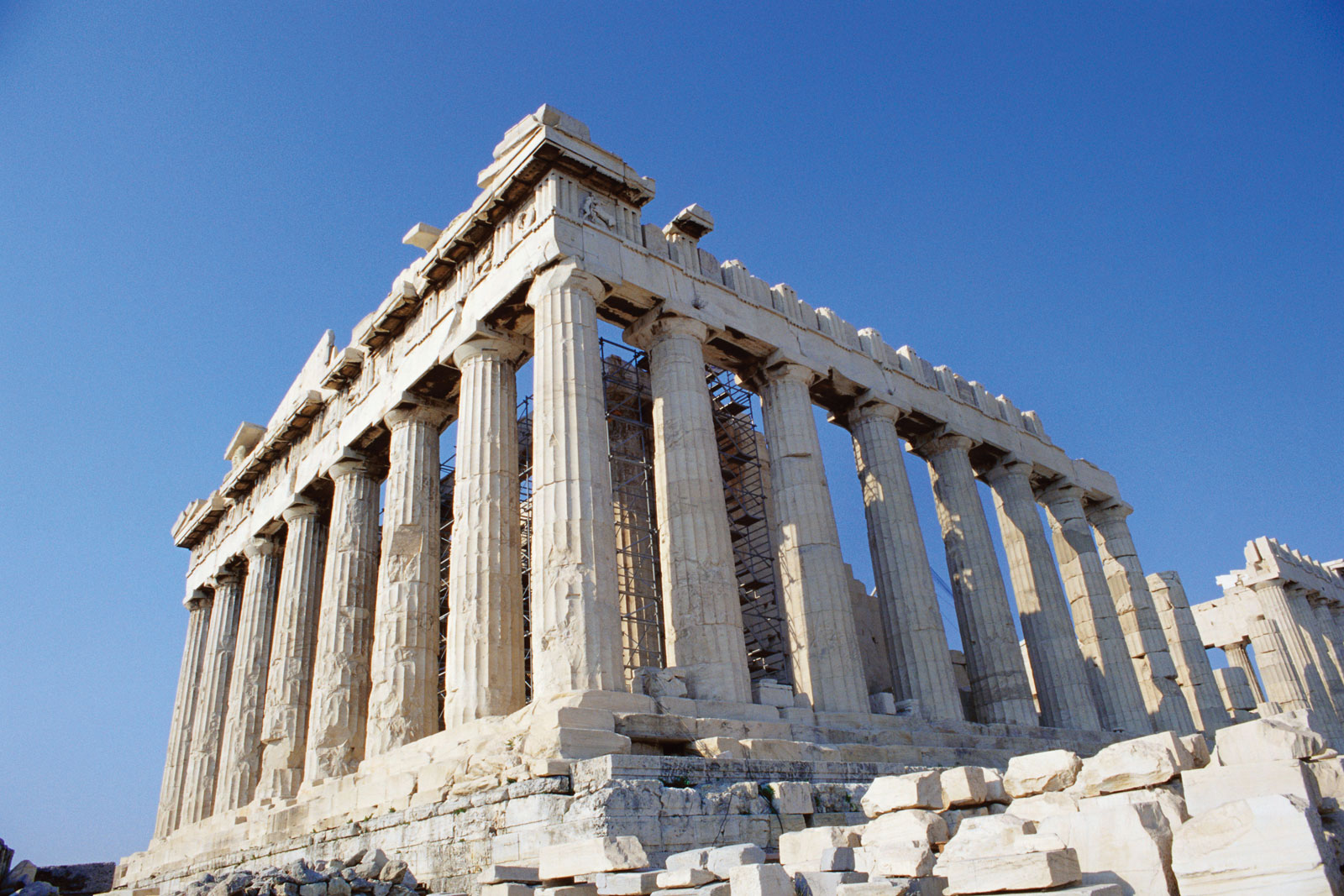
In 480 BC, shortly before being defeated, the Persians destroyed the temples and statues of the acropolis, the holy hill that dominates Athens. Its reconstruction at the end of the fifth century BC when Athens was at its height was the most ambitious undertaking of all Greek architecture and its artistic zenith. The largest of the temples was the Parthenon consecrated to the virginal Athena the patron saint of the city which gave her the name.