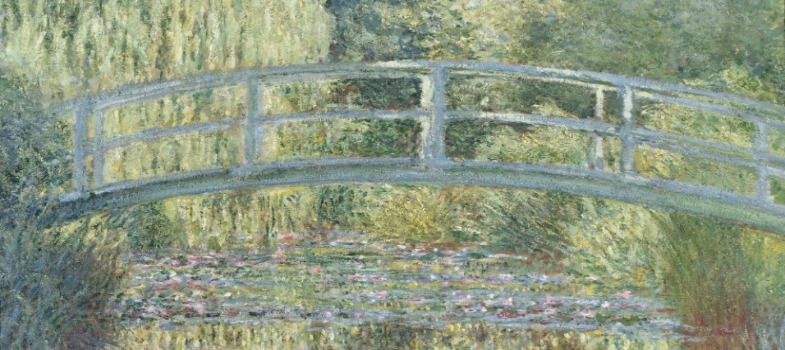
Realism
During the first half of the nineteenth century, as the clash between Neoclassicism and Romanticism waged Realism, the force that would dominate art in the second half of the century slowly began to appear.
The European man, faced with industrialization and learned to use scientific knowledge and technique to interpret and dominate nature convinced himself that he needed to be realistic, including in his artistic creations, leaving aside from the subjective and emotional views of reality.
In a sense realism had always been part of Western art. During the Renaissance, artists overcame technical limitations and represented nature with photographic acuity.
The "new" Realism insisted on the precise imitation of unchanged visual perceptions. They were also different in their themes; artists limited themselves to facts of the modern world as they experienced them personally; only what they could see or touch was considered real. Gods, goddesses, and heroes of antiquity were "out." Peasants and the urban working class were "inside." In everything from colour to a theme, Realism brought to art a sense of quiet sobriety.
They are general characteristics:
The scientism;
The valuation of the object;
The sober and the thorough;
The expression of reality and descriptive aspects.