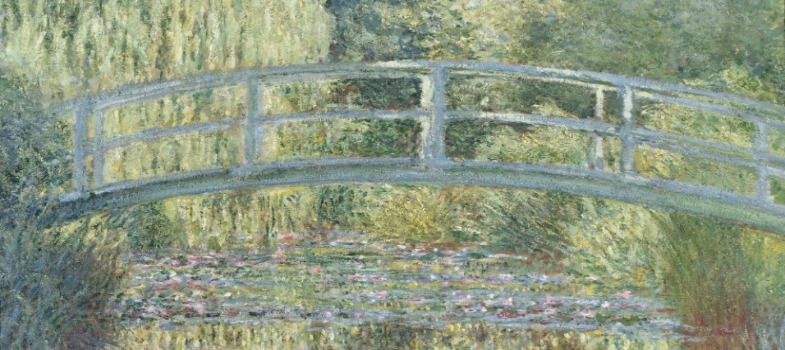
impressionism
Impressionism was an artistic movement that profoundly revolutionized painting and began the great trends of twentieth-century art. There were some general considerations, much more practical than theoretical, that artists followed in their technical procedures to obtain the results that characterized Impressionist painting.
Main features of the painting:
The painting must register the tones that the objects acquire when reflecting sunlight at a given moment, because of the colours of nature change constantly, depending on the incidence of sunlight.
The figures should not have clear contours, because the line is an abstraction of the human being to represent images.
Shadows should be bright and colourful, as is the visual impression they make us, not dark or black, as painters used to represent them in the past.
Contrasts of light and shadow must be obtained according to the law of complementary colours. Thus, a yellow near a violet produces a much more realistic impression of light and shade than the chiaroscuro so prized by Baroque painters.
Colours and shades should not be obtained by mixing the paints in the painter's palette. On the contrary, they should be pure and dissociated in the pictures in small brush strokes. It is the observer who, by admiring the painting, combines the various colours, obtaining the final result. Mixing is therefore no longer technical for optics.
The first time the public had contact with the Impressionists' work was at a collective exhibition held in Paris in April 1874. But the public and the critics reacted very badly to the new movement, as they still remained true to the academic principles of painting.


