Recognising Limits and Planning for Continuity
View
Institutional change often unfolds slowly and unpredictably (Moore et al., 2015; Wigboldus et al., 2016). Projects should recognise that policy windows may open unexpectedly, relationships require ongoing maintenance, and some forms of impact can be difficult to measure directly. Acknowledging these realities can help prevent burnout and avoid unrealistic expectations.
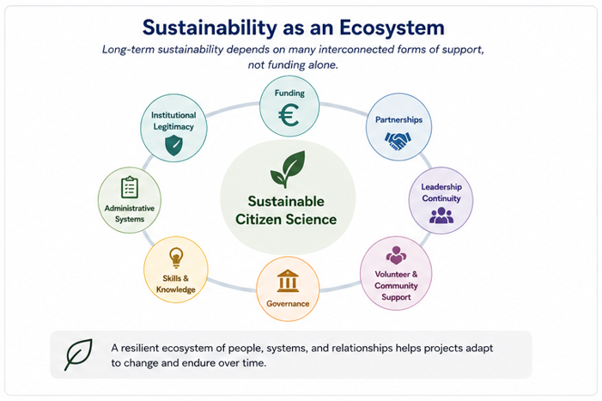
At the same time, projects frequently evolve through periods of uncertainty, including leadership changes or funding transitions (Wigboldus et al., 2016). Planning for continuity can therefore strengthen resilience by anticipating how work will proceed under changing conditions.
One useful reflection is: If a key coordinator stepped away tomorrow, what knowledge, systems, or relationships would remain vulnerable? Considering this question can help teams identify gaps and ensure that critical elements of the project are not overly dependent on particular individuals.
Last modified: Wednesday, 14 October 2026, 1:27 PM