Module 2: An overview of existing OER guidelines
Derivative of the “Logo of the OER conference in Berlin” (09/2013) by Markus Büsges licensed under CC BY SA 3.0

By the end of the 2nd module you will:
- understand the basic steps of creating, finding, using, reusing and sharing OERs,
- get a clear picture of existing OER guidelines,
- set clear objectives when creating OER.
What examples of guidelines for OERs exist?
There are several guideline proposals for the use, creation and sharing of OER.
A well known guideline is the “Life cycle for the development of OERs”. Its first version was created by Wiley in January 2008 (Wiley, 2008) while the second edition was proposed by Gurell & Wiley (2008) in the “OER Handbook for Educators 1.0 - WikiEducator” The idea behind this guideline is that the development, use and distribution of OER follows a general pattern. However, it is important to note that there is no definitive method of creating OER and the life cycle is just one proposed strategy.
According to literature (Gurell, 2008) the final version of the “Life cycle for the development of OERs” was developed by Gurell, Wiley and Tucker and comprises 5 main stages: begins with a desire or need to learn or teach something and it comprises of 5 main stages: 1) find; 2) compose; 3) adapt; 4) use; and 5) share (Figure 4).
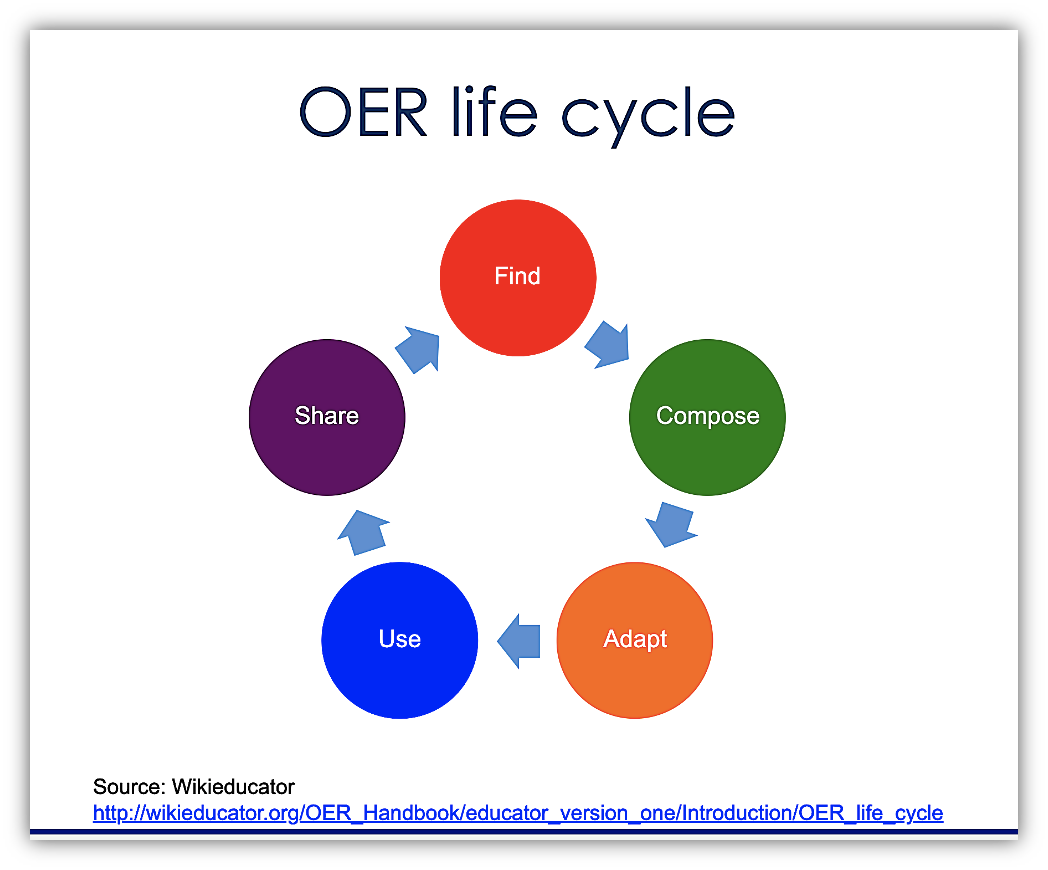
Figure 4: “Life cycle for the development of OERs” developed by Gurell, Wiley and Tucker (Gurell, 2008)
Find: start by looking for suitable resources which contribute to meeting the need or satisfying the desire. This may include using general search engines, searching specific repositories and finding individual websites. Some potential components may be available offline, including last year's lecture notes, class projects, handouts for learners and other resources prepared previously.
Compose: with a collection of resources at your disposal, start piecing them together to form a learning resource for yourself, your fellow educators and/or learners. This is a creative design process of building an educational resource from scratch and/or using components you have found.
Adapt: while composing OER, it will nearly always be necessary to adapt components to your local context. This may involve minor corrections and improvements, remixing components, localisation and even complete rework for use in diverse contexts.
Use: the actual use of OER in the classroom, online, during informal learning activities, etc.
Share: once an OER is finished, make it available for the open education community to re-use and begin the life cycle again.
Don’t forget to select a license based on how the OER is intended to be used and personal values (Gurell, 2008).
Other guidelines that worth to be explored are the the following: The TIPS Framework (Kawachi, 2014), the “Six steps to OER” guidelines developed by Northwestern Michigan College (NMC) Librarians (Figure 5), the “Basic Guide to Open Educational Resources” by Butcher (2015), the guideline proposed by McGreal (2013) in the report “Creating, Using and Sharing Open Educational Resources”, the “Guideline for the Creation of Open Educational Resources” by Zimmermann (2018) as well as the “Guidelines for Open Educational Resources (OER)” proposed by UNESCO & Commonwealth of Learning (2011; 2015).
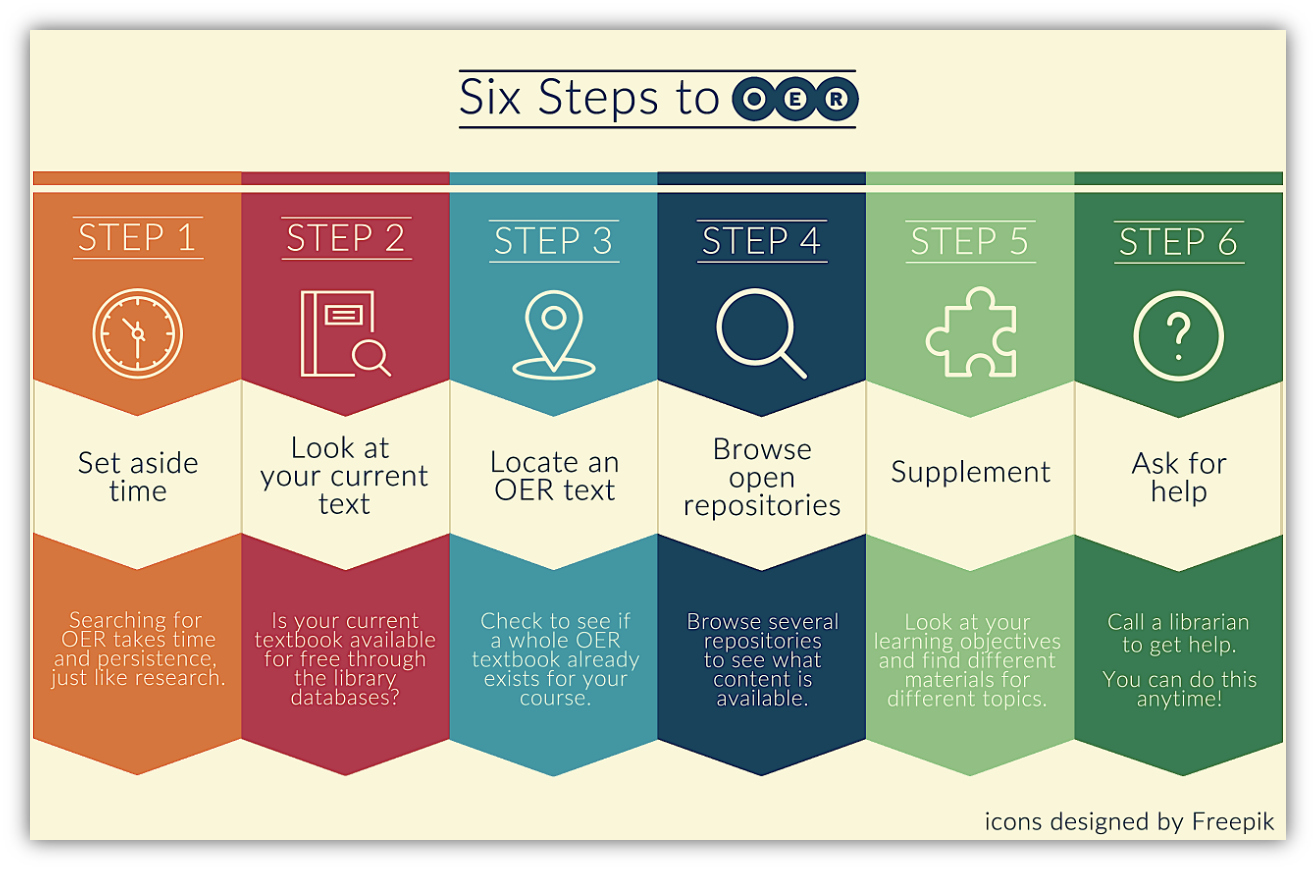
Figure 5: “Six steps to OER” by Northwestern Michigan College (NMC) Librarians, licensed under CC BY 4.0 Modified text from original by Lesley University Library
Additional Resources
UNESCO & Commonwealth of Learning. (2011; 2015). Guidelines for Open Educational Resources (OER) in Higher Education, 21. Retrieved from http://unesdoc.unesco.org/images/0021/002136/213605e.pdf
Kawachi, P (2014). Quality assurance guidelines for Open Educational Resources: TIPS Framework, Version-2.0. Commonwealth Educational Media Centre for Asia New Delhi. Retrieved from: http://oasis.col.org/bitstream/handle/11599/562/TIPSFramework_Version%202%5b1%5d%20Copy.pdf
References
Butcher, N. (2015). A basic guide to open educational resources (OER). Commonwealth of Learning, Vancouver and UNESCO. Retrieved from http://oasis.col.org/handle/11599/36
Gurell, S., & Wiley, D. (2008). OER Handbook for Educators 1.0 – WikiEducator. https://wikieducator.org/OER_Handbook/educator_version_one
Kawachi, P (2014). Quality assurance guidelines for Open Educational Resources: TIPS Framework, Version-2.0. Commonwealth Educational Media Centre for Asia New Delhi. Retrieved from http://oasis.col.org/handle/11599/562
McGreal, R. (2013). Creating, using and sharing Open Educational Resources. Commonwealth for Learning, Vancouver. Retrieved from http://oasis.col.org/handle/11599/44
UNESCO & Commonwealth of Learning. (2011; 2015). Guidelines for Open Educational Resources (OER) in Higher Education, 21. Retrieved from http://unesdoc.unesco.org/images/0021/002136/213605e.pdf
Wiley, D. (2008, January 17). OER Handbook. Iterating Towards Openness. Retrieved from http://opencontent.org/blog/archives/440
Zimmermann, C. (2018). Guideline for the creation of Open Educational Resources. Information and Practical Exercises for Lecturers in Higher Education. Retrieved from https://www.openeducation.at/fileadmin/Downloads/OEA-Guideline_online_final_english.pdf