Q14. Power of Data
 LEARNING OUTCOME
By the end of this section, you will be able to interpret learner data from digital tools to make data-drive decisions and improve teaching strategies.
 LISTEN
In the following podcast (4.48 min) from Maria Aciro, Entrepreneurship teacher at Padibe SS in Lamwo, teachers learn how to use data from digital tools to track learner progress, spot trends, and make smarter teaching decisions. It also explains data literacy and learner privacy, showing how even simple dashboards can guide feedback, differentiate teaching, and support respectful online participation.
 WATCH
WATCH
Watch the following video (2.18min) by STEAMpirations to learn how to use student data, like test scores and classwork, to plan lessons that meet their students’ needs and close learning gaps. You will also get practical tips on using assessments effectively, setting learning objectives, and tracking student progress to improve teaching and learning outcomes.
For easier viewing on mobile, click ‘Watch on YouTube'.
 READ
READ
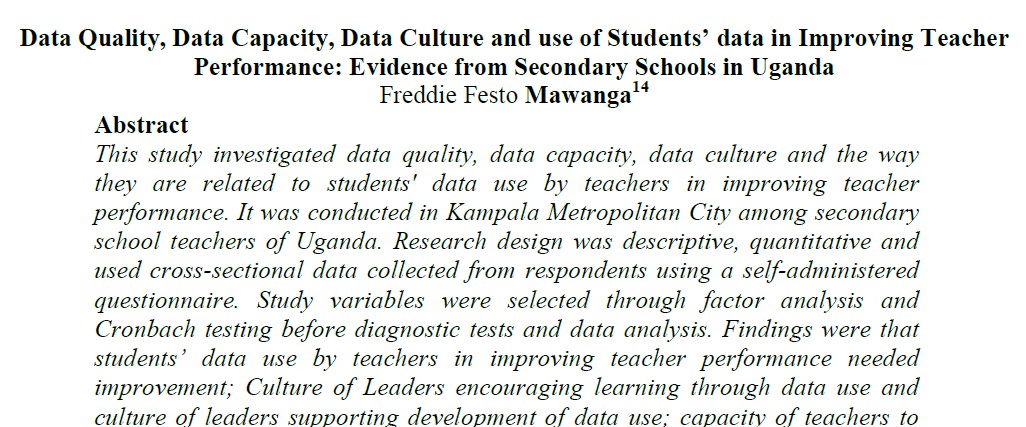
The following research from Makerere University Business School (MBU) argues how using student data well (quality data, good systems, and supportive leadership) helps teachers reflect on performance and improve teaching practices in secondary schools.
 AI-INTEGRATION
How can AI support in using educational data?
AI can help teachers collect, analyze, and act on data to improve learning outcomes.
👉🏾 AI for collecting and organizing data
Example: “Ask AI to help gather student performance data from quizzes, assignments, or attendance records and organize it for easy review.”
👉🏾 AI for analysing trends and insights
Example: “Use AI to identify patterns, such as topics where students struggle most or groups needing extra support.”
👉🏾 AI for data-driven decision making
Example: “Ask AI to suggest targeted interventions or personalised learning activities based on the analysed student data.”
Click Next to share your experiences with data and practice analyzing data to inform your teaching practices.