1.2. Building On What You Have
 Learning Objective
At the end of this section, teachers explain the why of this course, how it was designed, it's vision and it's contributors.
 THE WHY
Technology-Enhanced Learning (TEL) 2.0 aims to help teachers build digital pedagogy skills they can use directly in their daily teaching work.
In many classrooms, pedagogy and ICT do not always connect intentionally. Teachers are often trained in methods and tools separately, making it hard to combine them in daily practice.
We know that technology in itself doesn't improve learning. What makes the difference is how you use it.
Therefor, this course aims to strengthen your ability to design meaningful learning experiences where technology adds real value based on what you have.
In following video, Biology and Physics Teacher Isaac, explains how he integrates ICT using what is available. His students testify about their experiences.
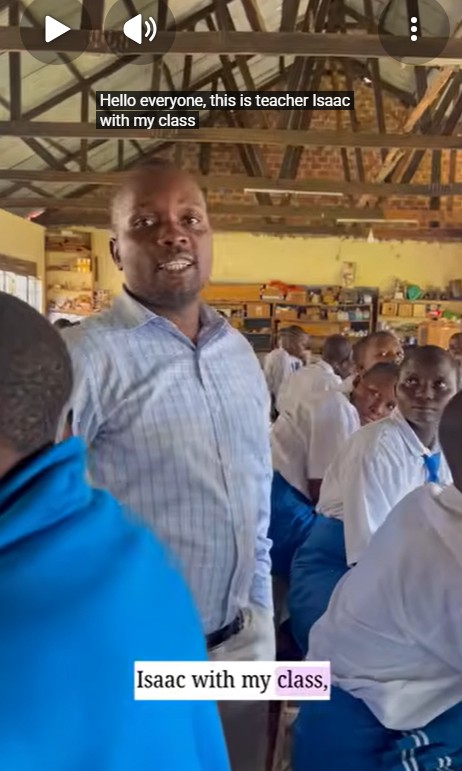
For easier viewing on mobile, click “Watch on YouTube.”
The goal is to help you confidently integrate technology in a purposeful and effective way that aligns with your learning objectives, respond to your students’ needs and contribute to more equity and inclusion for learners with special needs. Finally to fit within your school’s or organisation’s context to boost learning, academic performance, and application.
Technology thereby does not replace you, but strengthens the impact you already have. We focus on using digital tools in ways that:
1️⃣ Foster active learning and student engagement to make learning interactive
2️⃣ Design innovative teaching materials to visualize concepts and personalize instruction to meet different learning needs
3️⃣ Use AI to support teaching practices
The course builds on Technology Enhanced Learning (TEL) 1.0 and General Teaching Methods (GTM), available for free on OpenLearn. While prior completion helps with foundational concepts, it is not required.
Click on Next to learn how this course was designed.