
Overview
Study time: Approx. 1 hour
What if your research is unintentionally excluding the very people it aims to understand or benefit? Equally, what if you have a diverse research team but lack an inclusive culture that enables everyone to contribute and develop?
EDIA (Equality, Diversity, Inclusion and Accessibility) is now embedded across the UK research ecosystem through funder requirements, institutional strategies, sector guidance and growing expectations for inclusive research practice. In research, EDIA is concerned with creating fair opportunities for participation, recognising diverse perspectives and experiences, fostering meaningful inclusion, and addressing barriers that may prevent people from engaging with research. At its core, EDIA has the potential to strengthen research by making it more ethical, innovative, relevant and responsive to the diverse communities and populations it seeks to serve.
In response, a growing range of policies, principles and frameworks has emerged. Yet much of this guidance focuses on high-level aspirations and strategic commitments, providing less support for translating EDIA into day-to-day research practice. As a result, EDIA is often experienced as a compliance exercise rather than a meaningful component of high-quality research. However, meeting a requirement is not the same as embedding EDIA in practice.
You may have included a gender equality statement in a proposal, but how does that commitment influence the decisions you make and the way you conduct research throughout the life of a project?
This course explores that question.
Designed for social scientists, EDIA in Research Practice reframes EDIA as more than a compliance requirement. Instead, it presents EDIA as a practical and critical approach to conducting higher-quality research and building more equitable research relationships and outcomes.
Across the course, you will explore how EDIA influences research ideas, research practice, research relationships, and the ways impact is defined and experienced. You will also consider how EDIA can strengthen research by helping researchers recognise complexity, attend to perspectives that might otherwise be overlooked, and better understand the people and communities their work seeks to serve. To support this process, the course introduces the CERI Framework, a practical tool for understanding, analysing and reflecting on how EDIA can be embedded throughout the research lifecycle through four interconnected dimensions: Credibility and Competitiveness, Excellence, Relationships and Impact.
Drawing on the PEERs Gallery (Partnering for Equitable Research), a virtual exhibition space containing more than 100 stories and reflections from social scientists, you will encounter researchers' experiences of navigating the challenges, tensions, dilemmas and opportunities that arise when putting EDIA into practice. Spanning different disciplines, methods, countries and research contexts, these stories show how everyday research decisions can shape participation, partnerships, knowledge production and impact. These examples show that embedding EDIA is rarely straightforward. It requires researchers to navigate complexity, challenge assumptions, adapt to context and respond to others' needs and experiences.
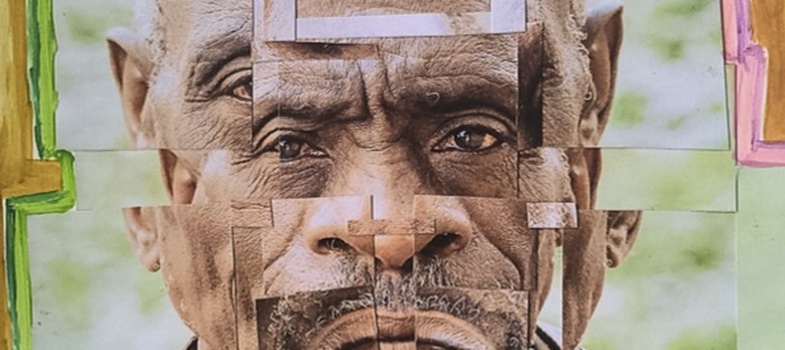
You can find the course image in the PEERs Gallery. It is a collage created by a participant in the Fluid Borders project, which brought together researchers, artists and people affected by flooding around Lake Tanganyika. The collage serves as a visual metaphor for social science itself. Society is not experienced as a single story but as a set of interconnected and sometimes competing realities. By bringing multiple fragments together, the image reflects the challenge of understanding complex social issues without losing sight of the people at their centre.
Rather than a checklist or one-off intervention, the course explores EDIA as an ongoing and relational practice that shapes how research is designed, conducted, experienced and used. Through critical reflection, practical activities and real-world examples, you will be encouraged to think differently about how knowledge is produced, how research relationships are formed and maintained, and who ultimately benefits from research.
By the end of the course, you will have developed a practical framework for recognising and embedding EDIA within your own research practice, helping you move from awareness and intention towards more reflective, inclusive and responsive research.
Next: Learning Outcomes