
5.4 Real-World Impact
As you move into the last part of Unit 5, and the final section of this course, we pose one final idea: impact is not only about creating change. It is about whether that change can be accessed, used and sustained by the people and communities it is intended to benefit.
Go to the Equitable Researcher Engagement room in the Gallery and read ‘From Add-On to Ally: Rethinking Learning Design Engagement in Research’ told by a learning designer in South Africa, brough into the Creative Economies project to help develop teaching resources.
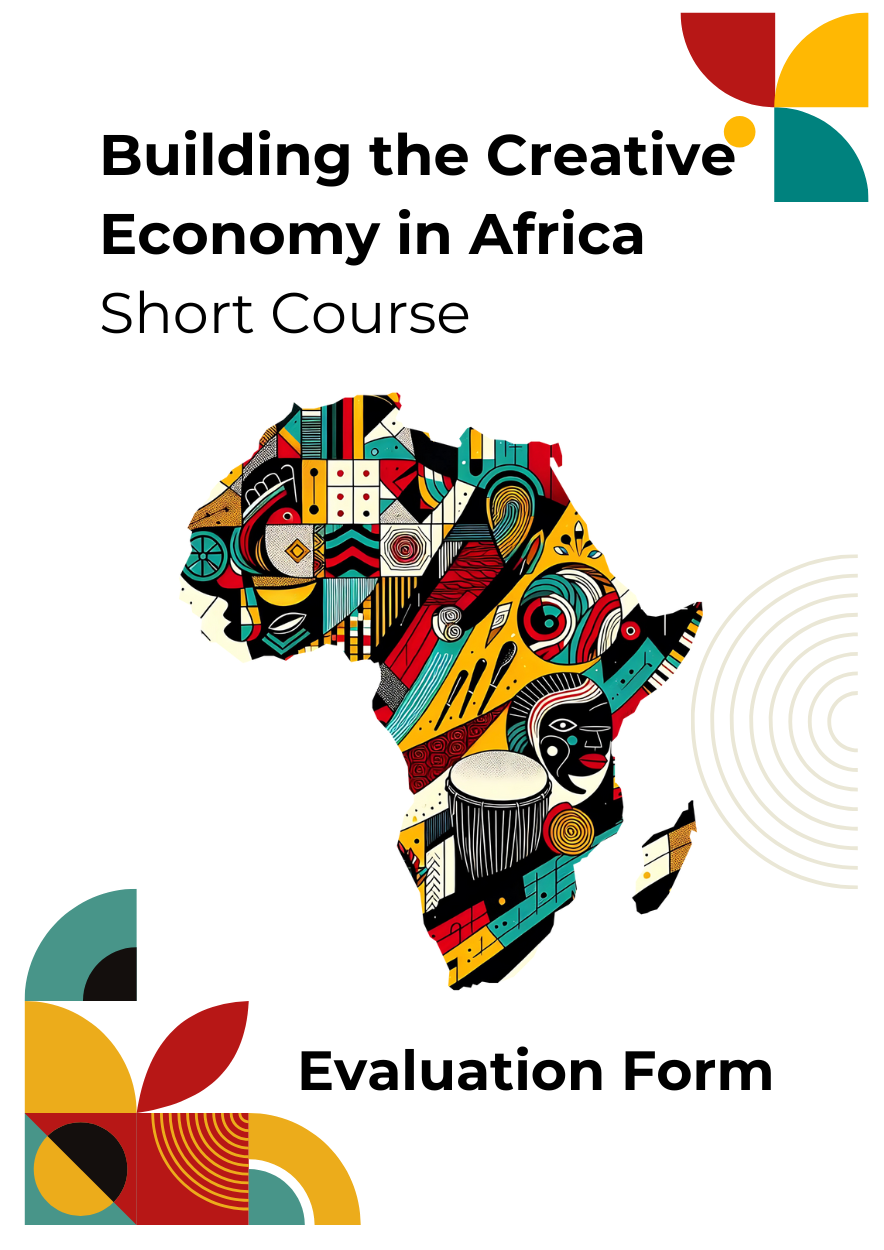
Image: Cover of one of the Creative Economies course manuals. It is part of a set of free, open access teaching resources created from the research.
What this story illustrates is that decisions about real-world impact are often shaped long before research findings are shared or outputs are produced.
In this example, the learning designer was able to make valuable contributions to the project. However, being brought into the project later limited opportunities to influence how the learning resource was designed for different audiences and contexts. The story highlights how decisions made throughout a project can affect who is ultimately able to access, engage with and benefit from research.
Real-world impact is about more than creating change. It is about whether the benefits of research can be accessed, used and sustained beyond the project itself. Research impact literature increasingly highlights the importance of accessibility, relevance and long-term use in determining whether research creates meaningful benefits in practice (Greenhalgh et al., 2016; Reed, 2018).
Throughout this course, you have explored how EDIA can strengthen research development, research practice, research relationships and impact. Real-world impact builds on these ideas by encouraging you to think beyond whether impact occurs and consider how impact reaches people, how it is experienced and whether its benefits can be sustained over time.
The following sections explore three connected dimensions of real-world impact.
Equitable Outputs - How research findings are shared influences who can access, understand and use them. This section explores how outputs can be made more accessible, relevant and meaningful to different audiences.
Reach and Relevance - Reaching more people does not always create greater impact. This section considers how researchers can balance broad dissemination with meaningful engagement and benefit.
Sustainable Impact - Some impacts continue long after a project ends, while others are short-lived. This section explores how research can create value that remains useful beyond the life of a project.
Next: 5.4.1 Equitable Outputs