
Introduction and Orientation
A warm welcome to the course!
Before exploring the content in more detail, take a few moments to think about your own experiences and perspectives. Throughout the course, you will be encouraged to reflect on how EDIA relates to your own research practice and the decisions you make as a researcher.
The following activity is not a test, and there are no right or wrong answers. Instead, it provides an opportunity to capture your current thinking before you begin the course. You may find it helpful to return to your responses at the end and reflect on whether your thinking has changed.
Activity: EDIA In Research
Time: approx. 5 minutes
-
Why is EDIA important to social science research? and
-
How do you conduct research in a fair and inclusive way?
About this course
Welcome to the EDIA (Equality, Diversity, Inclusion and Accessibility) in Research Practice short course.
This course explores how EDIA can be embedded throughout the social science research lifecycle. Rather than treating EDIA as a separate consideration, the course examines how it shapes the everyday decisions researchers make when developing ideas, conducting research, working with others and creating impact.
A distinctive feature of the course is the PEERs Gallery, a virtual exhibition space containing more than 100 stories and reflections from social scientists working across a diversity of research problems, disciplines, methodologies and research contexts. The exhibits are a curation from researchers working on more than 25 projects, across nearly 20 countries. Throughout the course, these stories provide real-world examples of the challenges, tensions, dilemmas and opportunities researchers encounter when putting EDIA into practice.

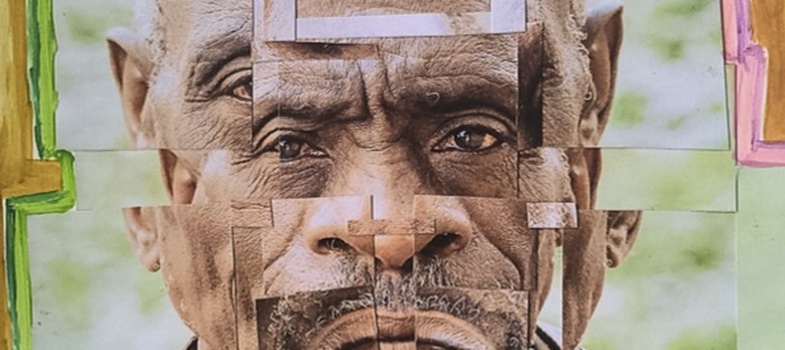
Image: This photograph was taken by a female refugee living in Kampala, Uganda. She was a participant in Decolonising Education for Peace in Africa (DEPA), one of the projects contributing to the PEERs Gallery. The photograph was created to represent the silencing of women who speak out about gender and sexual-based violence. By clicking on images throughout the gallery, you can explore the stories and EDIA experiences that sit behind them.
Like many of the stories featured in the PEERs Gallery, this image encourages us to think critically about power, participation and representation. These themes sit at the heart of this course and underpin how EDIA can be embedded throughout the research process.
The course is structured around the CERI Framework, which is used to identify and examine EDIA across the research process. Its four dimensions align with key phases and components of research and provide the conceptual foundation for Units 2-5:
-
Credibility and Competitiveness: strengthening research ideas, proposals and early project development.
-
Excellence: examining how EDIA shapes the way research activities are designed, conducted and analysed.
-
Relationships: exploring how power, participation and collaboration influence research partnerships and interactions.
-
Impact: considering how research benefits are defined, experienced and shared.
Together, these dimensions provide a practical framework for understanding how EDIA influences research practice from the earliest stages of project development through to the ways research creates change and value.
The course combines short learning materials, reflective activities and examples from the PEERs Gallery to encourage you to think critically about your own research practice. Throughout, you will be invited to reflect on how EDIA can help strengthen the quality, relevance and inclusiveness of your research.