
Acknowledgements
EDIA in Research Practice was created by Dr Craig Walker and Dr Saraswati Dawadi (Institute of Educational Technology, The Open University, UK) as part of the Research Capability Hub. The course is licensed on a Creative Commons Attribution 4.0 International license, unless otherwise stated.
PEERs (Partnering for Equitable Research) Gallery
The course incorporates the PEERs virtual gallery developed using Metasteps, a platform for creating immersive 3D digital spaces. The authors acknowledge Metasteps for enabling the design and delivery of this interactive learning resource.
In addition to the content being hosted in the virtual gallery, individual images are used throughout the units as learning aids, to help find the exhibits once inside the gallery.
The PEERs Gallery is built upon the contributions, experiences, creativity, and commitment of hundreds of individuals who have participated in, supported, and shaped research across a diverse range of contexts and communities.
Appreciation is given to all contributors whose photographs, videos, audio recordings, stories, reflections, creative works, and testimonies are represented within this collection. These contributions come from researchers, participants, artists, practitioners, community members, partner organisations, professional services colleagues, and others whose involvement made these research projects possible.
Many contributors are acknowledged through pseudonyms, identified by project roles, or organisational affiliation in accordance with their preferences and the ethical commitments of the originating projects.
In keeping with the participatory, creative, and decolonial approaches that underpin many of the projects represented in this gallery, we recognise knowledge production as a collective endeavour. The contributions featured here reflect collaborations between individuals and communities whose expertise arises from lived experience, professional practice, artistic expression, community leadership, research, and partnership working. We acknowledge that these contributions are not simply research outputs but represent acts of trust, dialogue, co-creation, and shared learning.
The PEERs Gallery brings together contributions that stem from five individual projects funded through the Arts and Humanities Research Council (AHRC), including:
- DEPA –
A collaborative programme exploring how locally grounded understandings and practices of peace can contribute to decolonising peace education and creating educational resources rooted in community knowledge.
-
A programme that explores how creative practice, cultural knowledge, and entrepreneurship can support sustainable livelihoods and strengthen creative economies across African contexts, building on participatory and decolonial approaches to learning and development.
- BEAP –
BEAP examines how more equitable and mutually beneficial partnerships can be developed between researchers, institutions, funders, communities, and civil society organisations across Africa and the United Kingdom.
-
An international collaborative programme that investigated how arts, heritage, and human rights approaches can support young people and contribute to building inclusive civil societies in contexts affected by conflict.
- TESF –
A network supporting research into how education can contribute to more equitable, just, and environmentally sustainable futures while foregrounding marginalised voices and decolonising research practice.
The PEERs gallery and course team gratefully acknowledge the AHRC for its support of the programmes represented within this gallery and thank all contributors, project teams, partner organisations, and communities whose participation, expertise, creativity, and generosity made this collection possible.
Individual Images and Videos
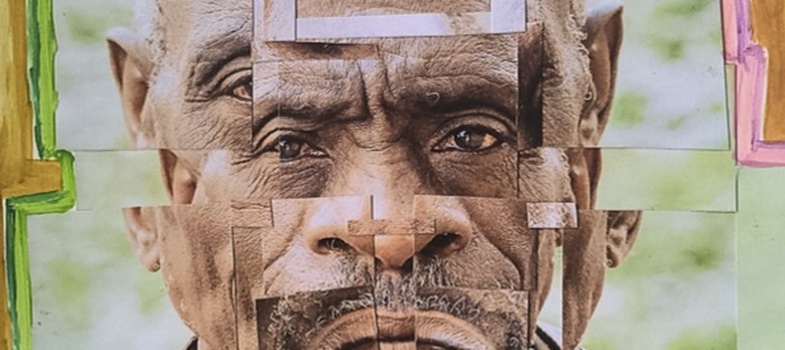
The following image:
- Course image: collage created as part of the
that used art and conversations to explore how borders — both real and symbolic — affect life and teaching about peace. The project was part of the umbrella programme
(DEPA).
The following video:
Further information and acknowledgements
The authors thank the reviewers, Dr Carina Bossu and Dr Elizabeth Fitzgerald, for their detailed feedback, and colleagues across the Research Capability Hub and the Institute of Educational Technology for their support during development.
M365 Copilot, a generative AI tool, was used to support editorial tasks, including refining language, improving clarity and enhancing readability. The authors reviewed, edited and verified all AI-assisted material and take full responsibility for the content of this course.